

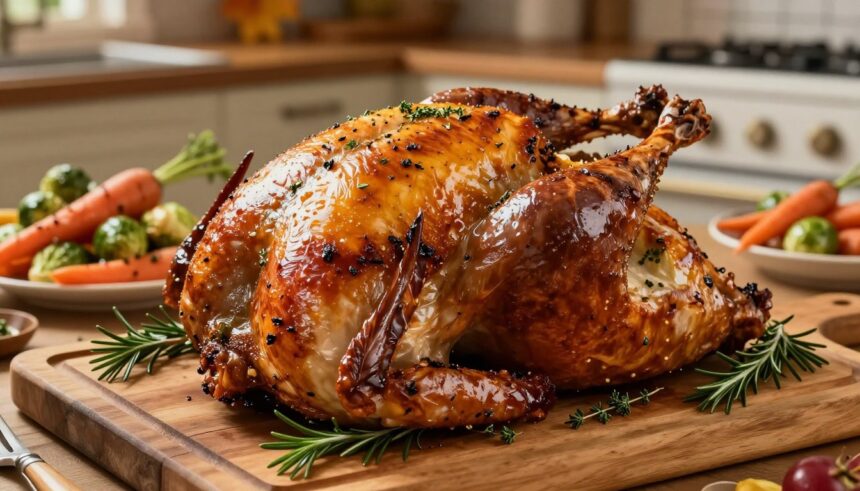
Creating the perfect herb butter turkey is a game-changer for any holiday dinner. With this simple and mouthwatering roast turkey recipe, you’ll be sure to impress your guests. The key to a deliciously juicy breast and crispy skin lies in the preparation and roasting process.
- The Perfect Holiday Centerpiece
- Essential Ingredients for Herb Butter Turkey
- Preparing Your Turkey
- Making the Perfect Herb Butter
- Turkey Recipe: Application Techniques
- Roasting Your Herb Butter Turkey
- Resting and Carving Your Turkey
- Making Turkey Gravy from Drippings
- Conclusion: Enjoying Your Herb Butter Turkey
To achieve a perfectly cooked pound turkey, it’s essential to understand the importance of room temperature and the role of aluminum foil in the roasting process. By following this comprehensive guide, you’ll learn how to prepare a flavor-packed and moist turkey that will be the centerpiece of your holiday meal.
From preparing the herb butter to roasting the turkey to perfection, this guide covers everything you need to know. You’ll also learn how to make a delicious turkey gravy using the drippings from the roasting pan.
Key Takeaways
- Cooking a turkey to perfection requires attention to detail and the right techniques.
- Using herb butter adds flavor and moisture to the turkey.
- Properly thawing and bringing the turkey to room temperature is crucial.
- Roasting the turkey with aluminum foil helps retain moisture.
- Making turkey gravy with the roasting pan drippings is a great way to complement your meal.
- A meat thermometer ensures the turkey is cooked to a safe internal temperature.
The Perfect Holiday Centerpiece
The tradition of serving turkey on special occasions is deeply rooted in history, but its enduring popularity stems from its versatility and flavor. A perfectly roasted turkey creates an impressive centerpiece that sets the tone for your entire holiday dinner experience.
When properly prepared, a turkey offers both succulent white meat and flavorful dark meat, satisfying different taste preferences at your table. The size flexibility of turkeys, ranging from 10 to 24 pounds, makes them adaptable for different gathering sizes, with cooking time generally calculated at about 20 minutes per pound.
Why Turkey Remains the Classic Choice
Modern roasting techniques have evolved to address common challenges like dry breast meat, making today’s turkey recipes more foolproof than ever. The ritual of carving the turkey at the table creates a memorable moment during holiday gatherings.
The multi-day process of preparing a turkey builds anticipation for the meal, making it feel more special. The leftover potential of turkey extends the enjoyment beyond the main meal, providing the foundation for sandwiches, soups, and casseroles in the days following.
Essential Ingredients for Herb Butter Turkey
A flavorful herb butter turkey is achieved by combining high-quality ingredients with precise preparation techniques. The foundation of this dish begins with a fresh turkey, ideally weighing between 11-15 pounds.
Quality Components for Maximum Flavor
The star component is the herb butter mixture, which combines unsalted butter with fresh herbs, garlic, lemon zest, and precisely measured salt and pepper. Fresh herbs are strongly recommended over dried for this recipe, as they provide more vibrant flavor that permeates the bird during roasting.
| Ingredient | Quantity |
|---|---|
| Turkey | 11-15 pounds |
| Unsalted Butter | 1/2 cup |
| Fresh Herbs (parsley, thyme) | 1/4 cup, chopped |
| Garlic | 3 cloves, minced |
| Lemon | 1, zested and quartered |
| Salt and Pepper | To taste |
To prepare your turkey, you’ll need to pat it dry with paper towels and fill the cavity with aromatics like onion, garlic, and herbs. Don’t forget to remove the giblets before cooking. Plan ahead for thawing if using a frozen turkey, allowing approximately 24 hours in the fridge for every 4-5 pounds.
https://www.youtube.com/watch?v=E2PIz5r243Y
Preparing Your Turkey
To ensure your turkey roasts evenly, it’s crucial to start with proper preparation. Begin by removing the turkey from the fridge about 30 minutes before you start working with it. This allows the turkey to come closer to room temperature, which is essential for even baking.
First, remove the neck and bag of giblets from the turkey cavity. These are usually found in the main cavity and neck cavity, packaged in paper or plastic. Set the turkey on a roasting pan after removing these items. Next, pat the turkey dry with paper towels, both inside and out. This step is vital for achieving crispy skin, as moisture hinders the browning process.
Essential Steps Before Roasting
- Position your oven rack in the lower third of the oven and preheat to the correct temperature, typically between 325°F to 350°F.
- Prepare your roasting pan by placing a rack inside or creating a bed of vegetables to elevate the turkey. This allows for air circulation around the bird.
- Generously season the cavity with salt and pepper before adding any aromatics or stuffing.
- If using a meat thermometer, identify the correct placement point – the thickest part of the thigh without touching bone.
- Fold the wing tips behind the turkey’s back to prevent them from burning during the roasting process.
For the most accurate cooking time, weigh your turkey after it’s been fully prepped. Use the standard formula of approximately 13-15 minutes per pound to calculate the cooking time. Ensure you have foil ready to tent the turkey if it browns too quickly during roasting.
By following these steps, you’ll be well on your way to preparing a deliciously roasted turkey that’s sure to be the centerpiece of your meal.
Making the Perfect Herb Butter
Blending Flavors for Maximum Impact
A well-crafted herb butter can transform an ordinary turkey into an extraordinary culinary experience. The process of making herb butter is straightforward and requires just a few ingredients.
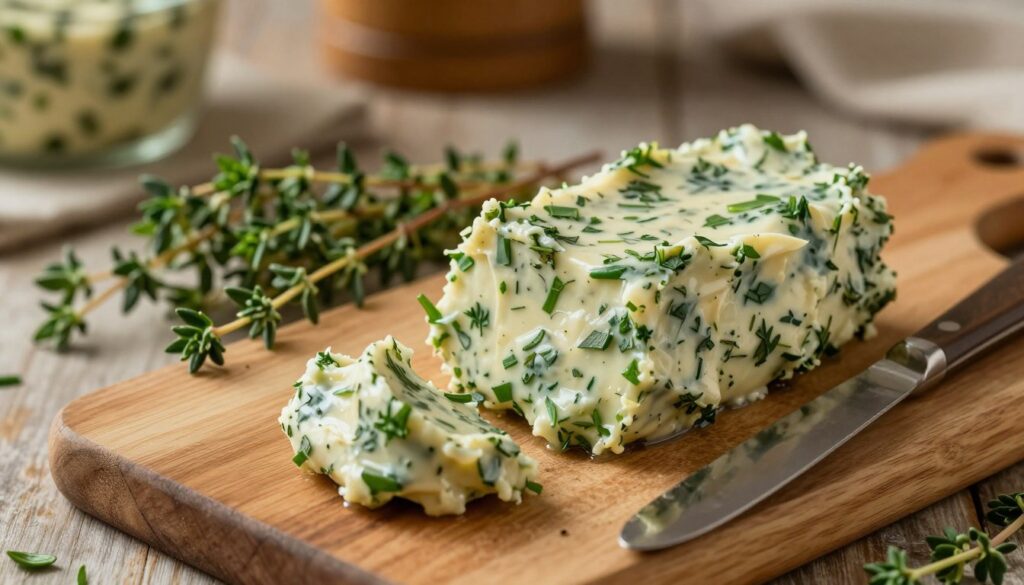
To make the flavored butter, combine 2 sticks of softened butter, 2 Tbsp olive oil, 1/2 Tbsp lemon zest, 4 Tbsp lemon juice, and 3 pressed garlic cloves, 1/4 cup chopped parsley, 1/2 Tbsp salt, 1/2 tsp pepper in a medium bowl or the bowl of a food processor. Mash or process until well combined.
The herb butter is the secret to a mouth-watering turkey. Begin with high-quality unsalted butter at room temperature.
| Ingredient | Quantity |
|---|---|
| Unsalted Butter | 2 sticks |
| Olive Oil | 2 Tbsp |
| Lemon Zest | 1/2 Tbsp |
| Lemon Juice | 4 Tbsp |
| Garlic Cloves | 3 |
| Chopped Parsley | 1/4 cup |
| Salt | 1/2 Tbsp |
| Pepper | 1/2 tsp |
For maximum flavor, prepare the herb butter a few hours in advance.
Turkey Recipe: Application Techniques
The secret to a mouth-watering turkey lies in the careful application of herb butter, ensuring every bite is infused with rich flavors. To achieve the best results, it’s crucial to understand the proper techniques for applying herb butter to your turkey.
Properly Applying Herb Butter for Best Results
Begin by ensuring your turkey is completely dry using paper towels and at room temperature for the butter to adhere properly to the skin. Gently separate the skin from the meat by carefully sliding your fingers between the skin and breast meat, being extremely careful not to tear the delicate skin.
Work from both the neck and cavity ends to create a pocket between the skin and meat that will hold the butter mixture. Approximately two-thirds of your herb butter should go under the skin, where it will directly flavor and moisten the breast meat during roasting. Use your hands to massage the butter from the outside of the skin, spreading it evenly throughout the pocket you’ve created.
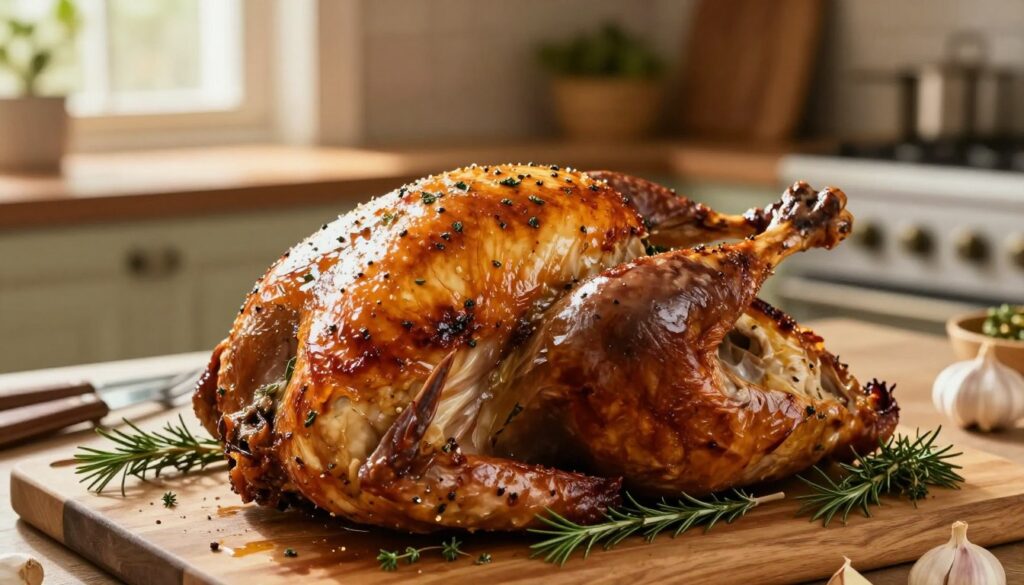
The remaining third of the butter should be generously applied to the exterior of the turkey, covering the breast, legs, wings, and all exposed skin. After applying the butter, stuff the cavity with aromatics like onion, lemon, and herbs. Position the turkey on a rack in your roasting pan to allow air circulation and prevent the bottom from becoming soggy during cooking time.
By following these steps, you’ll achieve a deliciously flavored turkey that’s sure to impress your guests. Remember to pat dry the skin and rub the remaining butter over the outside of the turkey for an extra layer of flavor.
Roasting Your Herb Butter Turkey
Roasting your herb butter turkey is a critical phase that requires careful temperature management and timing. To achieve a perfectly cooked turkey, preheat your oven to 430˚F on the bake mode. Place the oven rack in the lower part of your oven, ensuring that your large turkey roasts in the middle of the oven and keeps the turkey breast further from the top heating element.
Tips for Roasting
- Begin by preheating your oven to a higher temperature (around 425-450°F) for the first 20-30 minutes to create a golden exterior.
- Position your turkey on the rack in the lower third of the oven to ensure even heat distribution and prevent the top of the bird from browning too quickly.
- Calculate your approximate cooking time based on the weight of your turkey – generally 13-15 minutes per pound for an unstuffed bird.
- Use a reliable meat thermometer inserted into the thickest part of the thigh (without touching bone) to monitor the internal temperature.
The foil triangle technique is a simple method to protect the breast meat, which cooks faster than the dark meat and can dry out if not shielded. To apply this technique, fold a large square sheet of foil into a triangle, rub one side with olive oil, and shape the foil (oil-side-down) over the turkey breast. Remove the foil later in the roasting process to allow the breast to brown.
Temperature Control and Timing
It’s essential to resist the urge to frequently open the oven door, as this releases heat and extends cooking time. Instead, use the oven light to check progress. The butter on the skin will help create a beautiful golden-brown color, but if any areas are browning too quickly, cover those sections with small pieces of foil.
Your turkey is done when the thigh meat reaches 165°F and the breast reaches 160°F. For a large pound turkey, allow for additional cooking time and be particularly vigilant about protecting the breast with foil to prevent overcooking.
Resting and Carving Your Turkey
The key to a perfectly cooked turkey lies in the resting period after it’s been roasted. This crucial step allows the juices to redistribute, making the turkey more tender and easier to carve.
Patience for Perfect Results
After removing the turkey from the oven, transfer it to a serving platter and cover it loosely with foil. Let it rest for at least 1 hour. The longer it rests, the more tender it becomes. During this time, the internal temperature of the bird continues to rise slightly, completing the cooking process.
Use this resting period to prepare your gravy and finish any remaining side dishes. The resting phase is non-negotiable and makes a significant difference between a good turkey and a great one. Make sure to allow at least 30-60 minutes of rest time.
Once the turkey has rested, transfer it to a cutting board with a channel to catch any juices that escape during carving. Begin by removing the legs and thighs, then the wings, before tackling the breast meat. For the breast, make a deep horizontal cut at the base, then slice downward perpendicular to the breastbone.
A sharp carving knife and sturdy carving fork are essential tools that make the process much easier and more precise. If you’re new to carving, consider practicing on a roast chicken before the big day to build confidence in your technique.
Making Turkey Gravy from Drippings
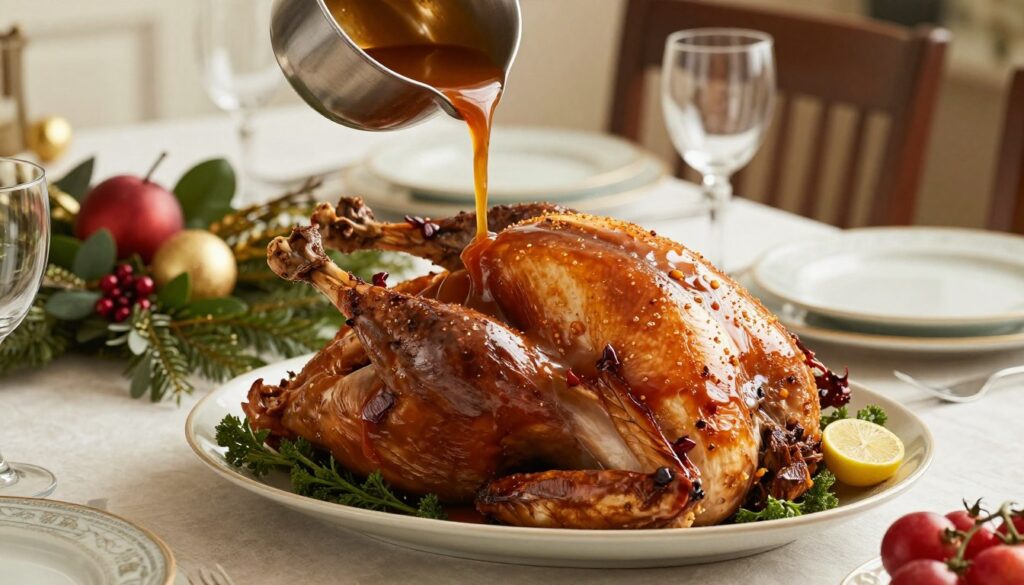
Elevate your holiday feast with a rich and savory turkey gravy made from the roasting pan drippings. The process of creating this gravy is straightforward and enhances the overall flavor of your herb butter turkey.
Creating the Perfect Sauce
To make the gravy, start by straining the pan juices into a fat separator or a 4-cup glass measuring cup, skimming off the fat from the top. Discard any bits and solids. If the pan drippings do not render 4 cups of broth, add chicken broth to make up the difference.
Next, deglaze the roasting pan with white wine or broth, scraping up the caramelized bits from the bottom. Allow the wine to reduce slightly, about 3-4 minutes.
- The turkey gravy made from roasting pan drippings captures the concentrated flavors developed during cooking.
- Begin by carefully straining the drippings, separating the fat from the flavorful juices.
- Deglaze the roasting pan to release the caramelized bits that contain incredible flavor.
- For the richest gravy, use the neck and giblets to make a simple stock while the turkey roasts.
- A ratio of 2 tablespoons each of fat and flour per cup of liquid creates the perfect gravy consistency.
- Whisk constantly while adding flour to the fat to prevent lumps.
- Allow the gravy to simmer for at least 5-10 minutes to cook out the raw flour taste.
- Season carefully with salt and pepper at the end of cooking.
- For a silky-smooth texture, strain the finished gravy through a fine-mesh sieve.
By following these steps, you can create a delicious and savory turkey gravy that complements your herb butter turkey perfectly.
Conclusion: Enjoying Your Herb Butter Turkey
With your herb butter turkey ready, the real fun begins, as you get to share this culinary masterpiece with your loved ones. Serving your turkey on a large platter surrounded by fresh herbs, citrus slices, or seasonal fruits will not only not only enhance the visual appeal but also add to the festive atmosphere. Accompany your turkey with traditional sides like mashed potatoes, stuffing, and cranberry sauce to create a well-rounded holiday meal.
Maximizing Your Holiday Feast
Remember, patience is key – let your turkey rest for at least 30-60 minutes before carving to ensure the juices redistribute, making the meat tender and flavorful. Don’t discard the carcass; instead, use it to make a delicious turkey stock for future soups and stews. Leftover turkey can be repurposed in various dishes, such as sandwiches, pot pies, soups, casseroles, and turkey salad, making it a versatile ingredient for meals beyond the holiday.
The herb butter technique you’ve mastered can also be applied to other poultry and even pork roasts, expanding your culinary repertoire. Consider making this recipe a tradition for both Thanksgiving and Christmas, creating a signature dish that your guests will look forward to year after year. By sharing this recipe, you’re giving the gift of a delicious and foolproof meal that will be cherished.
## FAQ
### Q: How long should I let the turkey come to room temperature before roasting?
A: It’s recommended to let the bird sit at room temperature for about 1-2 hours before roasting to ensure even cooking.
### Q: What is the best way to season the cavity of the turkey?
A: Rub the cavity with a mixture of salt, pepper, and your choice of herbs, then stuff with aromatics like onion and celery for added flavor.
### Q: How often should I baste the turkey while it’s roasting?
A: Baste the turkey every 30 minutes to keep the meat moist and promote even browning.
### Q: What temperature should I use to roast the turkey?
A: Preheat your oven to 325°F (165°C) for roasting, and use a meat thermometer to ensure the breast reaches 165°F (74°C).
### Q: How do I know when the turkey is done roasting?
A: Use a meat thermometer to check the internal temperature, and make sure the juices run clear when you cut between the leg and thigh.
### Q: Can I stuff the turkey with dressing before roasting?
A: Yes, but make sure the stuffing is loosely packed and reaches an internal temperature of 165°F (74°C) to ensure food safety.
### Q: How long should I let the turkey rest before carving?
A: Let the turkey rest for at least 20-30 minutes before carving to allow the juices to redistribute and the meat to stay tender.