
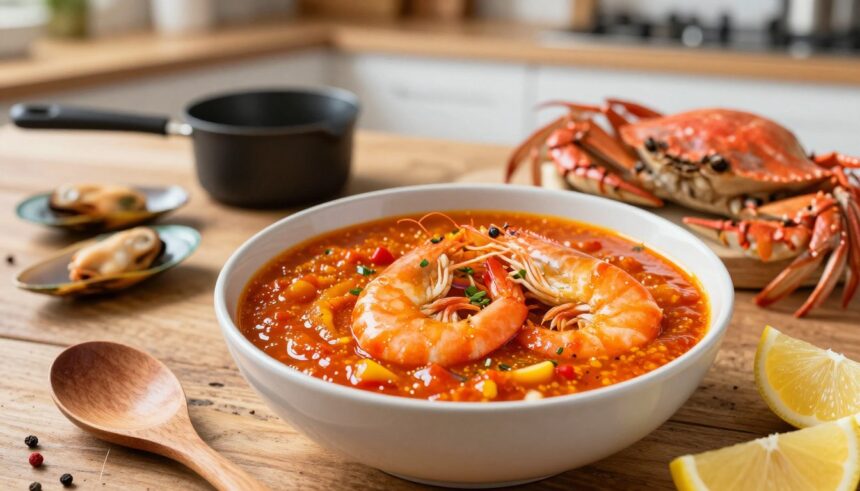
Imagine sitting around the table with loved ones, surrounded by the smell of a delicious seafood boil. The key to this tasty moment is the perfectly crafted boil sauce. Making your own seafood boil sauce is simple and changes the game for seafood fans.
- Understanding Seafood Boil Sauce: Origins and Importance
- Essential Ingredients for Authentic Seafood Boil Sauce
- Equipment You’ll Need for Perfect Results
- Step-by-Step Guide to Making Homemade Seafood Boil Sauce
- Adjusting Heat Levels in Your Seafood Boil Sauce
- Regional Seafood Boil Sauce Variations
- Pairing Your Homemade Seafood Boil Sauce with Different Seafood
- Best Sauce for Crab
- Perfect Pairings for Shrimp
- Sauce for Lobster and Crawfish
- Complementing Clams and Mussels
- Serving Suggestions and Complete Meal Planning
- Storage and Make-Ahead Tips for Seafood Boil Sauce
- Conclusion
- FAQ
- What is seafood boil sauce made of?
- How do I adjust the heat level in my seafood boil sauce?
- Can I make seafood boil sauce ahead of time?
- What are some regional variations of seafood boil sauce?
- How do I pair seafood boil sauce with different types of seafood?
- What are some traditional accompaniments to seafood boil?
- How do I store leftover seafood boil sauce?
- Can I use seafood boil sauce for other dishes?
- How do I make a homemade seafood boil sauce from scratch?
- What are some tips for making the best seafood boil sauce?
By making your own seafood boil sauce recipe, you can tailor the flavors to your taste. This way, you get a real seafood experience. With just a few ingredients, you can take your seafood boils to the next level.
Key Takeaways
- Learn how to make a delicious homemade seafood boil sauce
- Customize the flavors to your liking
- Elevate your seafood boils with a perfectly crafted boil sauce
- Enjoy a truly authentic seafood experience
- Impress your family and friends with your culinary skills
Understanding Seafood Boil Sauce: Origins and Importance
Seafood boil sauce is more than just a flavor enhancer. It’s a key part of coastal traditions. It’s a way to connect people through food.
The Cultural Significance of Seafood Boils
Seafood boils have a long history in coastal areas. They’re about more than just food. They’re about community and togetherness.
From Cajun Country to the Chesapeake
The Cajun and Chesapeake regions are at the heart of seafood boils. Each place has its own twist, shaped by local tastes and traditions.
The Evolution of Seafood Boil Traditions
Seafood boil traditions have grown over time. They’ve added new ingredients and ways of cooking. Yet, they still hold their cultural value.
What Makes a Great Sauce
A top-notch seafood boil sauce is all about balance. It should mix flavors and heat just right.
Balance of Flavors
Getting the right mix of tangy, spicy, and savory is essential. This ensures the sauce enhances the seafood without dominating it.
Heat vs. Depth
The heat in seafood boil sauce can range from mild to very spicy. But, the depth of flavor is just as important, adding richness to the sauce.
| Region | Signature Ingredient | Heat Level |
|---|---|---|
| Cajun | Hot peppers | High |
| Chesapeake | Old Bay seasoning | Medium |
| Low Country | Smoked paprika | Low to Medium |
Making an authentic seafood boil sauce means knowing about regional flavors and balance. It’s about creating a traditional seafood boil sauce that brings people together.
Essential Ingredients for Authentic Seafood Boil Sauce
To make a truly exceptional seafood boil sauce, you need to start with the right ingredients. The best seafood boil sauce is a mix of base ingredients, spices, and liquid components.
Base Ingredients
The foundation of your seafood boil sauce starts with base ingredients. These include fats and aromatics.
Butter and Oil Options
You can use either butter, oil, or a mix of both as the base. Butter adds richness, while oil balances the flavor.
Aromatics Foundation
Aromatics like onions, garlic, and sometimes lemongrass or ginger are key. They form the sauce’s flavor backbone.
Spices and Seasonings
Spices and seasonings give your seafood boil sauce its unique flavor.
Must-Have Spices
Essential spices include paprika, cayenne pepper, and black pepper. These spices add heat and depth.
Optional Flavor Enhancers
Optional ingredients like dried herbs (e.g., thyme, oregano) and spices (e.g., cumin, coriander) can enhance flavor further.
Liquid Components
The liquid components help bring the sauce together and add moisture.
Broth Choices
You can use seafood broth, chicken broth, or water as the liquid base. Seafood broth is best for its rich flavor.
Citrus and Vinegar
A splash of citrus juice (like lemon or orange) and/or vinegar (such as white wine or apple cider vinegar) adds brightness and balance.
| Ingredient | Purpose |
|---|---|
| Butter/Oil | Base for sautéing aromatics |
| Aromatics (Onions, Garlic) | Add depth and complexity |
| Spices (Paprika, Cayenne) | Provide heat and flavor |
| Broth | Liquid base for the sauce |
| Citrus/Vinegar | Adds brightness and balance |
Equipment You’ll Need for Perfect Results
To get perfect results in your seafood boil sauce, you need the right tools. The right equipment makes the process smoother. It also ensures your sauce is flavorful and consistent.
Essential Kitchen Tools
Measuring and Prep Equipment
Getting the measurements right is key to a great seafood boil sauce. You’ll need measuring cups and spoons for accurate amounts. A cutting board and a chef’s knife are needed for chopping herbs and veggies.
Mixing and Storage Containers
A large mixing bowl is crucial for mixing your ingredients well. You’ll also need airtight containers to store your sauce. This keeps it fresh for longer.
Cooking Vessels
Pot Size Considerations
The size of your pot matters a lot for your sauce. A medium saucepan is usually the best choice. It heats evenly and simmers well.
Heat Source Options
You can cook your seafood boil sauce on a stovetop or an induction cooktop. Both options let you control the heat perfectly.
| Equipment | Purpose |
|---|---|
| Measuring Cups and Spoons | Accurate ingredient measurement |
| Cutting Board and Chef’s Knife | Chopping herbs and vegetables |
| Large Mixing Bowl | Combining ingredients |
| Medium Saucepan | Heating and simmering the sauce |
| Airtight Containers | Storing the finished sauce |
Step-by-Step Guide to Making Homemade Seafood Boil Sauce
Creating a tasty seafood boil sauce is easy with a few steps. Making your own seafood boil sauce recipe lets you tailor the flavors. This way, your seafood boils will always be a hit.
Preparing Your Ingredients
First, prepare your ingredients well. This step is key to a flavorful sauce.
Proper Measuring Techniques
Measuring ingredients accurately is vital for your spicy seafood boil sauce. Use a digital scale for precise measurements. This affects the sauce’s flavor.
Prep Work for Efficiency
Chop onions and garlic before cooking. This makes the process smoother and faster.
Creating the Base
The base of your sauce adds depth and richness. Here, you sauté aromatics and add fats.
Sautéing Aromatics
Heat oil in a pan over medium heat. Sauté your chopped onions and garlic until they’re soft and fragrant. This step is crucial for flavor.
Incorporating Fats
Add butter or another fat to the pan and let it melt. This enriches your sauce and makes it smooth.
Adding Spices and Seasonings
Now, add the spices and seasonings for your sauce’s unique flavor.
Layering Flavors
Start with basic spices like paprika and cayenne pepper. This builds a complex flavor profile.
Timing Considerations
Be careful with when you add spices and seasonings. Add herbs towards the end to keep their flavor.
Simmering to Perfection
Simmer your sauce to perfection. This melds all the flavors together.
Temperature Control
Keep the sauce at a low simmer to avoid burning. Stir it now and then for even cooking.
Knowing When It’s Done
Your sauce is ready when it’s slightly thickened and flavors are well mixed. This takes about 20-30 minutes.
| Ingredient | Quantity | Purpose |
|---|---|---|
| Onions | 2 large | Aromatic base |
| Garlic | 4 cloves | Flavor enhancer |
| Paprika | 2 tbsp | Smoky flavor |
| Cayenne Pepper | 1 tsp | Heat |
Adjusting Heat Levels in Your Seafood Boil Sauce
Making your own seafood boil sauce lets you control the heat. This is great for families with kids or groups who love spicy food. Adjusting the heat makes for a better dining experience.
Mild Family-Friendly Options
For a milder sauce, skip the hot peppers. Use spice alternatives like paprika or garlic powder. They add flavor without the heat.
Spice Alternatives
Try adding cumin or oregano to your sauce. They add depth without making it spicy.
Flavor Without Heat
Use lemon juice or zest to brighten your sauce. They add flavor without any heat.
Medium Heat Variations
For a bit of heat, go for a medium level. Mix spices to balance the flavor.
Balanced Spice Profiles
Use a mix of cayenne pepper and black pepper. They create a balanced flavor.
Building Complexity
Add smoked paprika for a richer flavor. It enhances your sauce’s taste.
Creating an Extra Spicy Experience
For those who dare, make an extra spicy sauce. Use different hot peppers to get the right heat.
Pepper Varieties to Consider
Habanero or ghost peppers will make your sauce very hot. They increase the heat level.
Safety Tips for Handling Hot Peppers
When working with hot peppers, wear gloves. Avoid touching your face or eyes to prevent irritation.
Adjusting the heat in your seafood boil sauce lets you make it just right. Whether you like it mild, medium, or extra spicy, experimenting is key. Find the perfect balance for your next seafood boil.
Regional Seafood Boil Sauce Variations
Seafood boil sauce varies across America’s coasts, showing off different tastes and traditions. Each region adds its own twist, making the sauce unique.
Louisiana-Style Sauce
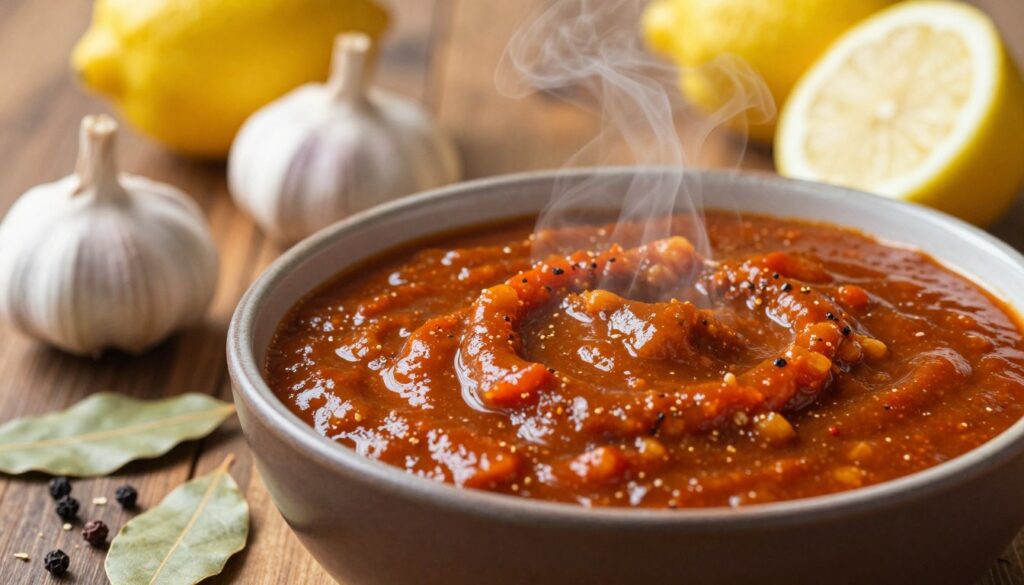
Louisiana’s seafood boil sauce is known for its bold flavors and spicy taste. It’s a mix of Cajun and Creole cooking styles.
Cajun vs. Creole Influences
Cajun sauce is hearty and rustic, while Creole sauce is more refined and complex. Both add special flavors to the dish.
Key Distinguishing Ingredients
What makes Louisiana-style sauce special includes:
- Hot peppers
- Garlic
- Lemons
- A blend of spices like paprika, thyme, and oregano
Maryland Crab Boil Sauce
Maryland’s crab boil sauce is famous for Old Bay seasoning. This blend is key to Chesapeake Bay’s taste.
Old Bay and Beyond
While Old Bay is essential, some recipes add more to the flavor.
Beer-Infused Options
Beer is used in some Maryland recipes. It adds depth and complexity to the sauce.
Low Country Boil Sauce
Low Country boil sauce, from South Carolina and Georgia, is sweeter and balanced.
Southern Traditions
This style reflects Southern hospitality and Low Country cuisine.
Sweet and Savory Balance
The sauce blends sweet and savory perfectly. It’s a hit with seafood lovers.
West Coast Interpretations
On the West Coast, seafood boil sauce has Asian flavors and fresh herbs.
Asian-Influenced Variations
West Coast recipes use soy sauce, ginger, and sesame oil. This gives the sauce an Asian twist.
Fresh Herb Additions
Cilantro, basil, or parsley add freshness and brightness to the sauce.
These regional sauces show the diversity and richness of seafood boil sauce. They offer a wide range of tastes for everyone.
Pairing Your Homemade Seafood Boil Sauce with Different Seafood
Now that you have your homemade seafood boil sauce, it’s time to find the best seafood to pair with it. Your sauce goes well with many seafood types, like crab, shrimp, lobster, and mussels.
Best Sauce for Crab
Crab is a favorite for seafood boils, and your sauce can make it even better. The type of crab you use can change how the sauce pairs with it.
Snow Crab vs. Dungeness
Snow crab is sweeter and more delicate, while Dungeness crab is richer. You can adjust your sauce to match these flavors.
King Crab Considerations
King crab legs are known for their tender meat. A sweeter, more robust sauce works well with them. Adding a bit of citrus or honey can enhance their natural sweetness.
Perfect Pairings for Shrimp
Shrimp is a seafood favorite that pairs well with your homemade boil sauce. The size and how the shrimp are prepared can affect how the sauce works with them.
Size Matters
Bigger shrimp can handle bolder flavors, while smaller ones need a lighter touch to avoid being overpowered.
Shell-On vs. Peeled
Choosing to leave shrimp shell-on or peeled changes how the sauce sticks to them. Shell-on shrimp need a thicker sauce, while peeled ones do better with a lighter one.
Sauce for Lobster and Crawfish
Lobster and crawfish add luxury to any seafood boil. Your homemade sauce can highlight their unique tastes.
Enhancing Sweet Lobster Meat
Lobster meat is sweet. A light, garlicky, and slightly lemony sauce is perfect for it, balancing its sweetness.
Crawfish Boil Specifics
Crawfish boils are common in many places. For them, a bold and spicy sauce is best, matching their strong flavor.
Complementing Clams and Mussels
Clams and mussels add texture and flavor to boils. Your sauce can enhance their brininess and softness.
Delicate Flavor Balancing
For clams and mussels, a light, aromatic sauce is better. It lets their natural flavors stand out.
Broth Integration Techniques
When cooking clams and mussels, mixing your sauce into the broth is key. It infuses the seafood with flavor, making the dish taste better.
Serving Suggestions and Complete Meal Planning
Now that you have your homemade seafood boil sauce, let’s talk about serving it. A well-thought-out meal makes the experience better for everyone.
Traditional Accompaniments
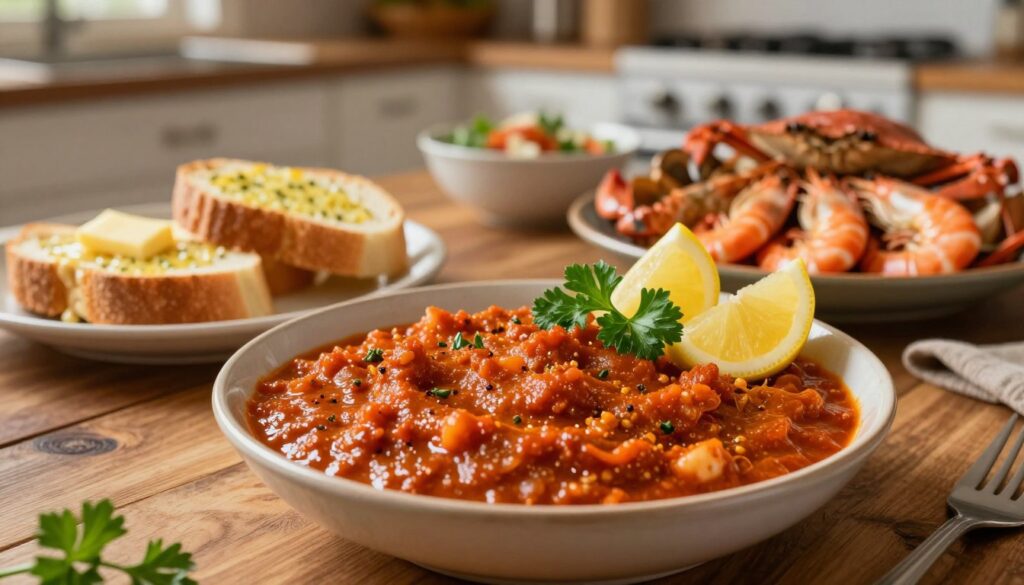
A seafood boil often comes with sides to go with the sauce. Some favorites are:
- Corn on the cob, which goes well with the boil’s flavors
- Boiled potatoes, adding a filling touch
- Sausage, like Andouille or smoked, for a spicy flavor
Corn, Potatoes, and Sausage
These are key in many boil recipes. Cook them until soft, then toss in your sauce.
Bread Options for Sopping
Remember to have crusty bread for the sauce. French bread or sourdough works great.
Plating and Presentation
How you serve your boil can make a big difference. Here are some ideas:
- Family-style service, where everyone shares from the center
- Individual portions, so each guest has their own
Family-Style Service
This style is perfect for family gatherings and casual meals.
Individual Portions
For a more formal meal, serve each guest their own. This way, they can pick their seafood and sides.
Beverage Pairings
The right drink can make your meal even better. Here are some good choices:
- Beer, especially light lagers or pale ales
- White wine, like Sauvignon Blanc or Pinot Grigio
- Non-alcoholic drinks like lemonade or iced tea
Beer Selections
A cold beer can cut through the boil’s richness. Choose a light, refreshing one.
Wine and Non-Alcoholic Options
For wine or non-alcoholic drinks, there are many options. A dry white wine or a flavorful iced tea works well.
Desserts to Follow
After your seafood boil, a light dessert is nice. Here are some ideas:
- Light desserts like key lime pie or lemon bars
- Local favorites, such as beignets or bananas Foster
Light Refreshing Choices
These desserts balance the meal’s richness.
Regional Favorites
Choosing a local dessert adds a fun touch to your meal.
Storage and Make-Ahead Tips for Seafood Boil Sauce
Storing your seafood boil sauce right keeps the flavors bright. It’s great for big gatherings or enjoying a meal later. Knowing how to store it is key.
Refrigeration Guidelines
When you chill your seafood boil sauce, pick the right containers. This keeps it fresh.
Proper Containers
Choose airtight glass or plastic containers made for food. Make sure they’re clean and dry before adding the sauce.
Maximum Freshness Timeline
Your sauce can stay fresh for up to 2 weeks in the fridge. Always check for spoilage signs like bad smells or mold before using.
Freezing Your Sauce
Freezing extends your sauce’s life. Here’s how to freeze it right:
Portioning for Convenience
Split the sauce into smaller parts before freezing. This makes thawing what you need easier.
Thawing Methods
Thaw frozen sauce in the fridge overnight or use the microwave’s defrost setting. Don’t thaw at room temperature to avoid bacteria.
| Storage Method | Duration | Thawing Method |
|---|---|---|
| Refrigeration | Up to 2 weeks | N/A |
| Freezing | Up to 3 months | Refrigerator or Microwave Defrost |
Reheating Methods
You can reheat your sauce on the stovetop or in the microwave. Make sure it’s hot enough to avoid food poisoning.
Maintaining Texture
Stir the sauce often while reheating. This keeps it smooth.
Refreshing Flavors
If the sauce tastes less vibrant after storage, add some fresh lemon juice or herbs. This will refresh the flavors.
Conclusion
Now you know how to make an authentic seafood boil sauce. Follow the steps from this article to create a sauce that suits your taste. You can make a traditional seafood boil sauce that you’ll love.
Try out different regional flavors and pairings to find your favorite. Whether it’s for a big group or a small dinner, your homemade sauce will wow everyone. So, be creative and enjoy the delicious flavors of the sea with your own sauce.
With your new kitchen skills, you can try out different ways to serve and plan your seafood boil. Make your experience even more special.
FAQ
What is seafood boil sauce made of?
Seafood boil sauce combines butter and oil with garlic and onions. It also includes spices, seasonings, and liquid like broth and citrus.
How do I adjust the heat level in my seafood boil sauce?
To change the heat, add more or less hot peppers or hot sauce. For a milder taste, use fewer peppers or remove seeds and membranes.
Can I make seafood boil sauce ahead of time?
Yes, you can make it ahead. It keeps in the fridge for a week or in the freezer for months. Just reheat it gently before using.
What are some regional variations of seafood boil sauce?
There are many variations. Louisiana-Style, Maryland Crab Boil, Low Country Boil, and West Coast styles each have their own flavors and ingredients.
How do I pair seafood boil sauce with different types of seafood?
Choose the right sauce for your seafood. Delicate seafood like crab and shrimp go well with citrus-based sauces. Hearty seafood like lobster and crawfish prefer spicier sauces.
What are some traditional accompaniments to seafood boil?
Traditional sides include corn on the cob, potatoes, and smoked sausage. You can also serve with crusty bread or over rice.
How do I store leftover seafood boil sauce?
Store it in an airtight container in the fridge for up to a week or freeze for months. Reheat it gently before using.
Can I use seafood boil sauce for other dishes?
Yes, it’s great as a flavor enhancer for soups, stews, or as a dip for fried foods.
How do I make a homemade seafood boil sauce from scratch?
Start by sautéing aromatics in fat. Then add spices and seasonings, followed by liquid. Simmer it to blend the flavors.
What are some tips for making the best seafood boil sauce?
Use fresh ingredients, layer flavors, and control the heat. This will help you achieve the perfect balance of taste.