

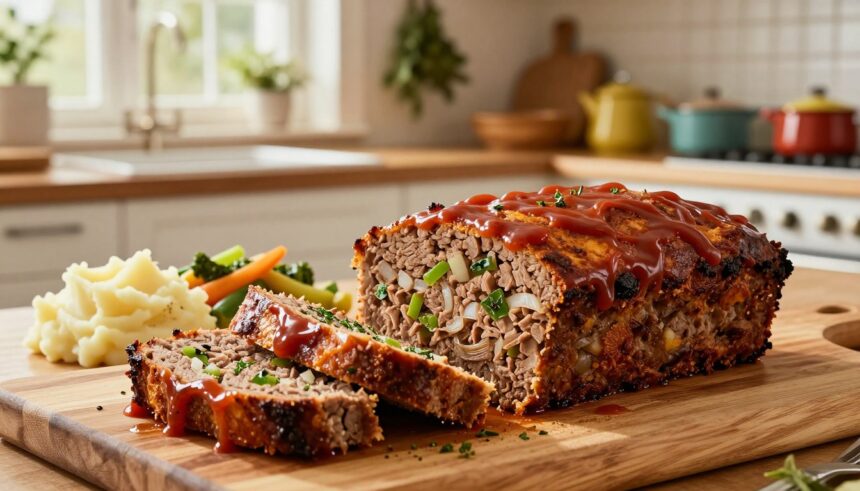
Creating a delicious homemade meatloaf is a culinary delight that brings families together. It’s a classic comfort food dish that is both easy to make and packed with flavor.
- Why This Classic Meatloaf Recipe Stands Out
- Essential Ingredients for Perfect Meatloaf
- Equipment You’ll Need
- The Ultimate Meatloaf Recipe
- Step-by-Step Cooking Instructions
- Creating the Perfect Meatloaf Glaze
- Pro Tips for Moist and Flavorful Meatloaf
- Don’t Overmix the Meat
- Sautéing Onions Before Adding
- Free-Form vs. Loaf Pan Baking
- Resting Before Slicing
- Cooking Times and Temperature Guide
- Perfect Side Dishes to Serve with Meatloaf
- Storage and Leftover Ideas
- Make-Ahead and Meal Prep Options
- Why This Homemade Meatloaf Will Become Your Go-To Recipe
- FAQ
- What is the best way to prevent a meatloaf from drying out?
- Can I make a meatloaf ahead of time?
- How do I achieve a perfectly glazed meatloaf?
- What are some good side dishes to serve with meatloaf?
- How do I know when my meatloaf is fully cooked?
- Can I use different types of meat for a meatloaf?
- How long can I store leftover meatloaf?
A well-crafted meatloaf can be a staple in any household, providing a satisfying meal that can be enjoyed on its own or paired with a variety of sides. In this article, we will explore the best homemade meatloaf recipe that is sure to become a favorite.
Key Takeaways
- Easy-to-follow instructions for making a delicious homemade meatloaf
- Tips for customizing the recipe to suit your taste preferences
- Ideas for pairing your meatloaf with complementary sides
- Insights into the benefits of making a homemade meatloaf
- Simple ingredients required for the best homemade meatloaf recipe
Why This Classic Meatloaf Recipe Stands Out
A well-crafted meatloaf is more than just a meal; it’s a nostalgic experience that brings families together. This classic comfort food has been a staple in many American households for generations.
A Family Favorite Comfort Food
Meatloaf is a dish that evokes memories of home-cooked meals and family gatherings. It’s a comforting, homey meal that’s easy to make and always a crowd-pleaser. Some key reasons it’s a family favorite include:
- Easy to make in large quantities
- Customizable with various ingredients
- A satisfying, filling meal
What Makes This Recipe Special
This meatloaf recipe stands out due to its perfect balance of flavors and moist texture. The combination of ground meat, aromatics, and seasonings creates a rich, savory flavor profile that’s hard to resist. 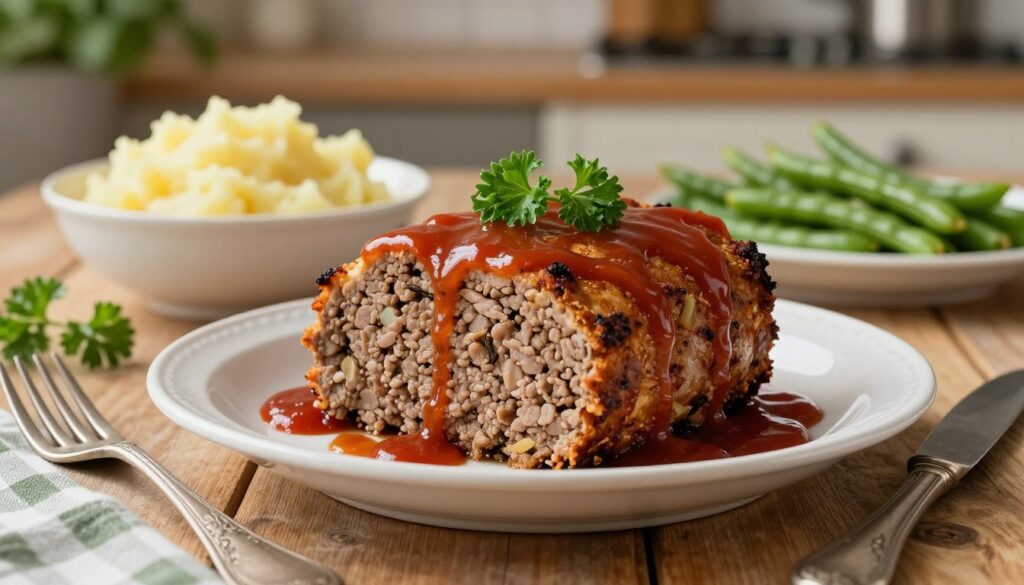
Essential Ingredients for Perfect Meatloaf
Creating the perfect meatloaf begins with understanding the essential ingredients that make it stand out. A great meatloaf is a symphony of flavors and textures, all coming together to create a dish that’s both comforting and satisfying.
The Meat Selection
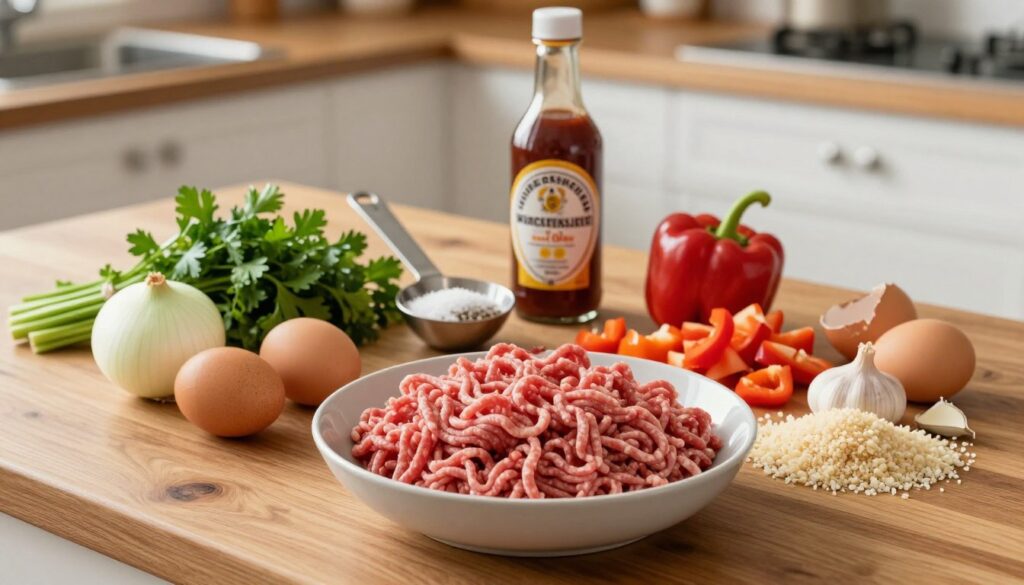
The foundation of any good meatloaf is the meat itself. A mix of ground beef and ground pork is often used, providing a balance between flavor and moisture. The beef adds a richness, while the pork keeps the meatloaf juicy.
Aromatics and Seasonings
Aromatics such as onions, garlic, and sometimes bell peppers, add depth to the meatloaf. Seasonings including salt, pepper, and herbs like parsley or thyme, enhance the overall flavor. These ingredients work together to create a complex taste profile.
Binding Ingredients
Binding ingredients are crucial for holding the meatloaf together. Eggs and breadcrumbs are commonly used for this purpose. The eggs help bind the mixture, while the breadcrumbs absorb excess moisture and add texture.
Equipment You’ll Need
To make the perfect meatloaf, you’ll need the right equipment. The type of baking pan you use can significantly affect the outcome of your meatloaf.
Baking Options: Sheet Pan vs. Loaf Pan
You have two primary options for baking your meatloaf: a sheet pan or a loaf pan. A sheet pan allows for even browning and a crisper exterior, while a loaf pan helps maintain the meatloaf’s shape and can make slicing easier. Consider the texture and presentation you prefer when choosing between these options.
| Baking Option | Advantages | Disadvantages |
|---|---|---|
| Sheet Pan | Even browning, crisper exterior | May spread during baking |
| Loaf Pan | Maintains shape, easier slicing | Less browning on the sides |
Other Kitchen Tools
In addition to a baking pan, you’ll need a few other kitchen tools, including a large mixing bowl for combining ingredients, a wooden spoon or spatula for mixing, and a meat thermometer to ensure your meatloaf is cooked to a safe internal temperature.
The Ultimate Meatloaf Recipe

Discover the secret to the ultimate meatloaf recipe that’s packed with flavor and tender texture. This classic comfort food dish is sure to become a staple in your household.
Ingredient Measurements
To make the ultimate meatloaf, you’ll need the following ingredients: 1 lb ground beef, 1/2 cup breadcrumbs, 1/2 cup chopped onion, 2 cloves garlic, 1 egg, 1/4 cup ketchup, 1 tbsp Worcestershire sauce, 1 tsp dried oregano, salt, and pepper. Using fresh ingredients will ensure the best flavor.
Preparation Method
Preheat your oven to 375°F (190°C). In a large bowl, combine the ground beef, breadcrumbs, chopped onion, garlic, egg, ketchup, Worcestershire sauce, and dried oregano. Mix the ingredients with your hands or a wooden spoon until just combined; avoid overmixing. Shape the mixture into a loaf and place it on a baking sheet lined with parchment paper. Bake for 45-50 minutes or until the meatloaf reaches an internal temperature of 160°F (71°C). Let it rest for 10 minutes before slicing and serving.
Step-by-Step Cooking Instructions
Achieving a perfectly cooked meatloaf involves several crucial steps, beginning with the preparation of the meatloaf mixture. This process ensures that all ingredients are well incorporated, resulting in a uniform flavor and texture throughout the meatloaf.
Preparing the Meatloaf Mixture
To prepare the meatloaf mixture, combine ground meat, aromatics, seasonings, and binding ingredients in a large bowl. Use your hands or a wooden spoon to mix these ingredients until they are just combined. Be careful not to overmix, as this can lead to a dense meatloaf.
Shaping the Meatloaf
Once the mixture is ready, shape it into a loaf. You can either form it by hand or use a loaf pan to achieve the desired shape. If using a loaf pan, gently remove the meatloaf and place it on a baking sheet.
Initial Baking Phase
Preheat your oven to 375°F (190°C). Place the shaped meatloaf on a baking sheet lined with parchment paper and bake for about 30 minutes. This initial baking phase helps to set the shape and start cooking the meatloaf.
Adding the Glaze
After the initial baking phase, brush your prepared glaze over the meatloaf. Return it to the oven and continue baking for an additional 15-20 minutes, or until the glaze is caramelized and the meatloaf is cooked through.
| Cooking Stage | Temperature | Time |
|---|---|---|
| Initial Baking | 375°F (190°C) | 30 minutes |
| Glaze Baking | 375°F (190°C) | 15-20 minutes |
Creating the Perfect Meatloaf Glaze
Creating the perfect glaze is an art that requires the right balance of ingredients. A well-made glaze can elevate your meatloaf, adding a layer of flavor and moisture.
Classic Sweet and Tangy Glaze Ingredients
The classic sweet and tangy glaze is a staple for meatloaf. It typically includes a mix of ketchup, brown sugar, and vinegar, such as apple cider vinegar. Some recipes also incorporate mustard for an added depth of flavor. The key is to balance these ingredients so that no single flavor dominates.
- Ketchup
- Brown sugar
- Vinegar (e.g., apple cider vinegar)
- Mustard (optional)
Mixing and Applying the Glaze
To mix the glaze, combine the ingredients in a bowl and stir until smooth. It’s best to apply the glaze during the last 30 minutes of baking. This allows the glaze to set and caramelize, creating a sticky, flavorful crust on the meatloaf.
Pro Tips for Moist and Flavorful Meatloaf
Achieving a moist and flavorful meatloaf requires some insider knowledge. To create a truly exceptional dish, it’s essential to understand the techniques that make a difference.
Don’t Overmix the Meat
Overmixing can lead to a dense, tough meatloaf. Mix your ingredients just until they come together. This helps preserve the texture of the meat and ensures a tender final product.
Sautéing Onions Before Adding
Sautéing onions before adding them to your meatloaf mixture can enhance the overall flavor. This process softens the onions and brings out their natural sweetness, adding depth to your meatloaf.
Free-Form vs. Loaf Pan Baking
The way you bake your meatloaf can affect its moisture and flavor. Baking in a loaf pan can help retain moisture, while a free-form loaf can develop a crisper crust. Choose the method that best suits your preferences.
Resting Before Slicing
Letting your meatloaf rest before slicing is crucial. This allows the juices to redistribute, ensuring that each slice is moist and flavorful.
| Tip | Benefit |
|---|---|
| Don’t Overmix | Tender Texture |
| Sauté Onions | Enhanced Flavor |
| Free-Form Baking | Crisper Crust |
| Rest Before Slicing | Moist and Flavorful |
Cooking Times and Temperature Guide
To ensure your meatloaf is cooked to perfection, it’s crucial to follow a reliable cooking time and temperature guide. Cooking a meatloaf involves more than just throwing it in the oven; it requires attention to detail to achieve that perfect loaf.
Cooking Different Sized Meatloaves
The size of your meatloaf significantly affects its cooking time. A larger meatloaf will take longer to cook through, while smaller ones will be done quicker. For instance, a standard-sized meatloaf typically takes about 45-60 minutes to cook at 375°F (190°C). Always adjust cooking times based on the size and shape of your meatloaf.
How to Check for Doneness
Checking if your meatloaf is done involves more than just checking the time. Use a meat thermometer to ensure the internal temperature reaches 160°F (71°C). This is crucial for food safety. Additionally, check that the meatloaf is firm to the touch and the edges are slightly browned.
Perfect Side Dishes to Serve with Meatloaf
When it comes to serving meatloaf, the right side dishes can elevate the entire meal. A well-rounded selection of sides can complement the rich flavors of the meatloaf, creating a satisfying dining experience.
Classic Potato Sides
Potatoes are a timeless pairing with meatloaf. Consider making mashed potatoes or roasted potato wedges to add a comforting element to your meal. These classic options are easy to prepare and always a crowd-pleaser.
Vegetable Pairings
To balance the heartiness of meatloaf, incorporate some steamed vegetables or a fresh green salad into your meal. Roasted vegetables like Brussels sprouts or carrots can also add a delightful contrast in texture and flavor.
Other Complementary Sides
Other sides that pair well with meatloaf include creamy mac and cheese, garlic bread, or a simple coleslaw. These options offer a variety of flavors and textures that can enhance your meatloaf dinner.
Storage and Leftover Ideas
Meatloaf leftovers can be a treasure trove of meal ideas, when stored correctly. Ensuring that your delicious homemade meatloaf remains fresh for future meals requires proper storage techniques.
Refrigerating Leftover Meatloaf
To keep your meatloaf fresh, refrigerate it within two hours of cooking. Wrap it tightly in plastic wrap or aluminum foil, or store it in an airtight container. It can be safely refrigerated for up to 3-4 days.
Freezing Instructions
For longer storage, consider freezing your meatloaf. Slice it first for easier reheating later. Wrap individual slices or the whole loaf tightly in freezer-safe wrap or bags. Frozen meatloaf can be stored for up to 3 months. When you’re ready, thaw it overnight in the refrigerator before reheating.
Creative Ways to Use Leftovers
Leftover meatloaf can be repurposed into various dishes. Some ideas include:
- Meatloaf sandwiches: Slice the meatloaf thinly and serve on a bun.
- Meatloaf hash: Dice the meatloaf and mix with diced potatoes and onions, then pan-fry until crispy.
- Meatloaf soup: Add diced meatloaf to your favorite soup recipe for added protein.
Make-Ahead and Meal Prep Options
Meatloaf is an ideal candidate for meal prep due to its ease of preparation and reheating. This makes it perfect for busy schedules or planning meals in advance.
Preparing Meatloaf in Advance
You can prepare the meatloaf mixture ahead of time and store it in the refrigerator for up to a day before baking. Alternatively, you can shape the meatloaf, wrap it tightly, and freeze it for later use.
- Assemble the meatloaf mixture and refrigerate overnight.
- Shape the meatloaf, wrap it tightly, and freeze for up to 3 months.
Reheating Methods for Best Results
To reheat meatloaf, you can use the oven or microwave. For the best results, wrap the meatloaf in foil and heat it in the oven at 350°F until warmed through.
- Oven reheating: Wrap in foil and heat at 350°F.
- Microwave reheating: Slice and heat on a microwave-safe dish.
Why This Homemade Meatloaf Will Become Your Go-To Recipe
Elevate your home cooking with this mouth-watering meatloaf that’s sure to impress. This recipe combines the perfect blend of flavors and textures, making it a go-to dish for any occasion.
With its tender results and simple preparation, it’s ideal for both weeknight dinners and special gatherings.
FAQ
What is the best way to prevent a meatloaf from drying out?
To keep your meatloaf moist, avoid overmixing the ingredients, and don’t overbake. Using a loaf pan can also help retain moisture. Additionally, incorporating ingredients like milk and eggs can enhance the overall texture.
Can I make a meatloaf ahead of time?
Yes, you can prepare the meat mixture and shape the loaf a day in advance. Store it in the refrigerator overnight and bake it the next day. You can also freeze it for later use.
How do I achieve a perfectly glazed meatloaf?
To get a great glaze, mix ketchup, brown sugar, and Worcestershire sauce together. Brush the glaze over the meatloaf during the last 20-30 minutes of baking. This will give you a sweet and tangy topping.
What are some good side dishes to serve with meatloaf?
Classic options include mashed potatoes, roasted vegetables, and a simple green salad. You can also consider serving it with garlic bread or a side of steamed broccoli.
How do I know when my meatloaf is fully cooked?
Use a thermometer to check the internal temperature. It should reach 160°F (71°C) for ground beef. Let it rest for a few minutes before slicing to ensure the juices redistribute.
Can I use different types of meat for a meatloaf?
While ground beef is traditional, you can experiment with other meats like ground turkey or pork. Just be aware that the flavor and texture may vary.
How long can I store leftover meatloaf?
Cooked meatloaf can be refrigerated for up to 3-4 days. You can also freeze it for up to 3 months. Reheat it in the oven or microwave until warmed through.