
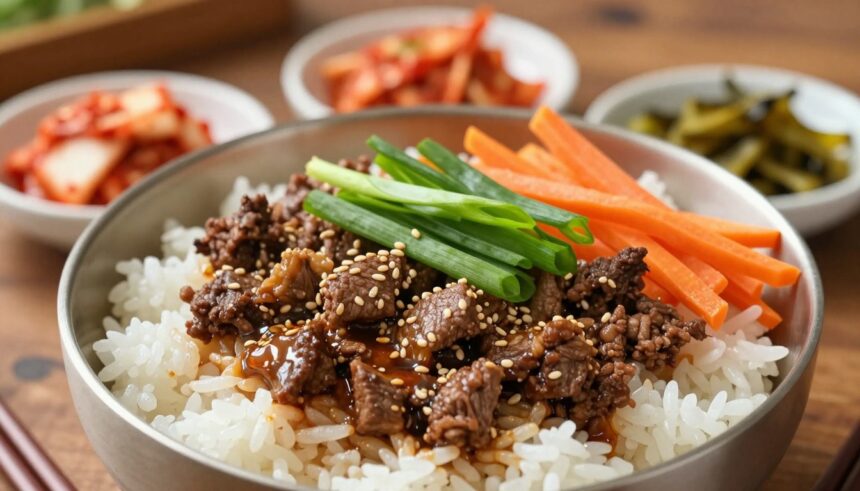
Discover a flavorful and quick meal with our Easy Korean Ground Beef Bowl Recipe. This dish tastes like traditional Korean BBQ, or bulgogi, but with a twist: we’re using ground beef instead of thinly sliced sirloin for a faster preparation time.
- What Makes Korean Ground Beef Bowls So Popular
- The Perfect Korean Ground Beef Bowl
- Essential Ingredients for Authentic Flavor
- Kitchen Tools You’ll Need
- Step-by-Step Cooking Instructions
- Best Base Options for Your Korean Ground Beef Bowl
- Vegetable Additions and Toppings
- Recipe Variations and Customizations
- Storage, Meal Prep, and Reheating Tips
- Conclusion
- FAQ
This recipe combines the rich flavors of Korean cuisine with the convenience of a 20-minute meal, making it perfect for busy weeknights. With healthy ground beef, ginger, garlic, and a touch of honey, this dish is both wholesome and delicious.
Our recipe is not only quick but also versatile, allowing you to customize it with your favorite vegetables and toppings. It’s ideal for meal prep, as it can be prepared ahead of time and enjoyed throughout the week.
Key Takeaways
- Quick and flavorful meal ready in 20 minutes
- Uses ground beef for a faster alternative to traditional bulgogi
- Combines rich Korean flavors with convenience
- Versatile recipe for customization with various vegetables and toppings
- Ideal for meal prep and busy weeknights
What Makes Korean Ground Beef Bowls So Popular
Korean Ground Beef Bowls have gained immense popularity due to their quick preparation time and rich flavor profile. This dish is an excellent example of how a simple, yet flavorful meal can be prepared in no time.
A Quick Alternative to Traditional Bulgogi
Traditional Bulgogi is a beloved Korean dish, but it requires marinating and cooking thinly sliced beef, which can be time-consuming. Korean Ground Beef Bowls offer a quicker alternative by using ground beef, significantly reducing preparation time without compromising on flavor.
Ready in Under 30 Minutes
One of the key reasons Korean Ground Beef Bowls are so popular is that they can be ready in under 30 minutes. This makes them ideal for busy weeknights when time is of the essence. The quick cooking time doesn’t compromise the depth of flavor, as the ground beef quickly absorbs the savory-sweet sauce.
| Benefits | Description |
|---|---|
| Quick Preparation | The entire recipe can be prepared and ready to serve in under 30 minutes. |
| Flavorful | The ground beef absorbs the savory-sweet sauce during the brief cooking process, ensuring rich flavor. |
| Convenient | Most ingredients are pantry staples, eliminating the need for special shopping trips. |
| Easy Cleanup | Everything can be prepared in a single skillet with just a few measuring tools. |

By utilizing ground beef and a streamlined cooking process, Korean Ground Beef Bowls offer a convenient, flavorful, and quick meal solution that can be on your table in no time, making them a perfect recipe for busy households.
The Perfect Korean Ground Beef Bowl
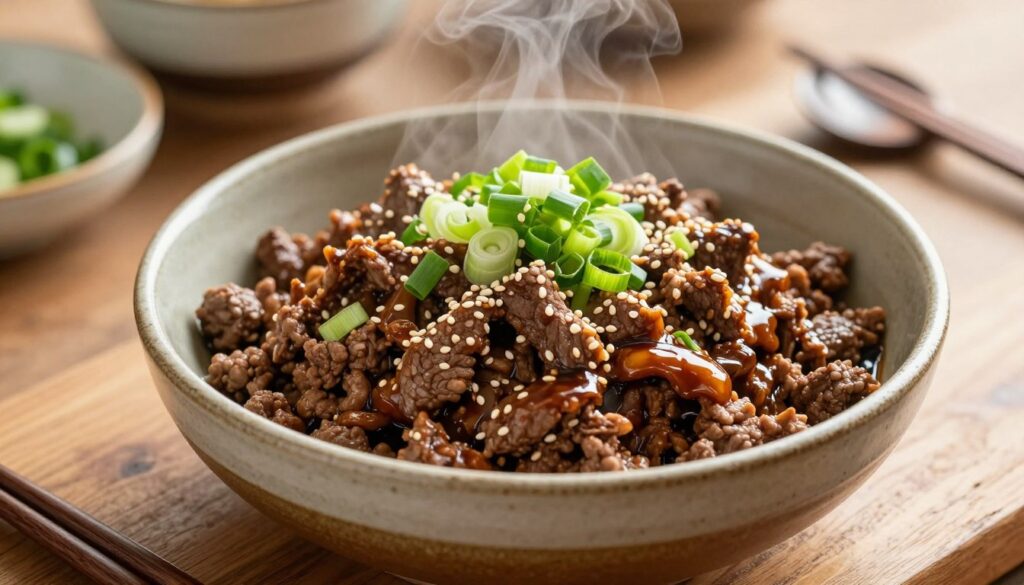
The Perfect Korean Ground Beef Bowl is a symphony of flavors and textures that delights the senses. With healthy ground beef, ginger, garlic, sesame oil, a touch of honey, and plenty of green onions, this recipe is perfect for serving over brown rice with vegetables for an easy, wholesome meal.
Balance of Sweet, Savory, and Spicy Flavors
The balance of flavors in a Korean Ground Beef Bowl is achieved by combining sweet ingredients like honey, savory elements such as soy sauce, and spicy components like gochujang. This harmonious blend creates a dish that is both flavorful and satisfying. The use of ingredients like ginger and garlic adds depth to the flavor profile.
Nutritional Benefits
Korean Ground Beef Bowls offer numerous nutritional benefits when prepared with lean ground beef and a variety of vegetables. The addition of carrots and other vegetables increases the fiber and vitamin content of the dish. Serving the beef over brown rice adds whole grains, providing sustained energy. The combination of protein from the beef and micronutrients from the vegetables creates a well-rounded meal.
| Nutritional Component | Benefit |
|---|---|
| Lean Ground Beef | High-quality protein with minimal saturated fat |
| Vegetables (e.g., Carrots, Cucumbers) | Increased fiber, vitamins, and minerals |
| Brown Rice | Whole grains for sustained energy |
Essential Ingredients for Authentic Flavor
Creating an authentic Korean Ground Beef Bowl requires a blend of essential ingredients that come together to produce a harmonious balance of flavors. The dish’s overall taste and aroma are significantly influenced by the quality and combination of these core components.
Protein Options
The primary protein source in a traditional Korean Ground Beef Bowl is ground beef. However, alternatives like ground chicken, pork, or tofu can be used for variation or dietary preferences. The choice of protein affects the flavor and texture of the dish.
The Key Sauce Components
The sauce is a critical element that brings the dish together. Key components include soy sauce, Korean chili paste (gochujang), soy sauce, and sesame oil. These ingredients provide a deep, savory flavor and a touch of spiciness. Soy sauce and gochujang are particularly important for their umami taste and spicy kick.
Aromatics and Seasonings
Aromatics and seasonings play a vital role in enhancing the flavor profile. Ingredients like garlic, ginger, and green onions add depth and freshness. Red pepper flakes contribute heat, while sesame seeds provide a nutty flavor and crunchy texture. These elements work together to create a complex and engaging taste experience.
- Aromatics like garlic and ginger are sautéed to bring out their natural oils and intensify the dish’s flavor.
- Green onions serve as both a flavor component and a garnish, adding freshness and visual appeal.
- Red pepper flakes adjust the dish’s heat level, allowing for customization to individual tastes.
Kitchen Tools You’ll Need

The right kitchen tools can make a significant difference in preparing this easy Korean Ground Beef Bowl recipe. To get started, you’ll need some basic equipment to handle tasks such as browning the ground beef and mixing the sauce.
Basic Equipment
Basic kitchen equipment includes a large skillet or wok for stir-frying the ground beef and vegetables, a cutting board for chopping ingredients, and a measuring cup for accurately measuring ingredients. Using a garlic press can expedite preparation and ensure even distribution of garlic flavor throughout the dish.
Optional Helpful Tools
Some optional tools can further enhance your cooking experience. A microplane or ginger grater makes quick work of fresh ginger, creating a fine paste that incorporates seamlessly into the sauce. Other helpful tools include a citrus juicer, meal prep containers, a kitchen scale, small pinch bowls, and a splatter screen, all of which can streamline your cooking process and improve the final result.
Step-by-Step Cooking Instructions
To create a delicious Korean Ground Beef Bowl, follow these straightforward cooking steps. The process involves preparing a flavorful sauce, cooking the ground beef to perfection, and combining the two for a mouth-watering dish.
Preparing the Sauce
Start by whisking together the ingredients for the sauce, including soy sauce, garlic, ginger, and sesame oil, in a small bowl. This mixture will be the foundation of the dish’s flavor. Ensure it’s well combined before setting it aside.
Cooking the Ground Beef
Cook the ground beef in a large skillet over medium-heat until it’s fully browned, breaking it up into small pieces as it cooks. Once done, drain any excess fat to prevent the dish from becoming too greasy.
Combining and Finishing the Dish
Pour the prepared sauce over the cooked ground beef and stir to combine. Let it simmer for a couple of minutes until the sauce has thickened and the beef is well coated. Finally, sprinkle sesame seeds on top for added flavor and texture. Serve the mixture hot, garnished with green onions if desired.
| Cooking Step | Action | Time |
|---|---|---|
| Preparing the Sauce | Whisk ingredients together | 2 minutes |
| Cooking the Ground Beef | Cook until browned | 5-7 minutes |
| Combining and Finishing | Simmer sauce and beef together | 2-3 minutes |
Best Base Options for Your Korean Ground Beef Bowl
From classic rice to innovative noodle options, the base of your Korean Ground Beef Bowl is a versatile element that can be tailored to your taste. The right base can enhance the flavors and textures of the dish, making it more enjoyable.
Traditional Rice Options
Steamed white or brown rice is a traditional and straightforward choice for Korean Ground Beef Bowls. It’s a classic for a reason, providing a simple yet effective base that complements the savory beef.
Low-Carb Alternatives
For those looking for low-carb options, cauliflower rice or zucchini noodles can be great alternatives. These options not only reduce the carb content but also add a fresh twist to the traditional bowl.
Noodle Variations
If you’re a fan of noodles with your stir-fries, consider these options for your beef bowl:
- Chewy Rice Noodles: Offer an interesting textural contrast while maintaining gluten-free status.
- Japanese Udon Noodles: Provide a substantial base with their thick, wheat-based texture.
- Buckwheat Soba Noodles: Introduce a nutty flavor that complements the sesame notes in the Korean beef seasoning.
- Glass Noodles (Japchae Noodles): Made from sweet potato starch, they have a bouncy texture and absorb flavors beautifully.
- Ramen Noodles: Without the seasoning packet, they offer a quick and budget-friendly alternative.
These noodle variations can be prepared according to package directions while the beef is cooking, making it easy to have both components ready simultaneously. Experimenting with different bases can lead to new favorite recipes and variations of the Korean Ground Beef Bowls, all centered around the flavorful ground beef and its savory sauce served over a bed of rice or noodles.
Vegetable Additions and Toppings
A well-crafted Korean Ground Beef Bowl relies on a balance of flavors and textures, achieved through various vegetable additions and toppings. These elements not only enhance the visual appeal but also contribute to the overall flavor profile.
Quick-Pickled Vegetables
Quick-pickled vegetables can add a tangy, crunchy contrast to your Korean Ground Beef Bowl. Consider using thinly sliced cucumbers, carrots, or radishes. These quick pickles can be made in just a few minutes using a mixture of vinegar, sugar, and salt.
Fresh Garnishes
Fresh garnishes are the finishing touch to your Korean Ground Beef Bowl. Options include thinly sliced green onions or scallions for a mild onion flavor, toasted sesame seeds for added crunch, and fresh cilantro leaves for a citrusy note. You can also add thinly sliced fresh chilis for extra heat or a sprinkle of furikake for complexity. Serve immediately, garnished with green onion and sesame seeds, if desired.
| Garnish | Flavor Contribution | Texture |
|---|---|---|
| Green Onions | Mild Onion Flavor | Crunchy |
| Sesame Seeds | Nutty Flavor | Crunchy |
| Fresh Cilantro | Citrusy, Herbaceous | Fresh |
Recipe Variations and Customizations
The versatility of Korean Ground Beef Bowls allows for numerous variations to suit different preferences. Whether you’re looking to adjust the spice level, substitute proteins, or make the dish gluten-free, there are several options to consider.
Adjusting the Spice Level
To adjust the spice level, you can modify the amount of gochujang paste or add other spicy ingredients like diced jalapeños. For a milder flavor, reduce or omit the gochujang paste. For an extra kick, add more gochujang or introduce other spicy elements like sriracha sauce.
Protein Substitutions
If you prefer not to use ground beef, you can substitute it with other proteins like ground turkey, chicken, or tofu for a vegetarian option. Each protein will slightly alter the flavor and texture, so adjust seasonings accordingly to maintain the dish’s integrity.
Making It Gluten-Free
To make a gluten-free Korean Ground Beef Bowl, replace regular soy sauce with gluten-free tamari or coconut aminos. Ensure that other ingredients like gochujang paste and rice vinegar are also gluten-free. Stick to gluten-free bases like rice or cauliflower rice.
Storage, Meal Prep, and Reheating Tips
The Korean Ground Beef Bowl is a meal prep champion, offering flexibility and flavor. This recipe is ideal for preparing meals in advance, saving you time during the week.
Refrigerating Leftovers
Store cooked beef mixture and prepared vegetables in separate containers in the refrigerator for up to 5 days. This keeps the components fresh and ready for assembly.
Freezing Instructions
The beef mixture can be frozen for later use. Simply thaw overnight in the refrigerator or reheat directly from frozen. Cooked rice can also be frozen, then thawed and reheated as needed.
Meal Prep Strategies
To maximize meal prep efficiency, cook rice in bulk and portion it into individual containers. Prepare the beef mixture and vegetables in advance, storing them separately. Assemble the bowls just before serving, adding fresh onions and other garnishes as desired.
| Component | Storage Method | Reheating Instructions |
|---|---|---|
| Beef Mixture | Refrigerate or Freeze | Reheat in microwave or on stovetop |
| Cooked Rice | Refrigerate or Freeze | Reheat in microwave or on stovetop |
| Prepared Vegetables | Refrigerate | Serve chilled or at room temperature |
Conclusion
This easy Korean beef bowl recipe proves that authentic flavors can be achieved in just 20 minutes! With its perfect blend of convenience, flavor, and nutrition, it’s ideal for busy home cooks. Experiment with different protein options and vegetable additions to make it your own.
FAQ
What can I use instead of soy sauce in the recipe?
You can substitute soy sauce with tamari or coconut aminos for a gluten-free or lower-sodium option.
How can I adjust the spice level to my liking?
To make the dish spicier, add more red pepper flakes. For a milder flavor, reduce or omit the red pepper flakes.
Can I use other types of protein in the recipe?
Yes, you can substitute ground beef with ground turkey, chicken, or tofu for a different protein option.
What are some good vegetable additions to the dish?
You can add quick-pickled vegetables, such as carrots or cucumbers, or fresh garnishes like green onions and sesame seeds.
How do I store leftovers?
Store leftovers in an airtight container in the refrigerator for up to 3 days or freeze for up to 2 months.
Can I make the recipe gluten-free?
Yes, use gluten-free soy sauce or tamari and be mindful of the ingredients used in the recipe to ensure they are gluten-free.