

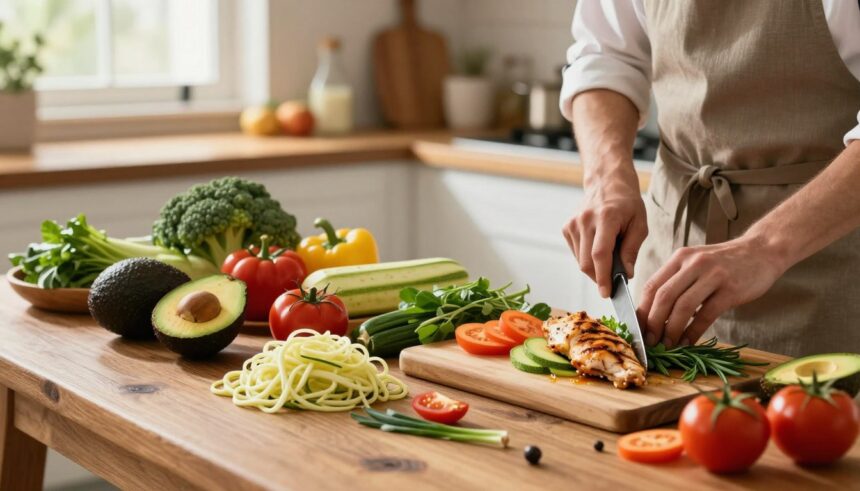
Imagine waking up feeling clear-minded and full of energy. You can enjoy your food without giving up flavor for health. It’s time to make your kitchen a place of personal wellness and joy.
- Understanding the Basics of Keto Cooking
- What Makes Keto Cooking Different from Traditional Methods
- The Macronutrient Ratio You Need to Follow
- How Ketosis Affects Your Food Choices and Cooking Style
- Building Your Keto-Friendly Pantry
- Essential Fats and Oils for High-Fat Low-Carb Recipes
- Low-Carb Flour Alternatives and Baking Staples
- Keto-Approved Sweeteners and Flavor Enhancers
- Quality Protein Sources to Keep Stocked
- Mastering Essential Techniques for Ketogenic Recipes
- Learning Fat-Based Cooking Methods
- How to Substitute High-Carb Ingredients Effectively
- Techniques to Maximize Flavor Without Adding Carbs
- Preparing Easy Keto Recipes for Breakfast
- Creating High-Protein Egg-Based Dishes
- Blending Quick Low-Carb Smoothies and Coffee Drinks
- Making Ahead Breakfast Options for Busy Mornings
- Crafting Satisfying Keto-Friendly Dishes for Lunch
- Building Creative Salad Bowls with Healthy Keto Meals
- Assembling Low-Carb Wraps and Lettuce Sandwiches
- Cooking Hearty Soups and Stews That Keep You Full
- Cooking Delicious Keto Diet Recipes for Dinner
- One-Pan Protein and Vegetable Combinations
- Using Keto-Friendly Pasta and Rice Alternatives
- Baking Flavorful Casseroles and Sheet Pan Dinners
- Implementing Keto Meal Prep for Weekly Success
- Planning Your Weekly Menu Around Your Schedule
- Using Batch Cooking Strategies for Low-Carb Cooking
- Applying Proper Storage Techniques to Maintain Freshness
- Following Time-Saving Tips for Efficient Preparation
- Making Snacks and Side Dishes to Round Out Your Meals
- Preparing Quick Fat Bombs and Energy Bites
- Roasting Vegetable-Based Sides with Maximum Flavor
- Whipping Up Keto-Approved Dips and Spreads
- Elevating Your Dishes with Bold Flavors
- Choosing Herbs and Spices That Transform Your Cooking
- Creating Keto-Friendly Sauces and Marinades from Scratch
- Balancing Acidity and Umami for Depth of Flavor
- Avoiding Common Mistakes in Your Keto Kitchen
- Identifying Hidden Carbs in Unexpected Ingredients
- Keeping Recipes Simple and Sustainable
- Incorporating Variety into Your Meal Rotation
- Maintaining Proper Electrolyte Balance Through Food
- Conclusion
- Avoiding Common Mistakes in Your Keto Kitchen
- What Makes Keto Cooking Different from Traditional Methods
- The Macronutrient Ratio You Need to Follow
- How Ketosis Affects Your Food Choices and Cooking Style
- Essential Fats and Oils for High-Fat Low-Carb Recipes
- Low-Carb Flour Alternatives and Baking Staples
- Keto-Approved Sweeteners and Flavor Enhancers
- Quality Protein Sources to Keep Stocked
- Learning Fat-Based Cooking Methods
- How to Substitute High-Carb Ingredients Effectively
- Techniques to Maximize Flavor Without Adding Carbs
- Creating High-Protein Egg-Based Dishes
- Blending Quick Low-Carb Smoothies and Coffee Drinks
- Making Ahead Breakfast Options for Busy Mornings
- Building Creative Salad Bowls with Healthy Keto Meals
- Assembling Low-Carb Wraps and Lettuce Sandwiches
- Cooking Hearty Soups and Stews That Keep You Full
- Preparing One-Pan Protein and Vegetable Combinations
- Using Keto-Friendly Pasta and Rice Alternatives
- Baking Flavorful Casseroles and Sheet Pan Dinners
- Planning Your Weekly Menu Around Your Schedule
- Using Batch Cooking Strategies for Low-Carb Cooking
- Applying Proper Storage Techniques to Maintain Freshness
- Following Time-Saving Tips for Efficient Preparation
- Preparing Quick Fat Bombs and Energy Bites
- Roasting Vegetable-Based Sides with Maximum Flavor
- Whipping Up Keto-Approved Dips and Spreads
- Choosing Herbs and Spices That Transform Your Cooking
- Creating Keto-Friendly Sauces and Marinades from Scratch
- Balancing Acidity and Umami for Depth of Flavor
- Identifying Hidden Carbs in Unexpected Ingredients
- Keeping Recipes Simple and Sustainable
- Incorporating Variety into Your Meal Rotation
- Maintaining Proper Electrolyte Balance Through Food
Starting a new lifestyle can feel tough at first. But learning to cook in this way can help you regain your energy and enjoy every bite. You can eat well and feel great at the same time.
This guide shows you how to make meals that nourish your body. These ketogenic recipes are more than just food; they open the door to a better life. Start your keto journey today and see how delicious true health can be.
Key Takeaways
- Learn to choose the right healthy fats for sustained energy.
- Discover how to minimize sugar without losing satisfying sweetness.
- Master simple preparation techniques designed for busy weeknights.
- Explore the science behind improved metabolic health and focus.
- Identify the best proteins to sustain your muscles and strength.
- Find inspiration for creative and satisfying low-carb snack options.
Understanding the Basics of Keto Cooking
Keto cooking is more than just following a recipe. It’s a new way of cooking that focuses on low-carb, high-fat meals. As you explore keto cooking, you’ll see it’s not just a diet. It’s a way of cooking that needs a deep understanding of its basics.
What Makes Keto Cooking Different from Traditional Methods
Keto cooking differs from traditional cooking in its macronutrient focus. Keto cooking emphasizes high-fat, moderate-protein, and low-carbohydrate intake. This is a big change from the usual high-carb, low-fat diets.
This change means cooks must pay more attention to their ingredients and cooking methods. For example, keto cooking often uses low-carb alternatives to traditional grains and starchy vegetables. It also involves cooking with high-fat methods, like frying in healthy oils.
The Macronutrient Ratio You Need to Follow
A typical keto diet aims to put your body into ketosis. This is when it burns fat for energy instead of carbs. To get into ketosis, the diet must have a specific macronutrient ratio: 70-80% of daily calories from fat, 15-20% from protein, and only 5-10% from carbohydrates.
Keeping this ratio is key to a successful keto diet. It requires careful planning and tracking of your daily food intake. This ensures the macronutrient balance is right.
How Ketosis Affects Your Food Choices and Cooking Style
When you’re in ketosis, your food choices get more limited. You need to focus on low-carb cooking and keto diet recipes that are high in fat and moderate in protein. This means avoiding foods high in carbs like bread, pasta, and sugary snacks. Instead, choose keto-friendly foods like meats, fish, eggs, full-fat dairy, and healthy oils.
Your cooking style also needs to change for the keto lifestyle. Techniques like grilling, roasting, and sautéing are key for making keto meals. Plus, learning to make tasty keto diet recipes can make the transition easier and more fun.
Building Your Keto-Friendly Pantry
A keto-friendly pantry is key to a successful ketogenic diet. You need the right ingredients to cook tasty and healthy keto meals.
Essential Fats and Oils for High-Fat Low-Carb Recipes
Quality fats and oils are vital for high-fat low-carb recipes. They add flavor and keep your diet balanced.
- Coconut oil
- Avocado oil
- Olive oil
- Ghee
- Lard
Use these fats and oils for cooking, baking, or to add flavor to your dishes.
Low-Carb Flour Alternatives and Baking Staples
Baking on a keto diet means using low-carb flour alternatives. Here are some good options:
| Flour Alternative | Carb Content per 100g | Common Uses |
|---|---|---|
| Almond flour | 5g | Baking, breading |
| Coconut flour | 10g | Baking, thickening |
| Flaxseed meal | 3g | Baking, as an egg substitute |
Keto-Approved Sweeteners and Flavor Enhancers
For those who love sweets, there are keto-approved sweeteners that won’t kick you out of ketosis.
- Stevia
- Erythritol
- Sucralose
- Monk fruit sweetener
Quality Protein Sources to Keep Stocked
Protein is crucial on a keto diet. Having quality protein sources means you can make healthy keto meals easily.
- Grass-fed beef
- Pasture-raised chicken
- Wild-caught fish
- Eggs
By focusing on these areas, you can build a keto-friendly pantry. It supports your diet and helps you make delicious keto dishes.
Mastering Essential Techniques for Ketogenic Recipes
Learning to cook keto meals well is all about mastering key techniques. These skills help you make tasty, keto-friendly dishes. As you start your keto journey, these techniques will make cooking easier and more fun.
Learning Fat-Based Cooking Methods
Fat-based cooking is key to the ketogenic diet. It uses high-fat ingredients for meals that taste great and follow keto rules. Start by learning to fry and sauté with healthy fats like olive oil, avocado oil, and butter.
Key Fat-Based Cooking Techniques:
- Pan-frying with butter or oil
- Sautéing vegetables in high-fat sauces
- Using fat-based marinades for meats
How to Substitute High-Carb Ingredients Effectively
Swapping out high-carb ingredients is vital for staying on the keto diet. Use almond flour instead of regular flour for baking. Choose zucchini noodles (zoodles) over pasta.
| High-Carb Ingredient | Keto Substitute |
|---|---|
| Traditional Flour | Almond Flour or Coconut Flour |
| Pasta | Zucchini Noodles or Shirataki Noodles |
| Sugar | Stevia or Erythritol |
Techniques to Maximize Flavor Without Adding Carbs
Getting flavor without carbs takes practice. Use herbs, spices, and other enhancers to boost your keto dishes’ taste. This way, you can enjoy great-tasting meals without adding carbs.
“The use of aromatic herbs and spices can transform a simple keto dish into a culinary masterpiece.” – Keto Cooking Expert
Try marinades, different seasoning blends, and umami-rich ingredients like mushrooms and soy sauce (in small amounts). With these techniques, you’ll make delicious, keto-friendly meals that taste amazing and help you reach your diet goals.
Preparing Easy Keto Recipes for Breakfast
Enjoy a tasty keto breakfast with the right recipes and meal prep. A keto breakfast is key to keep your metabolism going and give you energy all morning.
Creating High-Protein Egg-Based Dishes
Eggs are great for keto breakfasts because they’re full of protein and fat. Here are some high-protein egg dish ideas:
- Scrambled eggs with spinach and avocado
- Egg muffins with cheese and vegetables
- Breakfast omelets with bacon or sausage
To make egg muffins, whisk eggs with salt and pepper. Add your favorite veggies (like bell peppers, onions, and mushrooms) and cheese. Pour into muffin tins and bake until they’re set.
Blending Quick Low-Carb Smoothies and Coffee Drinks
Keto smoothies and coffee drinks are quick and healthy for breakfast.
- Make a smoothie with almond milk, frozen berries, and protein powder.
- Add coconut oil or MCT oil to your coffee for a boost.
You can also blend coffee with almond milk and ice for a keto coffee frappé.
Making Ahead Breakfast Options for Busy Mornings
Make breakfast ahead of time to save time in the morning. Try these ideas:
- Keto breakfast burritos with scrambled eggs, cheese, and avocado, wrapped in low-carb tortillas.
- Casseroles with sausage, eggs, and cheese that can be reheated as needed.
By adding these ideas to your keto meal prep, you’ll have a delicious and easy breakfast every day.
Crafting Satisfying Keto-Friendly Dishes for Lunch
Lunchtime on a keto diet is a chance to get creative. You can make tasty and filling keto lunches with a few key ingredients. Whether you want something quick or more elaborate, there are many options to satisfy your cravings.
Building Creative Salad Bowls with Healthy Keto Meals
Salad bowls are a great keto lunch option. You can customize them to your liking. Start with leafy greens, then add healthy keto meals like grilled chicken or steak. Add veggies like avocado and tomatoes, and finish with a keto-friendly dressing.
- Use different greens like spinach and kale to keep your salads interesting.
- Add protein sources like grilled chicken or tofu for nutrition.
- Include healthy fats like avocado and nuts to stay full.
Assembling Low-Carb Wraps and Lettuce Sandwiches
Low-carb wraps and lettuce sandwiches are also great for lunch. Use large lettuce leaves or low-carb tortillas for wraps. Fill them with keto friendly dishes like turkey or tuna salad. Add cheese, avocado, and veggies for extra flavor.
Some ideas for fillings include:
- Turkey or chicken breast with avocado and bacon
- Tuna salad with mayonnaise and diced veggies
- Egg salad with chopped herbs and cheese
Cooking Hearty Soups and Stews That Keep You Full
Soups and stews are comforting and keto-friendly. Use high-fat ingredients like coconut milk and fatty meats for richness. Try creamy broccoli soup, chicken and vegetable stew, or beef and mushroom stew.
To make your soups and stews more filling, add:
- Protein sources like chicken or beef
- Low-carb vegetables like spinach and broccoli
- Healthy fats like coconut oil and cream
Cooking Delicious Keto Diet Recipes for Dinner
Keto dinner recipes open up a world of flavors and textures. Dinner can be the most satisfying meal on a keto diet. You’ll enjoy dishes made with high-fat, moderate-protein, and low-carb ingredients.
One-Pan Protein and Vegetable Combinations
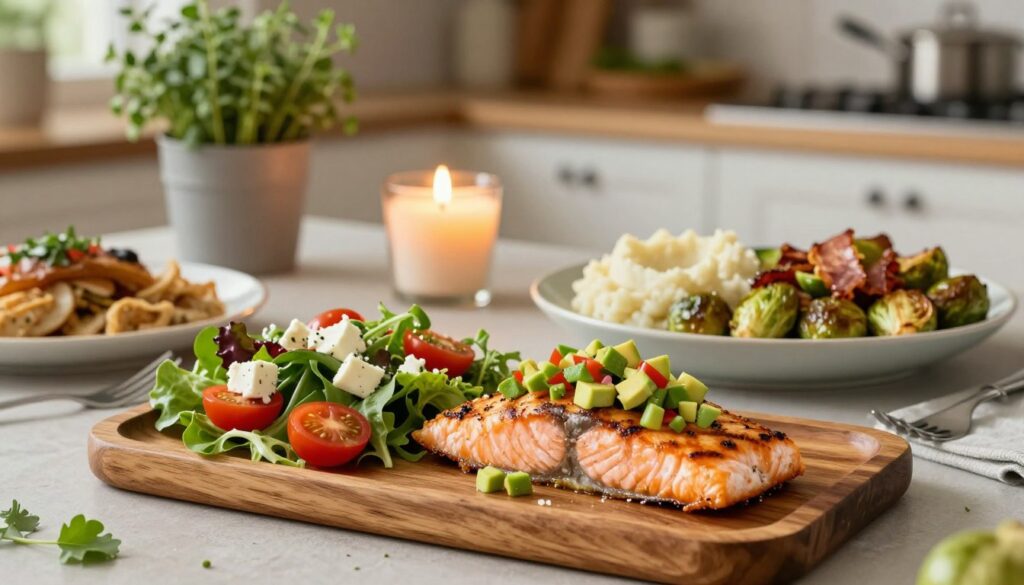
One-pan meals are great for keto cooking. They mix protein like chicken, beef, or pork with veggies and healthy fats. This makes for a well-rounded and satisfying dinner.
Use cast-iron or stainless steel pans for one-pan meals. They heat evenly and can handle high temperatures. This ensures a nice sear on your protein and tender veggies.
Using Keto-Friendly Pasta and Rice Alternatives
There are keto-friendly alternatives to pasta and rice. Zucchini noodles (zoodles), spaghetti squash, and cauliflower rice are good substitutes. They have fewer carbs than traditional grains.
Remember, each alternative cooks differently. Zoodles cook fast but can get mushy. Spaghetti squash needs longer to get tender.
Baking Flavorful Casseroles and Sheet Pan Dinners
Casseroles and sheet pan dinners are perfect for keto dinners. They let you cook many ingredients together. This makes for a hearty and satisfying meal.
Try keto casserole recipes like chicken and broccoli or beef and vegetable. For sheet pan dinners, mix chicken or salmon with roasted veggies like Brussels sprouts and sweet potatoes (in moderation).
Implementing Keto Meal Prep for Weekly Success
Keto meal prep is more than just cooking ahead. It’s about setting up a system that fits your life. Spend a few hours each week planning and preparing meals. This way, you stay on track with your keto diet, even when life gets busy.
Planning Your Weekly Menu Around Your Schedule
Start by planning your meals around your schedule. Look at your calendar and find busy days. Plan quick meals for those days.
Think about what you like to eat and what you need to reach your diet goals. Mix up old favorites with new recipes. Make a list of what you need and check what you already have.
Using Batch Cooking Strategies for Low-Carb Cooking
Batch cooking is key to successful keto meal prep. Cooking big batches saves time and keeps you on track. It ensures you always have healthy options ready.
Start with proteins like chicken, beef, and fish. These are versatile and can be used in many meals. Also, cook lots of low-carb veggies like broccoli and cauliflower.
Applying Proper Storage Techniques to Maintain Freshness
Storing your meals right is important for keeping them fresh. Get airtight containers for fridge and freezer use.
Label each container with the date and what’s inside. Store them in a way that’s easy to access. This helps you use up older meals before they go bad.
Following Time-Saving Tips for Efficient Preparation
To prep efficiently, focus on prepping ingredients, not full meals. Chop veggies, marinate meats, and cook grains or cauliflower rice ahead. This saves a lot of time.
Try the “cook once, eat twice” method. Cook a big batch of something and use it in different ways. For example, chili can be a meal, a salad topping, and a quick dinner.
Making Snacks and Side Dishes to Round Out Your Meals
To make your keto meals better, it’s key to have tasty snacks and sides. These should follow keto diet rules. Snacks and sides add variety and help you stick to your diet.
Preparing Quick Fat Bombs and Energy Bites
Fat bombs help you get more fat and stop cravings for sweets. They’re made with coconut oil, cream cheese, and butter. Add vanilla or cocoa for flavor. Popular flavors include peanut butter, chocolate, and lemon.
Energy bites are also great for a quick energy boost. Mix nuts, seeds, and coconut flakes together. Shape into balls and chill until firm. Try different mixes to find your favorite.
Roasting Vegetable-Based Sides with Maximum Flavor
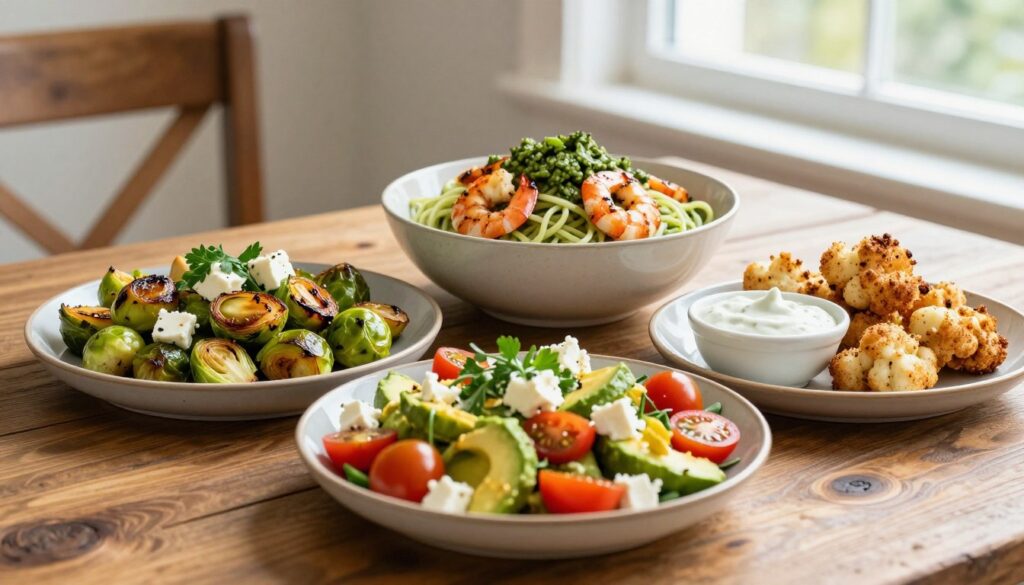
Roasting veggies brings out their sweetness and flavor. Toss them with olive oil, salt, and herbs, then roast in the oven. Popular keto-friendly vegetables include broccoli, cauliflower, and Brussels sprouts.
For extra taste, add cheese or a keto-friendly sauce. This makes the veggies even more delicious.
Whipping Up Keto-Approved Dips and Spreads
Dips and spreads add flavor to keto meals and snacks. Many dips have too many carbs, but homemade ones are easy. Start with cream cheese or Greek yogurt, then add herbs, spices, or diced veggies. Some popular keto dip options include spinach and artichoke dip, hummus made with cauliflower, and salsa.
Enjoy your dips with keto-friendly dippers like veggie sticks, pork rinds, or low-carb crackers. It’s a tasty snack or a fun meal addition.
Elevating Your Dishes with Bold Flavors
To take your keto cooking to the next level, it’s essential to understand how to elevate your dishes with bold flavors. The right combination of herbs, spices, and sauces can transform a simple keto meal into a culinary masterpiece.
Choosing Herbs and Spices That Transform Your Cooking
Herbs and spices are the backbone of flavorful cooking. When it comes to keto cooking, selecting the right herbs and spices can make all the difference. Some of the most versatile and flavorful options include:
- Fresh herbs like basil, rosemary, and thyme add a bright, fresh flavor to dishes.
- Spices such as cumin, coriander, and paprika bring warmth and depth.
- Chili peppers or hot sauce can add a spicy kick.
Experimenting with different combinations can help you find the perfect flavor for your keto dishes.
Creating Keto-Friendly Sauces and Marinades from Scratch
Sauces and marinades are excellent ways to add flavor to your keto meals. The key is to use ingredients that are low in carbs but high in flavor. Some keto-friendly options include:
- Mayonnaise-based sauces with herbs and spices.
- Olive oil-based marinades with garlic and lemon juice.
- Tomato-free sauces made with ingredients like avocado or cauliflower.
By making your own sauces and marinades, you can control the ingredients and ensure they fit within your keto diet.
Balancing Acidity and Umami for Depth of Flavor
Balancing acidity and umami is crucial for creating dishes with depth of flavor. Acidity from ingredients like lemon juice or vinegar can brighten flavors, while umami from foods like mushrooms or fish sauce adds richness.
| Flavor Component | Keto-Friendly Ingredients |
|---|---|
| Acidity | Lemon juice, vinegar, tomatoes (in moderation) |
| Umami | Mushrooms, fish sauce, soy sauce (watch for carbs), Parmesan cheese |
By understanding and balancing these flavor components, you can elevate your keto dishes and make them more enjoyable.
Avoiding Common Mistakes in Your Keto Kitchen
Starting your keto journey? Knowing common pitfalls can help you reach your health goals. A well-planned keto diet is key to staying in ketosis and enjoying its benefits. But, even with good intentions, many people fall into traps that slow their progress.
Identifying Hidden Carbs in Unexpected Ingredients
Finding hidden carbs in foods is a big challenge on a keto diet. Foods like sauces, condiments, and some veggies can have surprising carbs.
For example, a single serving of tomato sauce can have up to 10 grams of carbs. This can easily exceed your daily carb limit. Always check labels and know serving sizes to avoid too many carbs.
| Food Item | Carb Content (per serving) |
|---|---|
| Tomato Sauce | 10g |
| Salad Dressing | 5g |
| Canned Beans | 20g |
Keeping Recipes Simple and Sustainable
It’s easy to get excited about new recipes. But, complex recipes can make sticking to keto hard. Simple recipes are easier to follow and more likely to become favorites.
Simplicity is key in keto cooking. Use basic ingredients and techniques you can master and repeat. This makes it easier to stay on your diet and avoid burnout.
“The secret to successful keto cooking lies in its simplicity. By focusing on a few key ingredients and techniques, you can create a variety of delicious and satisfying meals.”
Incorporating Variety into Your Meal Rotation
Variety is key for a long-term keto diet. Eating the same meals can get boring and make you stray from your diet.
To keep meals interesting, mix proteins, veggies, and healthy fats into your diet. Try different cuisines and cooking methods to add variety.
Maintaining Proper Electrolyte Balance Through Food
Keeping electrolyte balance right is crucial on a keto diet. Electrolytes like sodium, potassium, and magnesium are important for hydration and health.
Eating foods rich in electrolytes helps keep balance. Avocados, nuts, and leafy greens are good for potassium and magnesium. Salt is a good sodium source.
- Avocados
- Nuts and seeds
- Leafy greens
- Fatty fish
By avoiding these common mistakes, you can keep a healthy keto lifestyle. Focus on whole foods, simple recipes, and variety for a successful and enjoyable keto journey.
Conclusion
Exploring keto cooking has opened up a world of ketogenic recipes for you. These recipes not only taste great but also help you meet your dietary needs. You’ve learned the basics and stocked your pantry with keto-friendly items.
Now, you can make tasty keto meals for any time of day. You know how to cook with fats and prepare meals ahead of time. This knowledge helps you enjoy healthy, delicious meals every day.
Keep being creative and open to new things in the kitchen. Try out different ingredients and ketogenic recipes to keep your meals interesting. This way, you’ll stay on track with your keto diet and enjoy all its benefits.
Avoiding Common Mistakes in Your Keto Kitchen
What Makes Keto Cooking Different from Traditional Methods
Keto cooking is different because it focuses on fats and proteins, not carbs. You’ll use heavy cream, egg yolks, and nut-based binders instead of grains.
The Macronutrient Ratio You Need to Follow
To stay in ketosis, your meals should be mostly fat, with some protein and a little carb. Keeping an eye on these macros helps your body burn fat.
How Ketosis Affects Your Food Choices and Cooking Style
Ketosis changes how you taste food. As your insulin levels drop, you’ll crave less sugar. You’ll enjoy the natural flavors of foods like avocado oil and organic steaks more.
Essential Fats and Oils for High-Fat Low-Carb Recipes
A good keto kitchen starts with quality fats. Stock up on Chosen Foods avocado oil, Viva Naturals coconut oil, and Kerrygold butter. These will add richness to your dishes.
Low-Carb Flour Alternatives and Baking Staples
For keto-friendly dishes, use Bob’s Red Mill almond flour and coconut flour. They add bulk without raising your blood sugar.
Keto-Approved Sweeteners and Flavor Enhancers
For a touch of sweetness, try erythritol or Swerve. Bragg liquid aminos or apple cider vinegar add depth without sugar.
Quality Protein Sources to Keep Stocked
Choose high-quality proteins like wild-caught salmon, Applegate bacon, and pasture-raised eggs. These are the foundation of your keto diet.
Learning Fat-Based Cooking Methods
Mastering emulsification is key. Making homemade hollandaise or aioli can elevate simple dishes into gourmet meals.
How to Substitute High-Carb Ingredients Effectively
Substitution is a skill. Use Palmini noodles or Miracle Noodle pasta to replace traditional pasta. Try breading chicken with crushed pork rinds for a crunchy texture.
Techniques to Maximize Flavor Without Adding Carbs
Searing meats enhances flavor. Deglazing with white wine or Kettle & Fire bone broth creates savory sauces without flour.
Creating High-Protein Egg-Based Dishes
Eggs are a keto superfood. Try a frittata with spinach and goat cheese or soft-scrambled eggs with chives and crème fraîche for a luxurious start.
Blending Quick Low-Carb Smoothies and Coffee Drinks
For a quick breakfast, blend Bulletproof MCT oil and grass-fed butter into your coffee. Mix Perfect Keto collagen powder with almond milk and raspberries for a smoothie.
Making Ahead Breakfast Options for Busy Mornings
Use keto meal prep by baking egg muffins in a silicone tray. These can be stored in the fridge and reheated quickly, providing a reliable protein source.
Building Creative Salad Bowls with Healthy Keto Meals
Forget boring greens. Build a bowl with kale, grilled chicken, walnuts, and Tessemae’s ranch dressing. Add avocado for essential fats.
Assembling Low-Carb Wraps and Lettuce Sandwiches
Use large butter lettuce leaves or Egglife wrap shells for your favorite deli meats and cheeses. This gives you a sandwich without the carbs.
Cooking Hearty Soups and Stews That Keep You Full
A slow-cooked broccoli and cheddar soup or beef chili without beans are great for lunch. They’re easy to take with you and warm you up.
Preparing One-Pan Protein and Vegetable Combinations
Minimize cleanup with sheet pan dinners. Roast salmon with asparagus and lemon zest for a quick, healthy meal.
Using Keto-Friendly Pasta and Rice Alternatives
For pasta night, sauté zoodles and top with Rao’s Homemade Marinara. This satisfies your Italian cravings without carbs.
Baking Flavorful Casseroles and Sheet Pan Dinners
Casseroles like “loaded” cauliflower bake are crowd-pleasers. They’re dense, flavorful, and perfect for feeding a family or saving for leftovers.
Planning Your Weekly Menu Around Your Schedule
Success in keto cooking comes from planning. Map out your meals on Sunday to avoid high-carb takeout during the week.
Using Batch Cooking Strategies for Low-Carb Cooking
Cook large amounts of protein at once. Roasting two chickens or browning three pounds of ground beef allows quick assembly of keto dishes all week.
Applying Proper Storage Techniques to Maintain Freshness
Invest in high-quality airtight containers like Glasslock. They keep your prepped vegetables and proteins fresh and ready to eat.
Following Time-Saving Tips for Efficient Preparation
Buy pre-washed greens and pre-riced cauliflower to save time. Using an Instant Pot can also speed up cooking tough cuts of meat or bone broths.
Preparing Quick Fat Bombs and Energy Bites
Fat bombs made with cocoa butter, coconut oil, and sea salt are perfect between meals. They give a quick energy boost and healthy fats.
Roasting Vegetable-Based Sides with Maximum Flavor
Elevate your sides by roasting Brussels sprouts with balsamic vinegar and bacon bits. Grilling halloumi cheese adds a salty, savory touch.
Whipping Up Keto-Approved Dips and Spreads
Keep homemade guacamole or creamy spinach-artichoke dip in the fridge. They’re great with celery sticks or Whisps Parmesan cheese crisps.
Choosing Herbs and Spices That Transform Your Cooking
Fresh rosemary, thyme, and cilantro can brighten any dish. Smoked paprika or cumin add warmth without extra calories.
Creating Keto-Friendly Sauces and Marinades from Scratch
Avoid store-bought marinades with hidden sugar. Make your own using olive oil, garlic, and Redmond Real Salt for vibrant flavors.
Balancing Acidity and Umami for Depth of Flavor
If a dish feels flat, add fresh lime or coconut aminos. Balancing these elements makes your keto meals taste like restaurant food.
Identifying Hidden Carbs in Unexpected Ingredients
Watch out for “sugar-free” labels with maltitol. Always check the ingredients on processed snacks and condiments.
Keeping Recipes Simple and Sustainable
Don’t overcomplicate keto cooking. Stick to simple, whole-food recipes that are easy to keep up with long-term.
Incorporating Variety into Your Meal Rotation
Rotate your proteins to avoid “egg burnout.” Try scallops or lamb chops for dinner to keep your meals interesting.
Maintaining Proper Electrolyte Balance Through Food
The keto diet can lead to mineral loss. Make sure you get enough sodium, magnesium, and potassium by seasoning well and eating leafy greens and avocados.