

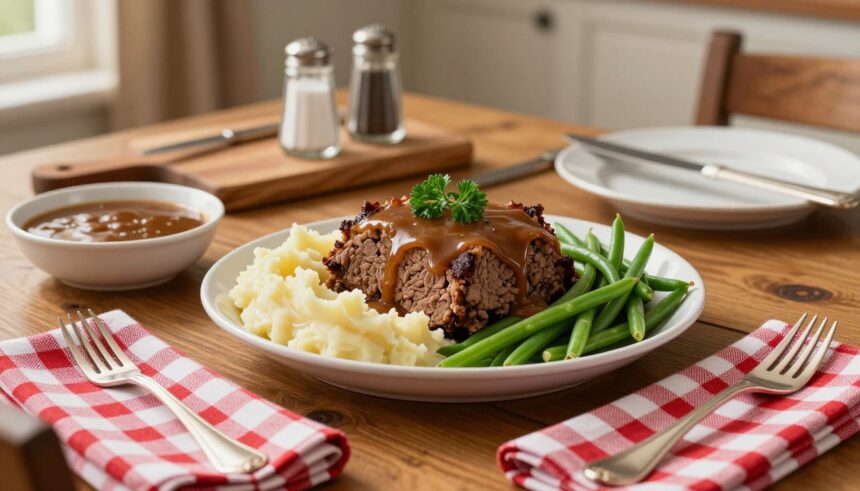
Remember those cozy Sunday evenings? A warm, savory smell filled your home. It’s a scent of comfort, safety, and a true family gathering.
- What Makes a Classic Meatloaf
- Essential Ingredients for Classic Meatloaf Recipe
- The Meat Blend
- Binding Agents and Fillers
- Seasonings and Aromatics
- Liquid Ingredients
- The Glaze Components
- Kitchen Tools and Equipment You’ll Need
- Step-by-Step Instructions for Making Classic Meatloaf
- Step 1: Prepare Your Ingredients and Preheat the Oven
- Step 2: Sauté the Aromatics
- Step 3: Prepare the Breadcrumb Mixture
- Step 4: Combine the Meat and Seasonings
- Step 5: Mix Without Overworking
- Step 6: Shape and Form the Meatloaf
- Step 7: Apply the Glaze
- Step 8: Bake to Perfection
- Step 9: Rest and Slice
- Tips for the Perfect Meatloaf Every Time
- Avoiding a Dry Meatloaf
- Preventing Crumbling and Falling Apart
- Achieving the Right Internal Temperature
- Dealing with Excess Grease
- Getting a Beautiful Crust
- Classic Meatloaf Glaze Variations
- Serving Suggestions and Side Dishes
- Storage, Reheating, and Leftover Ideas
- Conclusion
- FAQ
- What is the secret to making the best meatloaf recipe without it falling apart?
- Which meat blend works best for a classic meatloaf recipe?
- How to make meatloaf that is flavorful and moist rather than dry?
- What are the essential components for a signature old-fashioned meatloaf glaze?
- Can I prepare this homemade meatloaf in advance and freeze it for later?
- What is the ideal internal temperature to ensure the meatloaf is perfectly cooked?
- What side dishes pair best with the best meatloaf recipe?
Sharing a meal that’s been around for generations is special. It’s more than food; it’s a heartfelt tradition passed to loved ones.
You deserve a meal that hits the spot and is easy to make. Our guide will take you through every step to master this classic dish.
With quality ingredients and the right techniques, you’ll get a moist meatloaf. This recipe ensures a perfect flavor in every bite.
Key Takeaways
- Use fresh ingredients for the superior flavor profile.
- Gentle mixing prevents the beef from becoming too dense.
- A sweet glaze adds a perfect tangy finish to the top.
- Letting the dish rest ensures it stays moist and juicy.
- Proper temperature control is vital for kitchen safety.
- Leftovers make excellent sandwiches for the following day.
What Makes a Classic Meatloaf
Classic meatloaf is a comfort food that brings back memories of home and family. It’s known for its rich flavors and hearty texture. A classic meatloaf uses traditional ingredients and cooking methods passed down through generations.
The ingredients in a classic meatloaf include ground meats like beef and pork. They’re mixed with breadcrumbs, eggs, and seasonings. Onions, garlic, and herbs add to its flavor. Knowing how each ingredient works is key to making a true classic meatloaf.
Some key elements that define a classic meatloaf include:
- A balanced mix of ground meats for the right texture and flavor
- The use of binding agents like eggs and breadcrumbs to hold the loaf together
- A blend of seasonings and aromatics to enhance the flavor
- A glaze or topping that adds a sweet and tangy contrast to the savory meat
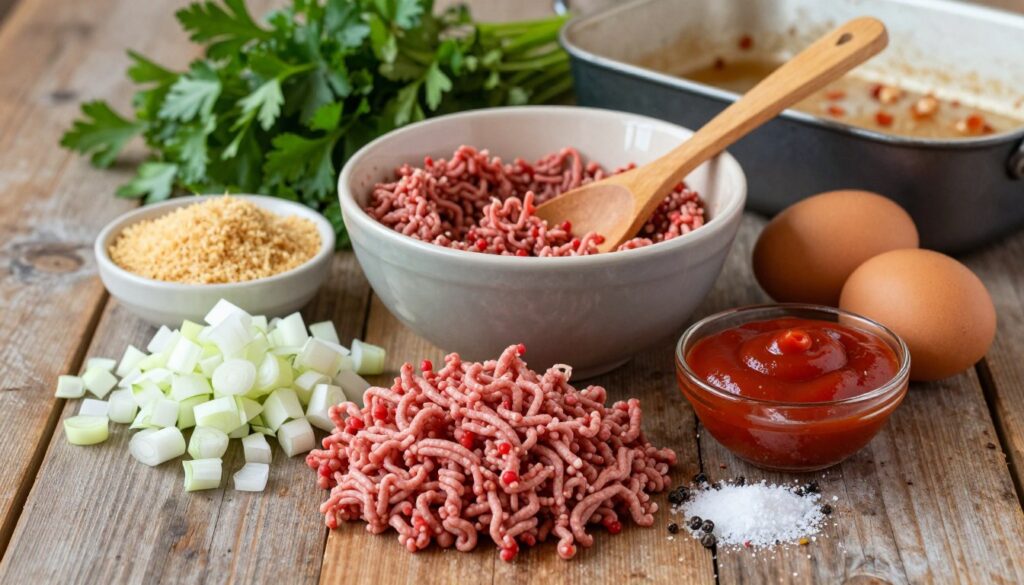
The cooking method is also important. It’s baked in a loaf shape for even cooking. This method makes the crust brown and adds to the dish’s texture and look.
In American cuisine, classic meatloaf is a beloved comfort food. It’s nourishing and satisfying. It’s often served at family dinners and casual gatherings.
Essential Ingredients for Classic Meatloaf Recipe
The secret to a perfect classic meatloaf recipe is in the quality and combination of its essential ingredients. A well-crafted meatloaf is a symphony of flavors and textures. These are all determined by the ingredients you choose.
The Meat Blend
The foundation of any meatloaf is the meat blend. Ground meats, with ground beef being the most common, are used. Mixing in some ground pork or veal adds depth to the flavor and improves the texture. Finding a balance between lean and fatty meats keeps the meatloaf moist.
Binding Agents and Fillers
Binding agents like eggs and breadcrumbs are crucial for holding the meatloaf together. Eggs act as a binder, while breadcrumbs absorb excess moisture and add bulk. You can also use oats or crushed crackers to vary the texture.
Seasonings and Aromatics
Seasonings and aromatics give your meatloaf its characteristic flavor. Onions, garlic, salt, and pepper are staples. Adding other seasonings like paprika, oregano, or thyme can give it a unique twist. Make sure to sauté your aromatics before adding them to the meat mixture to bring out their full flavor.
Liquid Ingredients
Liquid ingredients like milk or broth help keep the meatloaf moist. They are often used with breadcrumbs to create a more tender final product. Using other liquids like Worcestershire sauce can add depth to the flavor.
The Glaze Components
The glaze is the crowning glory of a classic meatloaf, adding a sweet and tangy exterior. A typical glaze is made from ketchup, brown sugar, and sometimes mustard or vinegar. Brushing the glaze over the meatloaf during baking creates a caramelized crust that’s both flavorful and visually appealing.
Kitchen Tools and Equipment You’ll Need
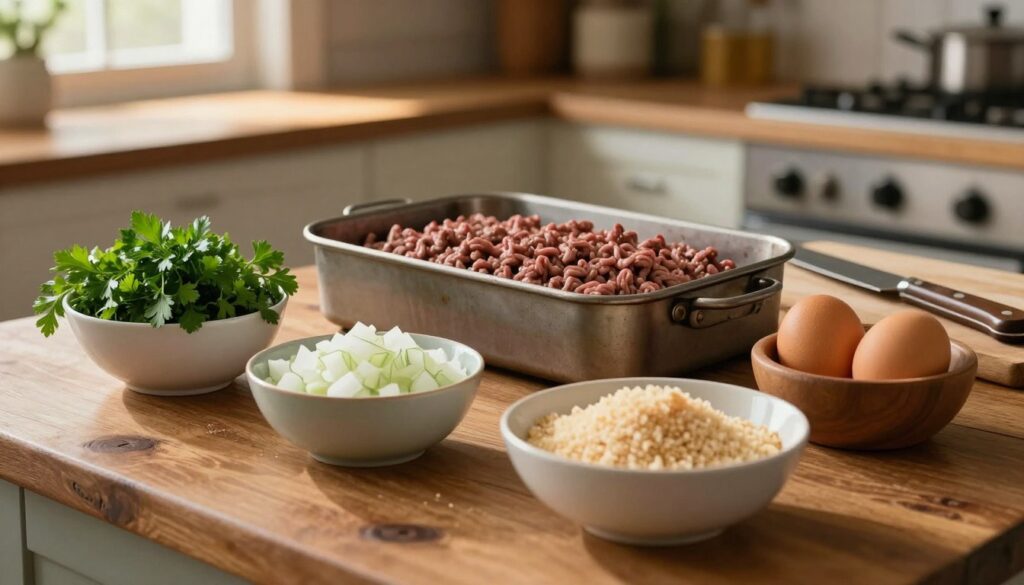
Getting your kitchen ready with the right tools is key to making a classic meatloaf. The right equipment makes the process easier and more efficient. You can then focus on using high-quality ingredients and perfecting your technique for an old-fashioned meatloaf.
Essential Cookware
For making a classic meatloaf, you need a few basic cookware items.
- A loaf pan is essential for shaping the meatloaf. You can pick between a traditional metal pan or a non-stick one, based on your preference.
- A baking sheet is also needed to catch any drips or spills while baking.
Mixing and Measuring Tools
You’ll need specific tools for mixing and measuring.
- A large mixing bowl is where you’ll mix your ingredients. Choose a bowl that’s big enough to hold everything without overflowing.
- Measuring cups and spoons are crucial for precise ingredient measurements. This helps your meatloaf turn out just right.
- A wooden spoon or spatula is needed for mixing the ingredients. You might also want to use your hands for a deeper mix.
With these tools, you’ll be ready to make a tasty old-fashioned meatloaf.
Step-by-Step Instructions for Making Classic Meatloaf
To make an easy meatloaf recipe, follow these steps carefully. Making a traditional meatloaf is simple with the right ingredients and steps.
Step 1: Prepare Your Ingredients and Preheat the Oven
Start by heating your oven to 375°F (190°C). While it heats up, get your ingredients ready. Chop onions, mince garlic, and measure out breadcrumbs and seasonings.
Step 2: Sauté the Aromatics
Heat a pan over medium and sauté onions and garlic until soft and fragrant. This step adds flavor to your meatloaf. Let them cool before mixing with the meat.
Step 3: Prepare the Breadcrumb Mixture
In a bowl, mix breadcrumbs, milk, and egg. Let it sit for a few minutes. This makes the mixture moist and helps the meatloaf stick together.
Step 4: Combine the Meat and Seasonings
In a large bowl, mix ground meat, sautéed onions and garlic, breadcrumb mixture, salt, pepper, and seasonings. Use your hands or a spoon to mix.
Step 5: Mix Without Overworking
Mix the meat until just combined. Don’t overwork it to avoid a dense meatloaf. Stop mixing when the ingredients are evenly spread.
Step 6: Shape and Form the Meatloaf
Put the meat mixture in a loaf pan or shape it on a baking sheet. Make sure it’s evenly shaped for even cooking.
Step 7: Apply the Glaze
Brush the glaze over the meatloaf. This adds a sweet and tangy flavor to your traditional meatloaf.
Step 8: Bake to Perfection
Put the meatloaf in the oven and bake for 45-60 minutes. It should reach 160°F (71°C) inside. Baking time depends on the meatloaf’s size and shape.
Step 9: Rest and Slice
After cooking, take the meatloaf out and let it rest for 10-15 minutes. This makes it tender and flavorful.
By following these steps, you’ll make a delicious easy meatloaf recipe. Enjoy your homemade traditional meatloaf with your favorite sides and condiments.
Tips for the Perfect Meatloaf Every Time
Creating a perfect meatloaf is more than just mixing ingredients. It’s about technique, patience, and detail. A best meatloaf recipe requires these elements to go from good to great.
Avoiding a Dry Meatloaf
Meatloaf can often be dry. To avoid this, don’t overmix the meat. This tight binding can make it dense and dry. Also, check the internal temperature with a thermometer to prevent overbaking.
Preventing Crumbling and Falling Apart
A crumbling or falling apart meatloaf is a letdown. Make sure your meat mixture has enough binding agents like eggs and breadcrumbs. Handle the meat gently when shaping to avoid making it too dense.
Achieving the Right Internal Temperature
The internal temperature of a meatloaf is key for safety and quality. Use a meat thermometer to ensure it reaches 160°F (71°C). This makes the meatloaf safe and well-cooked.
Dealing with Excess Grease
Too much grease can make a meatloaf soggy. Place the meatloaf on a baking rack over a baking sheet. This allows excess fat to drip away while cooking.
Getting a Beautiful Crust
A nice glaze can make your meatloaf look and taste better. Apply the glaze in the last 20-30 minutes of baking. Broil for a few minutes to caramelize the top.
| Tip | Description | Benefit |
|---|---|---|
| Avoid Overmixing | Mix ingredients just until they come together. | Prevents a dense and dry meatloaf. |
| Use a Thermometer | Check internal temperature to avoid overcooking. | Ensures the meatloaf is cooked to a safe temperature. |
| Don’t Overbake | Bake until the internal temperature reaches 160°F. | Retains moisture and flavor. |
Classic Meatloaf Glaze Variations
Make your classic meatloaf recipe even better with a flavorful glaze. The glaze is key to enhancing your homemade meatloaf. We’ll look at various glaze options you can make at home.
Traditional Ketchup-Based Glaze
The classic ketchup glaze is loved for its simplicity and taste. It’s sweet, tangy, and pairs well with your classic meatloaf recipe. To make it, mix ketchup, brown sugar, and spices. Brush it on your meatloaf for the last 30 minutes of baking.
Tangy Tomato-Brown Sugar Glaze
Try a tangy tomato-brown sugar glaze for a twist. It combines tomato paste and vinegar with the traditional glaze. This glaze is sweet and tangy, balancing your homemade meatloaf‘s savory flavors.
Barbecue Style Glaze
For a bold flavor, use a barbecue-style glaze. It’s made with barbecue sauce, brown sugar, and spices. This glaze adds a smoky, tangy taste to your classic meatloaf recipe.
Exploring different glazes keeps your homemade meatloaf exciting. Whether you choose the classic ketchup glaze or something new, your classic meatloaf recipe will be a hit.
Serving Suggestions and Side Dishes
Make your traditional meatloaf special with the right sides. The perfect side dishes can turn a simple meal into a memorable one. Choose from many options to go with your easy meatloaf recipe.
Classic American Sides
Classic American sides are loved for a reason. They match well with your meatloaf’s comforting flavors. Here are some great choices:
- Mashed potatoes, a classic that goes well with meatloaf’s rich taste.
- Roasted or grilled vegetables for a lighter touch.
- Creamy coleslaw, adding a refreshing crunch.
- Baked beans, a traditional choice that complements the savory flavors.
Vegetable Pairings
Vegetables bring flavor and color to your meal. Some top picks include:
- Steamed broccoli or green beans for a healthy, easy option.
- Roasted Brussels sprouts with balsamic glaze for a tasty twist.
- Sautéed spinach with garlic, a nutritious and flavorful contrast.
Bread and Starch Options
Bread and starches add to your meal. Consider these options:
- Garlic bread, a simple yet satisfying choice.
- Buttered dinner rolls, great for soaking up juices.
- Roasted sweet potatoes, offering a sweet and earthy taste.
Presentation and Plating Tips
The way you present your meal matters. Here are some tips:
- Slice your meatloaf against the grain for tender slices.
- Arrange your side dishes thoughtfully around the meatloaf.
- Garnish with fresh herbs for a pop of color and freshness.
- Use a variety of textures and colors to make the dish visually appealing.
Storage, Reheating, and Leftover Ideas
Knowing how to store, reheat, and use leftovers is key to enjoying your meatloaf. This helps keep your meal fresh longer and lets you enjoy it in different ways.
Refrigerating Your Meatloaf
Keeping your meatloaf fresh starts with proper refrigeration. Once it cools, wrap it tightly in plastic wrap or foil. Store it in a covered container to avoid drying out. It stays good in the fridge for 3 to 4 days.
Freezing for Later
Freezing is great for longer storage. Wrap it well in freezer-safe wrap or foil, or use a freezer-safe bag. Make sure to remove air before sealing. Frozen meatloaf lasts up to 3 months. Just thaw it in the fridge overnight when you’re ready to eat.
Reheating Techniques
Reheating your meatloaf right keeps it moist and flavorful. You can reheat it in the oven at 250°F (120°C) with foil until it’s 165°F (74°C). Or, use the microwave, but it might be softer.
Creative Ways to Use Leftovers
Leftover meatloaf can be turned into many dishes. Slice it thin for sandwiches, dice it for salads, or crumble it into pasta sauce. You can also top baked potatoes or fill omelets with it.
Here’s a simple table to help you decide on the best storage and reheating method based on your needs:
| Storage/Reheating Method | Time/Temperature | Notes |
|---|---|---|
| Refrigeration | Up to 3-4 days | Store in a covered container |
| Freezing | Up to 3 months | Wrap securely and thaw overnight |
| Oven Reheating | 250°F (120°C) until 165°F (74°C) | Cover with foil to retain moisture |
| Microwave Reheating | Until heated through | May result in softer texture |
Conclusion
Making a classic meatloaf is a fun cooking adventure. It adds warmth and comfort to any meal. By following the steps and tips in this article, you’re on your way to making the best meatloaf recipe.
This dish is more than just food; it’s a chance to be creative in the kitchen. You can serve it with traditional sides or try new things with leftovers. The joy of making your own meatloaf is clear.
As you try different glazes and serving ideas, you’ll find your perfect meatloaf. So, enjoy the process and relish the delicious outcome of your efforts.
With your new skills, you’ll make this classic dish with confidence. It will quickly become a favorite among your family and friends.
FAQ
What is the secret to making the best meatloaf recipe without it falling apart?
To keep your meatloaf together, use the right mix of binding agents. Breadcrumbs and eggs act as the glue. Letting it rest for 10 to 15 minutes after baking is key. This lets juices redistribute and proteins firm up, making it perfect to slice.
Which meat blend works best for a classic meatloaf recipe?
A mix of ground beef, pork, and sometimes veal is best. Aim for 80/20 beef fat content. This mix makes the meatloaf moist and flavorful, a true comfort food classic.
How to make meatloaf that is flavorful and moist rather than dry?
Add moisture with sautéed onions and celery in Land O’Lakes butter. Soaking breadcrumbs in milk or broth also helps. These steps keep the meat tender and prevent drying out.
What are the essential components for a signature old-fashioned meatloaf glaze?
A tangy-sweet glaze is key. Use Heinz Ketchup, brown sugar, and a bit of French’s Mustard or apple cider vinegar. For a smoky flavor, try Sweet Baby Ray’s barbecue sauce.
Can I prepare this homemade meatloaf in advance and freeze it for later?
Yes, you can prepare it ahead. Freeze the raw loaf for up to three months. Thaw it in the fridge before baking. You can also freeze cooked slices for quick meals.
What is the ideal internal temperature to ensure the meatloaf is perfectly cooked?
Use an instant-read thermometer to check the meatloaf’s center. It’s ready at 160°F (71°C). This ensures it’s juicy and safe to eat.
What side dishes pair best with the best meatloaf recipe?
Serve it with classic sides like mashed potatoes, green beans, or honey-glazed carrots. For a twist, try roasted Brussels sprouts or a crisp wedge salad. These sides complement the meatloaf’s flavor and make a complete meal.