

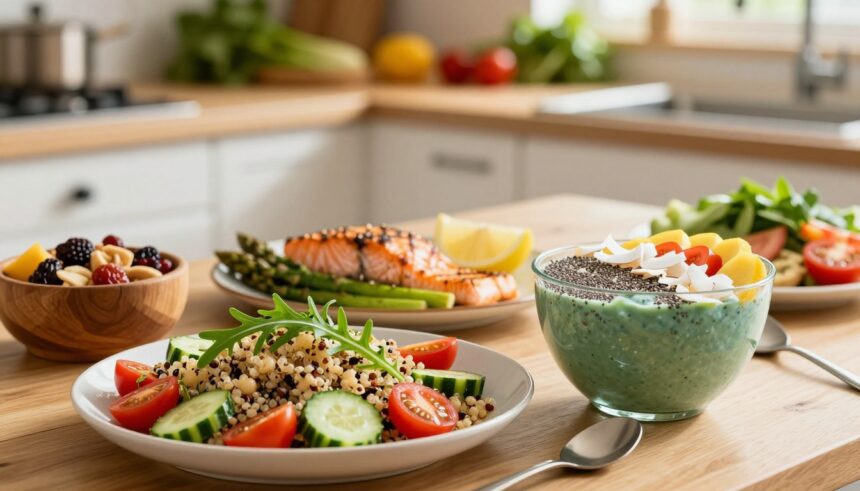
Ever stared into your fridge after a long day, feeling drained? You might search for a meal that satisfies you. You deserve a kitchen experience that feels like self-care, not a chore.
- Why Healthy Eating Matters for Your Well-Being
- Essential Nutrients Your Body Needs Daily
- Macronutrients: Proteins, Carbs, and Fats
- The Role of Protein in Your Diet
- Complex Carbohydrates for Sustained Energy
- Healthy Fats for Brain Function
- Micronutrients: Vitamins and Minerals
- Energizing Breakfast Dishes to Start Your Day
- Overnight Oats with Fresh Berries and Nuts
- Spinach and Mushroom Egg White Scramble
- Greek Yogurt Parfait with Granola
- Wholesome Lunch Options That Keep You Full
- Quinoa Buddha Bowl with Roasted Vegetables
- Grilled Chicken Salad with Avocado
- Lentil Soup with Whole Grain Bread
- Satisfying Dinner Recipes for Balanced Nutrition
- Baked Salmon with Asparagus and Sweet Potato
- Turkey Meatballs with Zucchini Noodles
- Chicken Stir-Fry with Brown Rice
- Nutritious Snacks Between Meals
- Plant-Based Healthy Food Dishes for Vegetarians
- Lean Protein Dishes for Muscle Building
- Low-Calorie Dishes for Weight Management
- Meal Prep Strategies for Busy Weekdays
- Smart Ingredient Swaps for Healthier Cooking
- Building Balanced Plates Every Time
- Conclusion
- FAQ
- How can I start incorporating more clean eating meals into my busy schedule?
- What are some low-calorie dishes that actually feel filling?
- Why is wholesome cooking better for my long-term health than processed alternatives?
- What are the best lean protein dishes for someone focused on muscle building?
- How do I ensure my plant-based healthy food dishes provide enough protein?
- Can you suggest some smart ingredient swaps to make my current meals more nutritious?
- What is the most effective way to practice portion control without feeling deprived?
It’s time to see wellness as a celebration of vibrant living. Finding nutritious recipes lets you nourish your soul and respect your body’s needs. Choosing ingredients that make you feel alive is key to a balanced, joyful life.
Making healthy food dishes doesn’t need to take hours or cost a lot. You can turn simple, fresh ingredients into colorful meals your family will love. These small changes can greatly improve your energy and mental clarity.
This journey is about feeling vibrant and strong through life’s seasons. Let’s see how every bite can contribute to a healthy, happy lifestyle.
Key Takeaways
- Balance great flavor with essential nutrients effortlessly.
- View wellness as a celebration rather than a strict diet.
- Use simple, fresh ingredients to save time and money.
- Transform daily meals into a form of personal self-care.
- Boost your energy levels with mindful ingredient choices.
- Create delicious meals that the entire family will love.
Why Healthy Eating Matters for Your Well-Being
Choosing a lifestyle with clean eating and wholesome cooking can greatly improve your well-being. Eating foods rich in nutrients can boost your health a lot.
Clean eating means eating whole, unprocessed foods like veggies, fruits, whole grains, lean proteins, and healthy fats. These foods give your body the nutrients it needs to work well. Cooking methods like grilling, roasting, and steaming help keep these foods’ nutrients intact.
Benefits of Healthy Eating
- Improved energy levels from eating nutrient-rich foods
- A stronger immune system to fight off diseases better
- Better mental health and less risk of depression and anxiety
- Support for a healthy weight and less risk of obesity-related diseases
Adding clean eating meals to your daily life can bring these benefits. It’s not just about dieting or cutting out certain foods. It’s about a lasting, healthy way to eat that benefits both your body and mind.
Wholesome cooking is key in this journey. Cooking meals from scratch with fresh ingredients lets you control what you eat. This way, you avoid unhealthy additives in processed foods. It makes your meals not only healthier but also more enjoyable and fulfilling.
In conclusion, healthy eating is vital for your well-being. By making smart choices about what and how you eat, you can move towards a healthier, happier life.
Essential Nutrients Your Body Needs Daily
Knowing what nutrients your body needs every day is key to staying healthy. A balanced diet gives your body the right stuff for energy and fixing tissues. It’s like fuel for your body’s engine.
Macronutrients: Proteins, Carbs, and Fats
Macronutrients are the main energy sources and building blocks for growth. They fall into three main types: proteins, carbs, and fats.
The Role of Protein in Your Diet
Protein is crucial for fixing and growing tissues like muscles and bones. It also helps make enzymes and hormones. Eating a variety of protein sources like lean meats and nuts is important.
Complex Carbohydrates for Sustained Energy
Complex carbs give your body energy that lasts. You can find them in whole grains and fruits. They help keep your energy steady all day.
Healthy Fats for Brain Function
Healthy fats are good for your brain and hormones. You can find them in avocados and nuts. They’re also good for your heart and make you feel full.
Micronutrients: Vitamins and Minerals
Micronutrients like vitamins and minerals are also vital. They help with energy and keeping you healthy.
Vitamins are needed in small amounts and come in two types: fat-soluble and water-soluble. Minerals are essential for nerve function and bone health.
| Nutrient Type | Examples | Key Functions |
|---|---|---|
| Proteins | Lean meats, fish, eggs, dairy, legumes, nuts | Building and repairing tissues, producing enzymes and hormones |
| Complex Carbohydrates | Whole grains, fruits, vegetables, legumes | Providing sustained energy |
| Healthy Fats | Avocados, nuts, seeds, fatty fish | Supporting brain function, hormone production, and vitamin absorption |
| Vitamins | Vitamin C, Vitamin D, B vitamins | Supporting energy production, immune function, and overall health |
| Minerals | Calcium, iron, potassium | Essential for nerve function, muscle contraction, and bone health |
Understanding these nutrients helps you make better food choices. You can then create dietary-friendly recipes that keep you healthy.
Energizing Breakfast Dishes to Start Your Day
Start your day with these healthy breakfast ideas. They are both nutritious and delicious. A good breakfast boosts your metabolism and gives you energy.
Overnight Oats with Fresh Berries and Nuts
Overnight oats are a simple, nutritious breakfast. They’re great for meal prep. You need rolled oats, milk, fresh berries, and nuts.
Preparation Steps and Variations
To make overnight oats, mix 1/2 cup of oats with 1/2 cup of milk in a jar. Add fresh berries and nuts. Refrigerate overnight and enjoy in the morning. You can change it up by using different milks, adding honey, or trying different nuts and seeds.
Some popular variations include:
- Adding a scoop of protein powder for an extra boost
- Using almond milk or soy milk for a dairy-free option
- Incorporating chia seeds for added fiber and omega-3 fatty acids
Spinach and Mushroom Egg White Scramble
A spinach and mushroom egg white scramble is packed with protein. It’s low in calories and full of nutrients. It’s a great way to add more veggies to your breakfast.
Adding Vegetables for Extra Nutrition
To make this scramble, sauté mushrooms and spinach in a pan. Then, add egg whites and scramble until done. Season with salt, pepper, and feta cheese (optional).
Try adding bell peppers, onions, or tomatoes to make it even healthier.
Greek Yogurt Parfait with Granola
A Greek yogurt parfait with granola is quick and easy. It combines protein, fiber, and healthy fats. Layer Greek yogurt, granola, and fresh fruit in a bowl for a satisfying breakfast.
Here’s a simple table to help you understand the nutritional benefits of these breakfast dishes:
| Breakfast Dish | Protein Content | Fiber Content | Calories |
|---|---|---|---|
| Overnight Oats | 5g | 4g | 250 |
| Spinach and Mushroom Egg White Scramble | 20g | 2g | 150 |
| Greek Yogurt Parfait with Granola | 15g | 4g | 300 |
Wholesome Lunch Options That Keep You Full
Lunchtime is a chance to refuel with healthy foods. These foods support your health and well-being. The right choices boost your energy and satisfaction until dinner.
Quinoa Buddha Bowl with Roasted Vegetables
A Quinoa Buddha Bowl is a nutritious and filling choice. It combines quinoa’s protein with roasted veggies. Quinoa is a complete protein and rich in fiber, making it a great base.
Building Your Perfect Bowl
To make your Quinoa Buddha Bowl, start with cooked quinoa. Add roasted veggies like sweet potatoes, Brussels sprouts, and red onions. You can also add avocado, nuts, or seeds for extra flavor and nutrition.
Grilled Chicken Salad with Avocado
A Grilled Chicken Salad with Avocado is a satisfying and healthy choice. It combines lean chicken, healthy avocado fats, and fiber from greens for a balanced meal.
Dressing Options for Flavor
The dressing is key in a salad. Choose homemade dressings with olive oil, lemon juice, and herbs for flavor without extra calories. A vinaigrette with 3 parts oil to 1 part acid is a good balance.
Lentil Soup with Whole Grain Bread
Lentil Soup is comforting and packed with protein and fiber. Paired with whole grain bread, it’s a filling meal. Lentils are also rich in iron and potassium, boosting your diet.
To enhance your Lentil Soup, add spices like cumin and turmeric, and veggies like carrots and celery. Whole grain bread on the side adds complex carbs for lasting fullness.
Satisfying Dinner Recipes for Balanced Nutrition
Eating nutritious dinners is key to staying healthy. A balanced dinner gives you the nutrients you need. It also helps keep your weight healthy and supports your body’s functions.
Here are some tasty and healthy dinner recipes for your meal plan. These dishes are both filling and nutritious. They include a variety of foods to give you lots of nutrients.
Baked Salmon with Asparagus and Sweet Potato
This recipe is a balanced meal option that has protein, healthy fats, and carbs. Salmon is full of omega-3s, while asparagus and sweet potatoes offer important vitamins and minerals.
Start by heating your oven to 400°F (200°C). Season the salmon with salt, pepper, and lemon juice. Drizzle with olive oil and bake for 12-15 minutes. Toss asparagus with olive oil, salt, and pepper, and roast for 10-12 minutes. Bake sweet potatoes whole for 45-60 minutes or until tender.
- Use fresh and high-quality ingredients for the best flavor.
- Don’t overcook the salmon to keep it moist and tender.
- Try different seasonings like garlic powder or paprika for extra taste.
Turkey Meatballs with Zucchini Noodles
Turkey meatballs with zucchini noodles are a low-calorie dish that’s both satisfying and healthy. This dish is a better choice than traditional pasta, with less carbs and more protein and veggies.
Making Spiralized Vegetable Noodles
To make zucchini noodles, use a spiralizer. Spiralize the zucchini into noodle-like strands. Sauté them in olive oil until tender but still crisp. Add garlic or cherry tomatoes for extra flavor.
“The key to a healthy diet is variety and balance. Incorporating different protein sources, vegetables, and whole grains into your meals can make a significant difference in your overall health.”
Chicken Stir-Fry with Brown Rice
Chicken stir-fry with brown rice is a balanced meal option that’s quick and nutritious. Brown rice gives you complex carbs, while chicken breast is a lean protein source. Adding colorful veggies makes the dish even healthier.
To make this dish, marinate chicken in soy sauce, honey, and ginger. Stir-fry it with bell peppers, broccoli, and carrots. Serve over brown rice for a filling and nutritious meal.
Nutritious Snacks Between Meals
Healthy snacks can help you feel full and support your weight. Snacking is more than just filling a hunger gap. It’s a chance to add more nutrients to your diet.
It’s hard to pick the right snacks with so many choices. But, choosing whole, nutrient-rich foods makes a big difference. Here are some healthy snack ideas:
Hummus with Veggie Sticks
Hummus, made from chickpeas, is packed with protein and fiber. Enjoy it with veggie sticks like carrots, cucumbers, or bell peppers for a tasty, healthy snack.
Apple Slices with Almond Butter
Apple slices are full of fiber. Almond butter adds healthy fats. This combo is not only tasty but also keeps you full until your next meal.
Trail Mix with Dried Fruits and Seeds
A mix of dried fruits, nuts, and seeds is a nutritious snack. Choose a mix low in added sugars and without too much salt.
Portion Control for Snacking
Snacking is good, but watch your portions. Eating too much, even healthy foods, can lead to too many calories.
To control your portions, here’s a simple guide for the snacks mentioned:
| Snack | Serving Size | Calories |
|---|---|---|
| Hummus with Veggie Sticks | 2 tbsp hummus, 5 veggie sticks | 100 |
| Apple Slices with Almond Butter | 1 medium apple, 2 tbsp almond butter | 150 |
| Trail Mix | 1/4 cup | 120 |
By being mindful of your snack portions and choosing nutrient-dense options, you can enjoy snacking without overeating.
Plant-Based Healthy Food Dishes for Vegetarians
Switching to a plant-based diet can really change the game for vegetarians. You can enjoy a wide range of clean eating meals. These meals are not only tasty but also full of nutrients.
Chickpea Curry with Cauliflower Rice
This dish is both tasty and healthy for vegetarians. Chickpeas are high in protein, and cauliflower rice is a low-carb option instead of regular rice.
Spice Combinations for Authentic Flavor
To make your chickpea curry taste authentic, use spices like turmeric, cumin, and coriander. Try different spice mixes to find the flavor you like best.
A simple spice blend recipe includes:
- 1 teaspoon turmeric
- 1 teaspoon cumin
- 1/2 teaspoon coriander
- 1/2 teaspoon cayenne pepper (optional)
Mix these spices with olive oil, garlic, and ginger for a delicious curry base.
Black Bean Tacos with Fresh Salsa
Black bean tacos are a tasty and protein-rich meal. With fresh salsa, they make a satisfying and healthy dish.
Homemade Salsa Recipe
Making your own salsa is easy and lets you choose what goes in it. Here’s a simple recipe:
- Combine diced tomatoes, onions, jalapeños, cilantro, and lime juice in a bowl.
- Season with salt and pepper to taste.
- Refrigerate for at least 30 minutes to let the flavors mix.
Tofu Scramble with Vegetables
Tofu scramble is a versatile dish you can make with your favorite veggies. It’s a great way to start your day with a nutritious and filling breakfast.
A sample nutritional breakdown for these dishes is as follows:
| Dish | Calories | Protein (g) | Fat (g) |
|---|---|---|---|
| Chickpea Curry with Cauliflower Rice | 400 | 20 | 15 |
| Black Bean Tacos with Fresh Salsa | 500 | 25 | 10 |
| Tofu Scramble with Vegetables | 300 | 20 | 12 |
Lean Protein Dishes for Muscle Building
To build lean muscle, it’s key to eat the right protein-rich foods. Lean protein dishes help grow muscles and boost health. Adding different lean proteins to your meals can help you reach your muscle-building goals.
Lean protein is vital for muscle repair and growth. It gives your muscles the building blocks they need. This helps you recover from workouts and build stronger muscles over time. You can enjoy lean protein through many tasty and healthy recipes.
Grilled Chicken Breast Variations
Grilled chicken breast is great for building lean muscle. It’s packed with protein, low in fat, and can be prepared in many ways. Try marinating it, seasoning it with herbs, or grilling it with veggies for a balanced meal.
Marinades for Juicy Chicken
The right marinade can make your grilled chicken breast juicy and flavorful. Here are some marinade ideas:
- Lemon Pepper: Mix lemon juice, black pepper, and olive oil for a refreshing twist.
- Garlic Herb: Combine minced garlic, chopped fresh herbs like parsley and thyme, and a bit of olive oil.
- Asian-Inspired: Blend soy sauce, honey, ginger, and garlic for a sweet and savory flavor.
Fish and Seafood Options
Fish and seafood are excellent for lean protein and omega-3 fatty acids. These support heart health and reduce inflammation. Adding different fish and seafood to your diet can boost muscle building and nutrition.
Choosing Sustainable Seafood
It’s important to pick sustainable fish and seafood for the health of our oceans. Here are some tips:
| Seafood | Sustainability Rating | Health Benefits |
|---|---|---|
| Salmon | High | Rich in Omega-3 fatty acids |
| Shrimp | Moderate | Low in fat, high in protein |
| Tuna | Variable | High in protein, rich in Omega-3 |
Choosing sustainable seafood supports your muscle-building goals and helps our planet’s ecosystems.
Low-Calorie Dishes for Weight Management
Looking to keep or lose weight? Adding low-calorie dishes to your meals is smart. They cut down calories but still give you the nutrients you need.
Eating low-calorie doesn’t mean you have to sacrifice flavor or satisfaction. With the right ingredients and recipes, you can enjoy delicious meals that support your weight management goals.
Cauliflower Pizza Crust
A great low-calorie pizza crust is made from cauliflower. It’s pulsed into rice, cooked, mixed with cheese and eggs, and then baked.
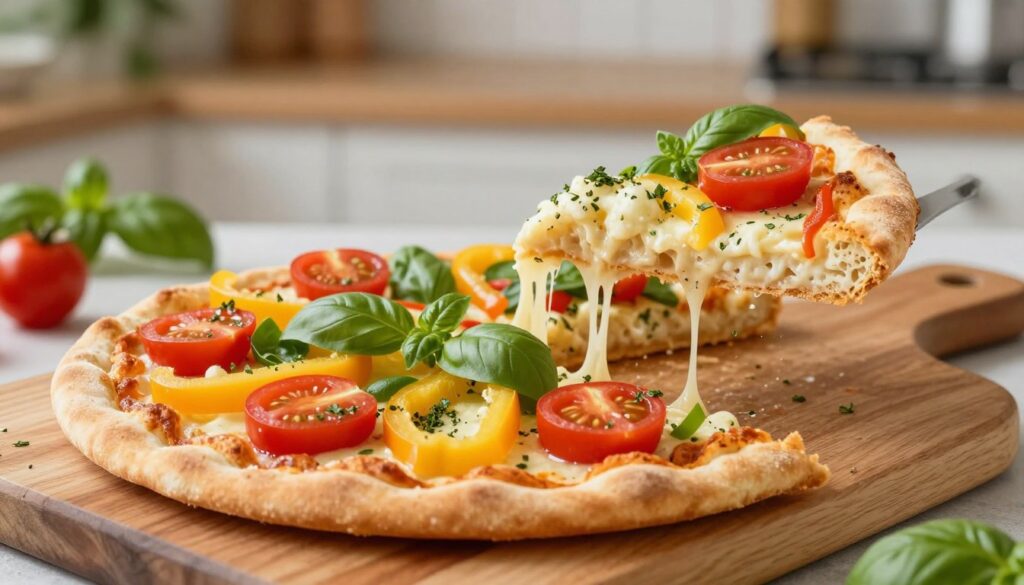
To keep your cauliflower pizza crust low in calories, choose toppings wisely. Use veggies like bell peppers, onions, and mushrooms. Go for lean proteins like chicken or turkey. Limit cheese and avoid high-calorie sauces.
- Vegetables (bell peppers, onions, mushrooms)
- Lean proteins (chicken, turkey)
- Low-fat cheese
Spaghetti Squash with Marinara
Spaghetti squash is a low-calorie pasta substitute. Cooked and shredded, it looks like spaghetti and pairs well with sauces.
“The key to a healthy diet is not just about cutting calories but making smart food choices.”
Cooking Spaghetti Squash Perfectly
To cook spaghetti squash, cut it in half lengthwise, scoop out the seeds, and bake until tender. Then, shred the flesh with a fork. Serve with marinara sauce and lean ground turkey or vegetarian options for a balanced meal.
By adding these low-calorie dishes to your diet, you can enjoy tasty meals while managing your weight.
Meal Prep Strategies for Busy Weekdays
With the right meal prep ideas, you can enjoy wholesome cooking every day, even on the busiest of weekdays. Meal prep is not just about saving time. It’s about making healthy eating a sustainable part of your lifestyle.
Batch Cooking Techniques
Batch cooking is a key part of meal prep. It means preparing large amounts of a single ingredient or meal. This can be portioned out and eaten over several days. It’s especially helpful when time is short on busy weekdays.
Benefits of Batch Cooking:
- Saves time during the week
- Reduces food waste
- Ensures consistent healthy eating
Best Dishes for Batch Cooking
Some dishes are better for batch cooking than others. Consider making:
- Soups and stews
- Casseroles
- Grilled meats and vegetables
- Quinoa or rice bowls with various toppings
Storage and Reheating Tips
Proper storage and reheating are key for keeping your prepped meals safe and fresh.
Storage Tips:
- Use airtight containers to keep food fresh
- Label containers with the date and contents
- Store meals in the refrigerator at 40°F (4°C) or below
Food Safety Guidelines
To avoid foodborne illness, follow these guidelines:
- Reheat food to an internal temperature of 165°F (74°C)
- Consume or freeze meals within 3 to 5 days
- Avoid cross-contamination by separating raw and cooked foods
Weekly Meal Planning Guide
Effective meal planning is the backbone of successful meal prep. Start by:
- Deciding on your meals for the week
- Making a grocery list based on those meals
- Shopping for ingredients
- Preparing meals according to your batch cooking schedule
By following these steps and using batch cooking, proper storage, and reheating, you’ll enjoy healthy meals even on the busiest weekdays.
Smart Ingredient Swaps for Healthier Cooking
Making smart ingredient swaps is a simple way to make your cooking healthier. By changing some ingredients, you can make your meals more nutritious without losing flavor. This is great for those who want to eat clean eating meals and dietary-friendly recipes.
Replacing Refined Carbohydrates
Refined carbs like white bread and sugary cereals are not good for you. They have few nutrients but lots of empty calories. Switching to whole grains can greatly improve your diet.
Whole Grain Alternatives
Whole grains are full of fiber, vitamins, and minerals. They are a healthier choice. Try using quinoa, brown rice, and whole wheat bread instead of refined grains.
- Quinoa is a complete protein and a good source of iron and magnesium.
- Brown rice is high in fiber and manganese.
- Whole wheat bread contains more fiber and nutrients compared to white bread.
| Refined Carbohydrate | Whole Grain Alternative | Nutritional Benefit |
|---|---|---|
| White Rice | Brown Rice | Higher in Fiber and Manganese |
| White Bread | Whole Wheat Bread | Higher in Fiber and Nutrients |
| Sugary Cereals | Oatmeal with Fresh Fruits | Lower in Sugar, Higher in Fiber |
Healthy Fat Alternatives
Not all fats are the same. Bad fats can harm you, but good fats are vital for your brain and body. They help with hormone production and vitamin absorption.
Reducing Saturated Fats in Recipes
Choosing healthier fats can reduce saturated fats. Use avocado or olive oil instead of butter or margarine.
By making these simple changes, you can make dietary-friendly recipes that taste great and are good for you. The secret to healthy cooking is being careful about what you use and making smart choices.
Building Balanced Plates Every Time
Making a balanced plate is easier than you might think. It’s a key step to eating healthier. By learning about portion control and mixing food groups, you can make balanced meal options that taste great and are good for you.
Let’s look at a simple way to make balanced meals.
The Plate Method for Portion Control
The plate method is a simple way to eat the right amounts of food. Here’s how it works: split your plate into parts.
- Fill half your plate with vegetables.
- Put a quarter of your plate to lean proteins.
- Use the last quarter for whole grains or complex carbs.
This method helps control portions and ensures you get the right nutrients.
Combining Food Groups Effectively
Mixing different food groups is crucial for nutritious recipes. A balanced meal should have a variety of:
| Food Group | Examples | Benefits |
|---|---|---|
| Vegetables | Leafy greens, broccoli, bell peppers | Rich in vitamins, minerals, and fiber |
| Lean Proteins | Chicken, fish, tofu | Essential for muscle repair and growth |
| Whole Grains | Brown rice, quinoa, whole wheat bread | Provide sustained energy and fiber |
By mixing these food groups in your meals, you get a wide range of nutrients.
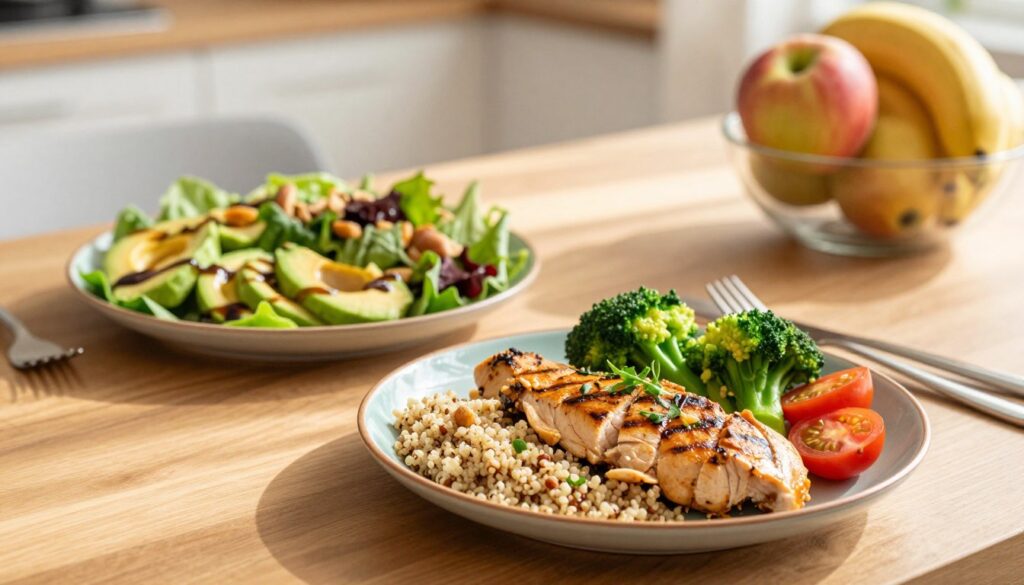
For example, a balanced plate might have grilled chicken (lean protein), roasted veggies (vegetables), and quinoa (whole grain). This mix gives you protein, healthy fats, and complex carbs.
By using the plate method and mixing food groups well, you can make balanced meal options that are good for your health and well-being.
Conclusion
Choosing healthy food dishes and wholesome cooking can change how you view food. It can also boost your overall health. By using the recipes and meal prep tips from this article, you’re on your way to a balanced diet.
You now have many tasty and healthy meal choices. Whether it’s breakfast, lunch, dinner, or snacks, you’re ready to make smart food decisions. You can pick from energizing breakfasts, filling dinners, and healthy snacks.
By following the principles of wholesome cooking, you can enjoy a diet that’s both balanced and nutritious. Try out new recipes and ingredients to keep your meals interesting and healthy.
FAQ
How can I start incorporating more clean eating meals into my busy schedule?
Start by planning your meals for the week. Set aside a few hours on Sunday to cook basics like quinoa, sweet potatoes, and chicken. This way, you’ll always have healthy options ready in your fridge.
Use good storage containers to keep your food fresh. Brands like Glasslock or Rubbermaid are great for this. They help your meals stay fresh all week.
What are some low-calorie dishes that actually feel filling?
Try dishes that are low in calories but high in volume. Spaghetti squash with marinara or cauliflower pizza with lots of veggies are great. They’re filling because of their fiber, not because of calories.
Why is wholesome cooking better for my long-term health than processed alternatives?
Wholesome cooking lets you control what goes into your food. You avoid hidden bad stuff like sodium and sugars. Home-cooked meals give you good carbs and proteins for energy and blood sugar control.
What are the best lean protein dishes for someone focused on muscle building?
For muscle growth, eat lean proteins like chicken, salmon, and turkey meatballs. Tofu or tempeh are good plant-based options. Pair these with carbs for energy to build muscle.
How do I ensure my plant-based healthy food dishes provide enough protein?
Meet your protein needs with plant-based foods by mixing different sources. Chickpea curry, black bean tacos, and lentil soup are all good. Add Barilla Protein+ pasta or seeds and nuts for extra protein.
Can you suggest some smart ingredient swaps to make my current meals more nutritious?
Upgrade your meals by swapping bad carbs for good ones. Use brown rice or farro instead of white rice. Replace butter with avocado or olive oil for healthy fats. These changes make your meals healthier without losing flavor.
What is the most effective way to practice portion control without feeling deprived?
The Plate Method is a great way to control portions. Fill half your plate with veggies, a quarter with protein, and a quarter with carbs. This method helps you eat balanced meals and stay on track with your diet.