

Are you looking to elevate your culinary skills with delicious and easy-to-make seafood recipes? Whether you’re a seasoned chef or a kitchen novice, cooking with fish and other seafood can be a great way to add variety to your meals.
- The Art of Cooking Seafood at Home
- Essential Seafood Cooking Techniques
- Quick and Easy Seafood Dish Recipes for Weeknights
- Elegant Seafood Recipes for Special Occasions
- Healthy Seafood Dish Recipes for Nutritious Meals
- International Seafood Dish Recipes to Try at Home
- One-Pot Seafood Meals for Easy Cleanup
- Seafood Appetizers and Small Plates
- Seafood Pasta and Rice Dishes
- Seasonal Seafood Cooking Guide
- Sustainable Seafood Choices and Cooking Tips
- Conclusion: Mastering the Art of Seafood Cooking
- FAQ
- What are the key characteristics of fresh seafood?
- How do I achieve perfect timing when steaming or poaching seafood?
- What is the best way to prepare lobster for lobster thermidor?
- What are the benefits of one-pan cooking for Mediterranean fish with vegetables?
- How do I build flavor layers in Italian cioppino?
- What is the key to creating the perfect seasoning blend for seafood boil?
- How do I achieve a crispy exterior on crab cakes?
- What is the secret to a classic shrimp scampi?
- How do I choose sustainable seafood options?
- What are some tips for cooking seasonal seafood in the spring?
Cooking seafood can be intimidating, but with the right cooking techniques, you can create mouth-watering fish dishes that will impress your family and friends.
Key Takeaways
- Explore a variety of seafood recipes for different occasions.
- Master essential cooking techniques for preparing fish and seafood.
- Discover new ideas for incorporating fish dishes into your meal routine.
- Learn how to make flavorful meals that will impress your loved ones.
- Get inspired to try new seafood recipes and cooking methods.
The Art of Cooking Seafood at Home
To master the art of seafood cooking, understanding the freshness of your ingredients is crucial. Fresh seafood not only tastes better but is also safer to eat. When you’re preparing seafood at home, the quality of your ingredients can make or break your dish.
Understanding Seafood Freshness
Freshness is key to a great seafood dish. Here are some tips to help you choose the freshest seafood:
How to Select Quality Fish
When selecting fish, look for clear, bright eyes, and firm flesh that springs back when touched. The gills should be red, and there should be no strong fishy smell. Always check the source of your fish to ensure it’s sustainably caught or farmed.
Shellfish Selection Guidelines
For shellfish like shrimp, mussels, and clams, look for shells that are closed or close when tapped. Avoid any with broken shells or an overly fishy smell. Fresh shellfish should have a mild smell of the sea.
| Seafood Type | Freshness Indicators | Signs of Spoilage |
|---|---|---|
| Fish | Clear eyes, firm flesh, red gills | Dull eyes, soft flesh, strong smell |
| Shellfish | Closed shells, mild sea smell | Broken shells, strong fishy smell |
By following these guidelines, you can ensure that your seafood dishes are not only delicious but also safe to eat. Whether you’re cooking fish or shellfish, the key is to start with the freshest ingredients possible.
Essential Seafood Cooking Techniques
The art of cooking seafood involves several techniques, with steaming and poaching being among the most effective for achieving tender and flavorful dishes. To cook seafood like a pro, you need to understand the methods that preserve its delicate flavor and texture.
Steaming and Poaching
Steaming and poaching are two moist-heat cooking methods that are ideal for cooking seafood. Steaming involves cooking seafood in a steamer basket over boiling water, while poaching involves submerging it in liquid, usually a flavorful broth or court-bouillon.
Perfect Timing for Different Seafood Types
Cooking time is crucial when steaming or poaching seafood. The timing varies depending on the type and thickness of the seafood. For example, delicate fish fillets may require only 3-4 minutes, while thicker cuts or shellfish may need 8-10 minutes.
| Seafood Type | Steaming Time | Poaching Time |
|---|---|---|
| Delicate Fish Fillets | 3-4 minutes | 4-5 minutes |
| Thicker Fish Cuts | 8-10 minutes | 10-12 minutes |
| Shellfish (e.g., Mussels) | 5-7 minutes | 5-7 minutes |
Flavor-Enhancing Liquids
The liquid used for poaching can greatly enhance the flavor of your seafood. You can use a variety of ingredients like white wine, lemon juice, and herbs to create a flavorful poaching liquid. For instance, butter-poached fish is a luxurious dish that’s surprisingly easy to make, resulting in an incredibly tender and rich texture.
Quick and Easy Seafood Dish Recipes for Weeknights
Quick and easy seafood dishes are perfect for weeknights when time is of the essence. You can create a delicious and satisfying meal without spending hours in the kitchen.
15-Minute Garlic Shrimp Pasta
This recipe is a favorite among shrimp lovers, and it’s ready in just 15 minutes. Garlic shrimp pasta is a classic combination that’s both flavorful and easy to make.
Ingredient Preparation
To start, you’ll need the following ingredients:
- 1 pound large shrimp, peeled and deveined
- 2 cloves garlic, minced
- 1 cup pasta of your choice
- 2 tablespoons olive oil
- 1 teaspoon dried parsley
- Salt and pepper to taste
- Grated Parmesan cheese (optional)
Make sure your ingredients are ready before you begin cooking, as this dish comes together quickly.
Step-by-Step Cooking Process
Cook the pasta according to the package instructions until al dente. Meanwhile, heat the olive oil in a large skillet over medium-high heat. Add the garlic and sauté for 1 minute until fragrant.
Add the shrimp to the skillet and cook for 2-3 minutes per side, until they’re pink and cooked through. Season with salt, pepper, and parsley.
Combine the cooked pasta and shrimp mixture. Toss well to coat the pasta with the garlic and shrimp. Serve hot, topped with grated Parmesan cheese if desired.
This 15-minute garlic shrimp pasta is a quick seafood recipe that’s perfect for busy weeknights. It’s a dish that’s sure to become a staple in your kitchen.
Elegant Seafood Recipes for Special Occasions
Special occasions call for extraordinary meals, and elegant seafood recipes fit the bill perfectly. Whether you’re hosting a dinner party or celebrating a milestone, seafood dishes can add a touch of sophistication to your table.
Lobster Thermidor
Lobster Thermidor is a classic French dish that epitomizes elegance. It involves baking lobster tails with a rich, creamy sauce made from garlic butter, mustard, and cognac. This dish is sure to impress your guests with its rich flavors and luxurious presentation.
Lobster Preparation Techniques
Preparing lobster for Thermidor involves several key steps. First, you need to humanely kill and clean the lobster, then separate the meat from the shell. The shells are typically filled with a mixture of lobster meat, sauce, and breadcrumbs before being baked until golden brown.
Creating the Classic Sauce
The sauce is a crucial component of Lobster Thermidor. To create it, you’ll need to mix softened butter with garlic, mustard, and a splash of cognac. This mixture is then combined with the lobster meat and spooned back into the lobster shells.
“The key to a great Lobster Thermidor lies in the quality of its ingredients and the care taken in its preparation.”
Here’s a simple table to help you keep track of the ingredients needed for Lobster Thermidor:
| Ingredient | Quantity |
|---|---|
| Lobster tails | 4 |
| Butter | 1/2 cup |
| Garlic | 2 cloves |
By following these steps and using high-quality ingredients, you can create an elegant seafood dish that’s sure to wow your guests.
Healthy Seafood Dish Recipes for Nutritious Meals
You can enjoy nutritious meals by exploring healthy seafood recipes. Incorporating seafood into your diet can provide numerous health benefits due to its high protein content and rich omega-3 fatty acids.
Mediterranean Fish with Vegetables
Mediterranean baked fish is a flavorful and healthy option that’s bursting with fresh ingredients. This dish combines the richness of fish with the freshness of vegetables, creating a well-balanced meal.
Nutritional Benefits
The Mediterranean diet is renowned for its health benefits, including reduced risk of heart disease and improved cognitive function. By combining fish with vegetables, you get a meal rich in vitamins, minerals, and antioxidants.
One-Pan Cooking Method
One of the advantages of Mediterranean fish with vegetables is its simplicity. The one-pan cooking method not only reduces cleanup but also allows the flavors to meld together, enhancing the overall taste of the dish. This method ensures that the fish remains moist while the vegetables are cooked to perfection.
By adopting healthy seafood recipes like Mediterranean fish with vegetables, you’re making a conscious choice towards a balanced diet.
International Seafood Dish Recipes to Try at Home
The world of seafood is vast and varied, with different cultures offering unique recipes to try at home. You can explore a multitude of flavors and techniques from around the globe, enriching your culinary experience.
Italian Cioppino (Seafood Stew)
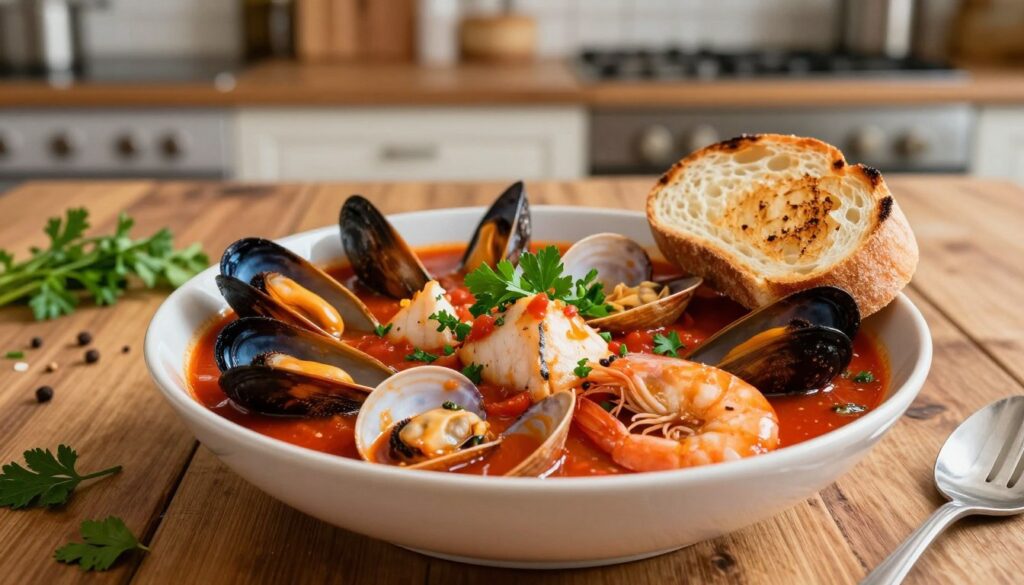
Italian Cioppino is a hearty seafood stew originating from San Francisco’s Italian-American community. It’s a flavorful dish that combines a variety of seafood such as clams, mussels, scallops, and fish, all simmered in a rich tomato broth.
Building Flavor Layers
To create a rich and satisfying Cioppino, it’s essential to build layers of flavor. Start with a base of sautéed onions, garlic, and sometimes fennel, then add white wine to deglaze the pan, followed by tomatoes and seafood broth. The key is to simmer the stew gently, allowing the flavors to meld together.
Seafood Addition Sequence
The sequence in which you add seafood to Cioppino is crucial for achieving the perfect texture. Typically, you start with firmer seafood like fish and squid, followed by more delicate options such as shrimp and scallops, and finally, clams and mussels, which cook quickly.
| Seafood Type | Cooking Time | Addition Order |
|---|---|---|
| Fish | 5-7 minutes | First |
| Shrimp | 2-3 minutes | Second |
| Clams/Mussels | 3-5 minutes | Last |
By following these guidelines, you can create an authentic Italian Cioppino that showcases the diversity and richness of international seafood recipes.
One-Pot Seafood Meals for Easy Cleanup
Seafood lovers rejoice with one-pot meals that are both delicious and convenient. You can simplify your dinner routine with a hearty seafood boil that includes corn and potatoes, making it a complete meal.
Seafood Boil with Corn and Potatoes
A seafood boil is a delicious and easy dinner for entertaining, so break out the newspaper and put a pot on. This classic dish is perfect for a crowd, and you can customize it with your favorite seafood.
Creating the Perfect Seasoning Blend
The key to a great seafood boil is the seasoning blend. You can use a store-bought mix or create your own using a combination of paprika, garlic powder, and cayenne pepper. Experiment with different spices to find the flavor you enjoy.
Timing Each Component
To ensure that all components are cooked perfectly, it’s essential to time them correctly. Add potatoes and corn first, as they take longer to cook. Then, add your seafood, such as shrimp and mussels, towards the end.
| Ingredient | Cooking Time |
|---|---|
| Potatoes | 10-12 minutes |
| Corn | 5-7 minutes |
| Shrimp | 2-3 minutes |
| Mussels | 3-5 minutes |
Seafood Appetizers and Small Plates
When it comes to seafood appetizers, few dishes are as impressive as a well-made crab cake. You can elevate your dining experience with these delicious and easy-to-make treats.
Crab Cakes with Remoulade Sauce
Crab cakes are a classic seafood appetizer that combines the sweetness of crab with a tangy remoulade sauce. To make them, you’ll need fresh crab meat, breadcrumbs, and a blend of spices.
Binding Techniques for Perfect Texture
A good crab cake should hold together well when cooked. To achieve this, you can use a combination of mayonnaise, egg, and breadcrumbs as binding agents. Here are some tips for binding:
- Use fresh, high-quality crab meat to ensure the best flavor and texture.
- Don’t overmix the ingredients, as this can make the crab cakes dense and tough.
- Chill the crab cakes before cooking to help them retain their shape.
Pan-Frying Methods
Pan-frying is a great way to cook crab cakes, giving them a crispy exterior and a tender interior. To pan-fry crab cakes, heat a skillet with a small amount of oil over medium-high heat. Cook the crab cakes for about 4 minutes on each side, until they’re golden brown and cooked through.
Seafood Pasta and Rice Dishes
Seafood, pasta, and rice – a trio that promises a culinary adventure. You can create a variety of dishes that are both flavorful and satisfying. One of the most beloved seafood pasta dishes is Classic Shrimp Scampi.
Classic Shrimp Scampi
Anything sautéed in lots of garlic and butter is bound to be delicious, and shrimp are no exception. The key to a great shrimp scampi lies in the balance of its ingredients.
Garlic and Wine Balance
Achieving the right balance between garlic and wine is crucial. You want the garlic to be aromatic but not overpowering, and the wine to add a subtle depth without making the dish too acidic.
Pasta Cooking and Sauce Integration
Cooking pasta al dente is essential, as it holds the sauce better. Integrating the scampi sauce with the pasta requires a bit of finesse – you want to coat the pasta evenly without making it too soggy or oily.
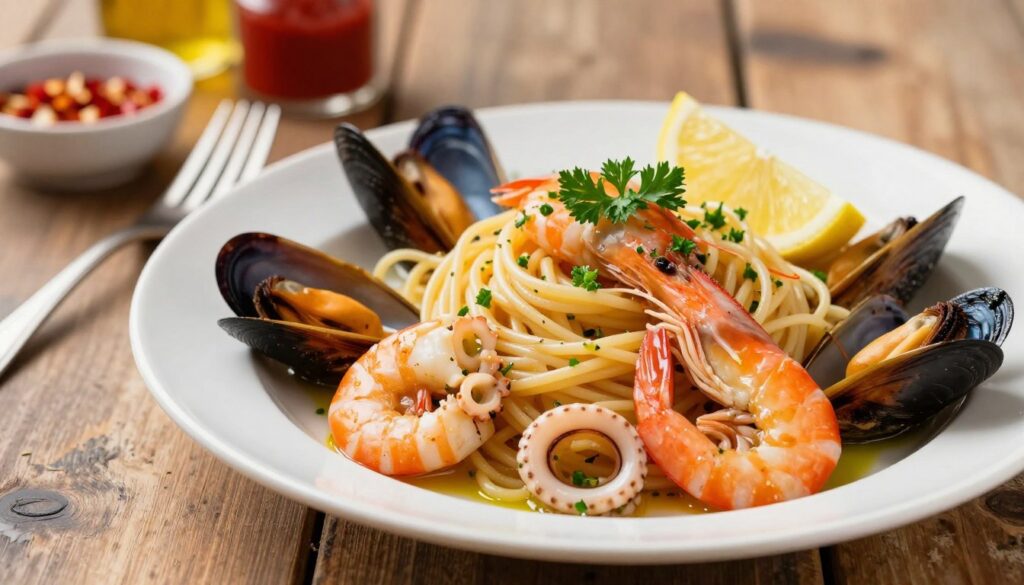
To perfect your shrimp scampi, remember to use fresh ingredients and don’t overcook the shrimp. With practice, you’ll master the art of creating a dish that’s both elegant and easy to make.
Seasonal Seafood Cooking Guide
With the onset of spring, seafood lovers can rejoice in the availability of fresh, seasonal ingredients. This season brings a variety of seafood options that are perfect for light and refreshing meals.
Spring: Light and Fresh Preparations
Spring is a time when many seafood species are at their peak freshness. Seafood such as shrimp, salmon, and halibut become staples in many kitchens due to their flavor and versatility.
Seasonal Species Availability
During spring, the waters are filled with an array of seafood. You can find fresh catches like lobster and oysters, which are ideal for special occasions or simple family dinners.
Herb and Citrus Pairings
Lemon and lots of fresh herbs keep dishes like shrimp pasta salad light and refreshing. Consider pairing your seafood with herbs like parsley, dill, or basil, and don’t forget a squeeze of lemon or orange for added brightness.
By incorporating these seasonal ingredients and flavors, you can create delicious and healthy meals that celebrate the best of spring’s seafood offerings.
Sustainable Seafood Choices and Cooking Tips
Choosing sustainable seafood is a simple yet effective way to contribute to ocean conservation. As you explore various seafood recipes, understanding the impact of your choices can enhance both your meals and the health of our oceans.
Understanding Seafood Sustainability Labels
Seafood sustainability labels are crucial for making informed choices. These labels indicate the environmental sustainability and social responsibility of seafood products.
Common Certification Programs
- MSC (Marine Stewardship Council): Certifies wild-caught seafood that meets rigorous standards for sustainability.
- ASC (Aquaculture Stewardship Council): Focuses on responsible aquaculture practices.
- BEST (Building Effective Salmon Trade): Promotes sustainable salmon farming.
What the Labels Really Mean
Understanding these labels helps you make choices that support healthy fish populations, minimal environmental impact, and fair labor practices. For instance, MSC-certified products ensure that the seafood comes from fisheries that maintain healthy fish populations and have minimal environmental impact.
By choosing seafood with these certifications, you’re supporting sustainable fishing practices and contributing to a healthier ocean ecosystem.
Conclusion: Mastering the Art of Seafood Cooking
You now have a solid foundation in seafood cooking, from understanding freshness to mastering various cooking techniques. With these skills, you can create delicious and healthy meals for any occasion.
By incorporating seafood into your diet, you’re not only treating your taste buds to a world of flavors, but you’re also making a nutritious choice. Seafood cooking techniques like steaming and poaching help retain the natural goodness of the ingredients, making your meals both satisfying and healthy.
As you continue to explore the world of seafood cuisine, remember that practice makes perfect. Try new recipes, experiment with different flavors, and don’t be afraid to innovate. With a sweet, creamy dipping sauce and crisp coconut breading, you can jazz up a weeknight meal and make it special.
Mastering seafood cooking is a journey, and with the right techniques and ingredients, you can create mouth-watering dishes that will impress your family and friends. So, keep cooking, and enjoy the process of mastering seafood cooking techniques.
FAQ
What are the key characteristics of fresh seafood?
Fresh seafood typically has a mild smell, firm texture, and shiny appearance. When selecting fish, look for clear eyes, red gills, and a smooth texture. For shellfish, choose those with tightly closed shells or that close when tapped.
How do I achieve perfect timing when steaming or poaching seafood?
To achieve perfect timing, consider the type and thickness of the seafood. Delicate fish like sole or flounder require shorter cooking times, while thicker fish like salmon or cod need more time. Use a thermometer to ensure the seafood reaches a safe internal temperature.
What is the best way to prepare lobster for lobster thermidor?
To prepare lobster for lobster thermidor, start by steaming or boiling the lobster until it’s partially cooked. Then, remove the meat from the shell, chop it, and mix it with the thermidor sauce. Finally, fill the lobster shells with the mixture and bake until golden brown.
What are the benefits of one-pan cooking for Mediterranean fish with vegetables?
One-pan cooking for Mediterranean fish with vegetables offers several benefits, including reduced cleanup, retained flavors, and a nutritious meal. This method allows the fish and vegetables to cook together, creating a harmonious balance of flavors and textures.
How do I build flavor layers in Italian cioppino?
To build flavor layers in Italian cioppino, start by sautéing aromatics like onions, garlic, and fennel. Then, add a mixture of tomatoes, white wine, and seafood broth, followed by a variety of seafood. Simmer the stew, allowing the flavors to meld together, and season with herbs and spices.
What is the key to creating the perfect seasoning blend for seafood boil?
The key to creating the perfect seasoning blend for seafood boil is to balance spices, herbs, and aromatics. Combine ingredients like paprika, cayenne pepper, thyme, and lemon juice to create a flavorful broth. Adjust the seasoning to your taste, and don’t be afraid to experiment with different combinations.
How do I achieve a crispy exterior on crab cakes?
To achieve a crispy exterior on crab cakes, use a combination of panko breadcrumbs and pan-frying. Gently shape the crab mixture into patties, coat with panko breadcrumbs, and fry in a hot skillet with oil until golden brown and crispy.
What is the secret to a classic shrimp scampi?
The secret to a classic shrimp scampi lies in the balance of garlic, butter, and white wine. Cook the shrimp in a mixture of garlic, butter, and white wine, then serve with linguine and parsley. Use high-quality ingredients and don’t overcook the shrimp to ensure a tender and flavorful dish.
How do I choose sustainable seafood options?
To choose sustainable seafood options, look for certifications like MSC (Marine Stewardship Council) or ASC (Aquaculture Stewardship Council). These labels ensure that the seafood is caught or farmed using environmentally friendly and responsible practices. Check the origin and type of seafood to make informed choices.
What are some tips for cooking seasonal seafood in the spring?
When cooking seasonal seafood in the spring, take advantage of fresh and light preparations. Pair spring seafood with herbs like parsley, dill, or basil, and citrus flavors like lemon or orange. Grilling, poaching, or sautéing are great cooking methods to highlight the delicate flavors of spring seafood.