
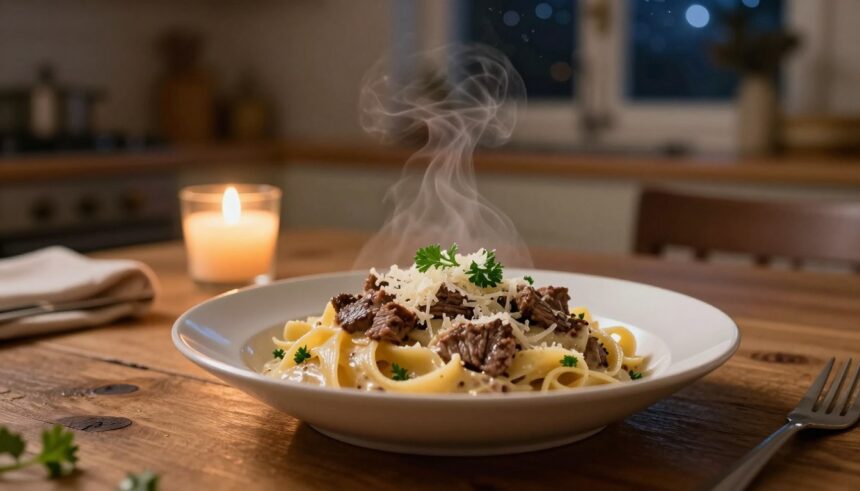
As the evening gets chilly, a warm bowl of creamy beef pasta is perfect. Imagine snuggling up with a book or your favorite movie. A steaming plate and candles make it even cozier.
- The Comfort of Creamy Beef Pasta on Cold Evenings
- Essential Ingredients for the Perfect Creamy Beef Pasta
- Kitchen Tools and Equipment You’ll Need
- Preparing Your Ingredients: A Step-by-Step Guide
- Proper Meat Preparation Techniques
- Vegetable Cutting and Preparation
- Measuring and Organizing Your Ingredients
- Cooking the Perfect Creamy Beef Pasta
- Searing the Beef to Perfection
- Temperature and Timing Considerations
- Achieving the Perfect Browning
- Creating a Flavorful Base
- Achieving the Ideal Pasta Texture
- The Al Dente Secret
- Pasta Water: The Secret Ingredient
- Combining Components for Maximum Flavor
- Secret Techniques for an Extra Creamy Sauce
- Balancing Cream and Cheese
- Cheese Selection for Optimal Meltability
- Incorporating Cheese Without Graininess
- Temperature Control Tips
- Preventing Sauce Separation
- The Low and Slow Method
- Troubleshooting Common Sauce Issues
- Flavor Enhancers and Seasoning Tips
- Herbs That Complement Beef Pasta
- Spice Combinations for Depth of Flavor
- The Importance of Layering Flavors
- Variations on the Classic Creamy Beef Pasta
- Mediterranean-Inspired Adaptations
- Spicy Alternatives for Heat Lovers
- Lighter Versions for Health-Conscious Diners
- Pairing Suggestions: Sides and Beverages
- Make-Ahead and Storage Tips
- Conclusion: Mastering the Art of Creamy Beef Pasta
- FAQ
- What is the best type of pasta to use for creamy beef pasta?
- Can I use different cuts of beef for creamy beef pasta?
- How do I achieve a silky cream base for my pasta sauce?
- What are some essential kitchen tools for making creamy beef pasta?
- How can I prevent my pasta from becoming overcooked?
- What are some tips for balancing cream and cheese in the sauce?
- Can I make creamy beef pasta ahead of time?
- How do I reheat creamy beef pasta without losing quality?
- What are some variations on the classic creamy beef pasta recipe?
- What are some good pairing suggestions for creamy beef pasta?
- How can I make a lighter version of creamy beef pasta?
This beef pasta recipe is more than food; it’s a special moment. It’s about enjoying rich flavors and letting go of stress. Our recipe is easy and comforting, ideal for cozy nights.
Key Takeaways
- A simple yet satisfying beef pasta recipe for cozy nights.
- Rich and creamy sauce to warm up your evening.
- Perfect for a relaxing night in with a good book or movie.
- Easy to make, even on a busy day.
- A comforting meal that melts away the stresses of the day.
The Comfort of Creamy Beef Pasta on Cold Evenings
When it gets cold, nothing beats a warm bowl of creamy beef pasta. It’s like a hug in a bowl. The first bite fills you with comfort, warming you up inside.
This dish is the perfect comforting meal for chilly winter nights. It’s a treat that makes you want to snuggle up with a full plate.
Why Pasta Dishes Make Perfect Comfort Food
Pasta, especially creamy sauces like our beef pasta, is the ultimate comfort food. It brings back memories of home-cooked meals from your childhood. Making an easy creamy pasta is simple, making it great for any day.
“Pasta is the ultimate comfort food because it’s familiar, it’s comforting, and it’s versatile.”
The Rich History of Beef and Pasta Combinations
Beef and pasta have a long history across cultures. From Italian classics to American twists, the mix has grown. A homemade beef pasta dish takes you on a culinary journey, offering a taste of history.
| Dish | Origin | Description |
|---|---|---|
| Pappardelle with Beef Ragù | Italy | Wide, flat noodles served with a rich beef and tomato sauce. |
| Beef and Shells | USA | Shell pasta baked in a creamy beef and tomato sauce. |
Essential Ingredients for the Perfect Creamy Beef Pasta
A great creamy pasta dish starts with the right ingredients. To make a beef pasta dinner that’s truly satisfying, focus on the basics. The right mix of beef, pasta, and creamy sauce can turn your meal into something special.
Selecting the Right Cuts of Beef
The quality of your beef is key for a creamy beef pasta dish. You can choose between ground beef or steak.
Ground Beef vs. Steak Options
Ground beef is popular because it’s easy to cook and mixes well with pasta and sauce. Steak, however, offers a tender and fancy option. Sirloin or ribeye steak adds a richer flavor.
Quality Indicators to Look For
Whether you pick ground beef or steak, look for freshness and the right color. For ground beef, choose a mix with a higher lean-to-fat ratio for better taste and texture.
Pasta Varieties That Work Best
The pasta you choose greatly affects your creamy pasta dish. Some shapes hold sauce better than others.
Shapes That Hold Creamy Sauces
Shells, pappardelle, and fettuccine are great because they trap creamy sauce well.
Fresh vs. Dried Pasta Considerations
Fresh pasta is tender, but dried pasta holds sauce better and has a firmer bite. Think about what you prefer.
Creating a Silky Cream Base
A rich, creamy sauce is the heart of any creamy beef pasta recipe. The secret is finding the right balance of dairy.
Dairy Options and Substitutions
Heavy cream is a favorite for its creamy texture. But you can also mix milk and butter or try dairy-free options like coconut cream.
Balancing Fat Content for Perfect Texture
The fat in your cream base affects the sauce’s texture. Adjusting cream amounts or adding Parmesan cheese can get it just right.
Kitchen Tools and Equipment You’ll Need
The right kitchen equipment is key to making a delicious creamy beef pasta. You’ll need some essential tools and cookware for a smooth cooking process.
Essential Cookware for Pasta Preparation
A large pot is crucial for cooking pasta to the perfect al dente texture. A 10.25″ Le Creuset cast iron skillet is also recommended for searing beef and making the creamy sauce. These pieces of cookware are essential for the best results.
| Cookware | Purpose |
|---|---|
| Large Pot | Cooking Pasta |
| Cast Iron Skillet | Searing Beef and Making Sauce |
Helpful Gadgets That Make Cooking Easier
Certain gadgets can make cooking easier. Angled measuring cups are great for accurately measuring ingredients. Other helpful tools include a garlic press and a wooden spoon for sauce preparation.
Preparing Your Ingredients: A Step-by-Step Guide
A great creamy beef pasta starts with good ingredients. Preparing them right makes cooking easier and improves taste and texture.
Proper Meat Preparation Techniques
Choosing the right beef is key for a tender dish. Opt for tender cuts like sirloin or ribeye.
Trimming and Cutting Methods
Remove excess fat from the beef and cut it into small pieces. Uniform cutting ensures even cooking, so aim for consistent sizes.
Seasoning Before Cooking
Season the beef with salt, pepper, and herbs before cooking. This step is vital for the beef’s flavor.
Vegetable Cutting and Preparation
Vegetables add depth and complexity to the dish. Onions, garlic, and herbs are key aromatics.
Aromatics: Onions, Garlic, and Herbs
Chop onions and mince garlic to release their flavors. Add fresh herbs like parsley or thyme towards the end to keep their flavor.
Additional Vegetables for Enhanced Flavor
Adding vegetables like bell peppers or mushrooms boosts flavor and nutrition. Sauteing them before adding pasta can enhance their sweetness.
Measuring and Organizing Your Ingredients
After preparing, measure and organize your ingredients. This makes cooking smoother and faster.
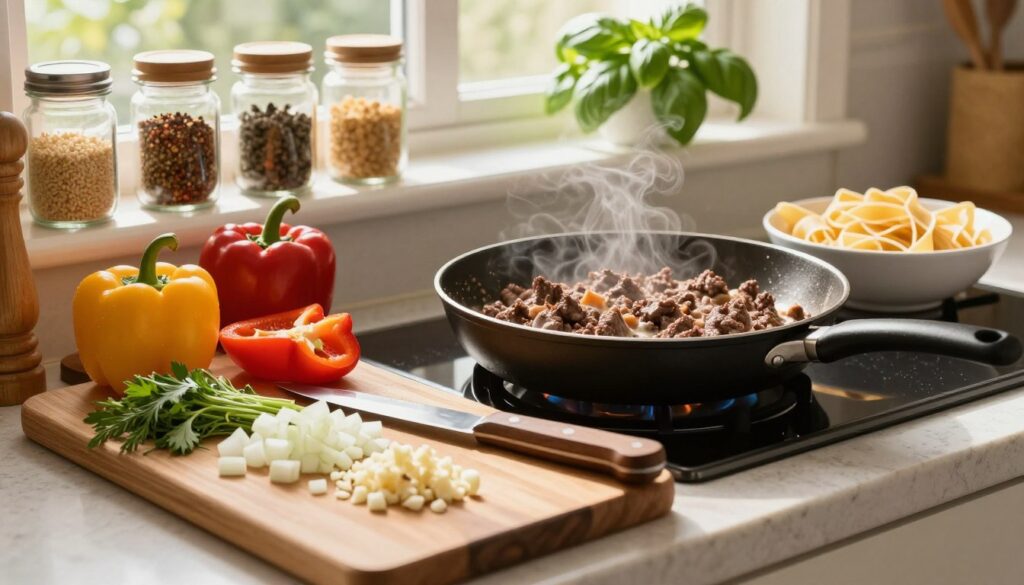
“The only time to eat diet food is while you’re waiting for the steak to cook.”
This quote captures the joy of cooking a hearty meal like creamy beef pasta.
Cooking the Perfect Creamy Beef Pasta
Making creamy beef pasta is all about mixing flavors and textures right. You need to know a few key cooking tricks to get it just right.
Searing the Beef to Perfection
Searing the beef is key to making the dish taste better. Learning the right searing techniques can really improve the beef’s flavor and texture.
Temperature and Timing Considerations
To sear beef well, think about temperature and timing. Heat your pan hot, then add oil and beef. Cook for 2-3 minutes on each side, based on the beef’s thickness.
Achieving the Perfect Browning
Browning happens through the Maillard reaction, a chemical process. For perfect browning, make sure the beef is dry and don’t put too much in the pan.
Creating a Flavorful Base
A good base is key for a rich sauce. Start by sautéing onions, garlic, and sometimes celery. Use butter and olive oil for extra flavor.
| Aromatic | Quantity | Cooking Time |
|---|---|---|
| Onion | 1 medium | 5 minutes |
| Garlic | 3 cloves | 1 minute |
Achieving the Ideal Pasta Texture
Getting the pasta just right is important. “Al dente” means it should still have some bite.
The Al Dente Secret
To get al dente pasta, cook it until it’s almost done. Then, check it often. It should still feel firm when you bite it.
Pasta Water: The Secret Ingredient
Save some pasta water before draining. This starchy water helps the sauce stick to the pasta, making it taste better.
Combining Components for Maximum Flavor
Finally, mix the cooked pasta, seared beef, and creamy sauce. Make sure the pasta is well coated with the sauce.
“The key to a great creamy beef pasta is in the balance of its components.”
By following these steps and techniques, you can make a delicious creamy beef pasta dish. It’s sure to impress anyone.
Secret Techniques for an Extra Creamy Sauce
The secret to a rich creamy sauce is simple yet crucial. To make your Creamy Beef Pasta better, learn to balance flavors and textures.
Balancing Cream and Cheese
A great creamy sauce needs the right mix of cream and cheese. Pick the right cheese and add it the right way.
Cheese Selection for Optimal Meltability
Go for cheeses that melt well, like Gruyère, Fontina, or Gouda. Stay away from cheeses that are too soft or too hard. They can mess up the sauce’s feel.
Incorporating Cheese Without Graininess
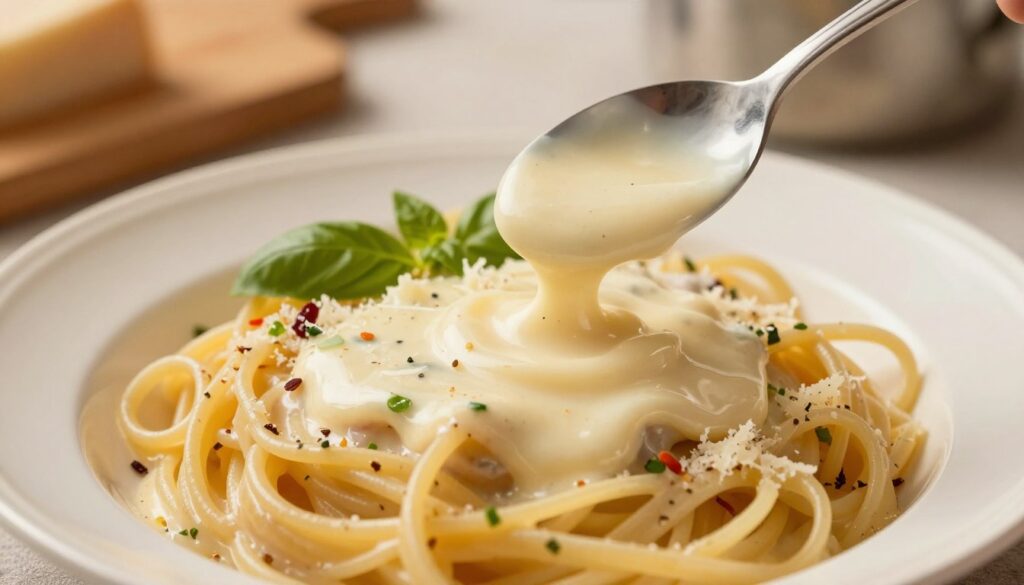
Grate your cheese finely to avoid graininess. Add it slowly to the sauce, stirring constantly on low heat. This keeps the sauce smooth.
Temperature Control Tips
Temperature control is key for a creamy sauce. It stops the sauce from separating and makes sure it covers your pasta well.
Preventing Sauce Separation
Keep your sauce warm but not boiling. If it starts to separate, take it off the heat and whisk hard.
The Low and Slow Method
Use the low and slow method to cook your sauce. It lets the flavors blend and the sauce thicken, making it creamier.
Troubleshooting Common Sauce Issues
Even with careful prep, problems can still happen. You might end up with a sauce that’s too thin, too thick, or has a bad texture.
- If your sauce is too thin, simmer it for a few minutes to reduce it.
- If it’s too thick, add a bit more cream or pasta water to thin it out.
- If the texture is off, check how you added the cheese and adjust as needed.
Flavor Enhancers and Seasoning Tips
Make your creamy beef pasta even better with the right flavor enhancers and seasoning tips. The right mix of herbs and spices can turn a simple dish into a masterpiece.
Herbs That Complement Beef Pasta
Herbs are key to enhancing your creamy beef pasta’s flavor. Whether fresh or dried, basil, oregano, and thyme add depth and complexity.
Fresh vs. Dried Herb Usage
Fresh herbs give a brighter flavor, while dried herbs are more concentrated. Add fresh herbs at the end, and dried ones earlier.
Timing Your Herb Additions
When to add herbs matters. Add delicate herbs like parsley and basil at the end. Thyme and rosemary can go in earlier.
Spice Combinations for Depth of Flavor
Spices like chili powder and garlic can really boost your dish. Try different spice mixes to find the perfect flavor for you.
| Spice | Flavor Profile | Usage |
|---|---|---|
| Chili Powder | Smoky, slightly spicy | Add to the sauce for a bold flavor |
| Garlic Powder | Savory, aromatic | Mix into the pasta or sauce |
| Paprika | Mild, sweet | Use as a garnish or mix into the sauce |
The Importance of Layering Flavors
Layering flavors is crucial for a rich dish. Start with a solid base, then add layers with herbs, spices, and more.
Building a Flavor Foundation
Start with onions and garlic, then add your protein and sauce. This base supports the other flavors you add.
Finishing Touches for Maximum Impact
End your dish with fresh herbs, lemon, or parmesan cheese. These touches can take your creamy beef pasta to the next level.
With these tips, you can make a creamy beef pasta dish that will wow your family and friends.
Variations on the Classic Creamy Beef Pasta
You can easily customize creamy beef pasta to suit your taste preferences. This beloved dish is a canvas waiting for your creative touch.
Mediterranean-Inspired Adaptations
Transport your taste buds to the Mediterranean by incorporating regional flavors into your creamy beef pasta.
Sun-Dried Tomato and Olive Variations
Add sun-dried tomatoes and Kalamata olives for a salty, savory twist. Sun-dried tomatoes bring a concentrated burst of tomato flavor, while olives add a rich, briny taste.
Incorporating Mediterranean Herbs
Fresh or dried herbs like oregano, thyme, and rosemary can infuse your pasta with the essence of the Mediterranean. Use them to create a herb bouquet garni for added depth.
Spicy Alternatives for Heat Lovers
If you enjoy spicy food, you can give your creamy beef pasta a kick.
Chili and Pepper Options
Add diced jalapeños or red pepper flakes to introduce a spicy element. For a smoky heat, try chipotle peppers in adobo sauce.
Balancing Heat with Creaminess
The creaminess of the sauce can help balance the heat. Adjust the level of spiciness to your liking by adding more or less of the spicy ingredients.
| Spicy Ingredient | Heat Level | Flavor Profile |
|---|---|---|
| Jalapeños | Medium | Crisp, green |
| Red Pepper Flakes | High | Sharp, peppery |
| Chipotle Peppers | Medium-High | Smoky, slightly sweet |
Lighter Versions for Health-Conscious Diners
For a lighter version, consider using leaner cuts of beef and reducing the amount of cream.
You can also load up on vegetables to increase the nutrient density of the dish. Roasted or sautéed vegetables like spinach, bell peppers, and mushrooms can add flavor and texture.
Pairing Suggestions: Sides and Beverages
Exploring different pairing options can make your creamy beef pasta dish even better. The right combinations can make it more enjoyable and satisfying.
Complementary Side Dishes
Choosing the right side dishes can boost your meal’s flavor. Look for options that contrast and complement the pasta’s richness.
Salad Pairings That Cut Through Richness
A fresh salad with a light vinaigrette can balance out the creamy pasta. Choose greens like arugula or spinach. Add cherry tomatoes for a burst of freshness.
Bread Options for Sauce Sopping
Crusty bread is great for soaking up the creamy sauce. Try garlic bread or a rustic baguette for a satisfying crunch.
Wine and Beverage Pairings
The right drink can enhance your creamy beef pasta’s flavors. Here are some wine and drink suggestions that pair well.
Red Wine Selections
A medium-bodied red wine like Merlot or Pinot Noir pairs well with the beef and pasta. The wine’s acidity cuts through the cream sauce’s richness.
Non-Alcoholic Pairing Options
For non-alcoholic drinks, try sparkling water with lemon or a flavorful iced tea. These options can refresh your palate between bites.
Creating a Complete Meal Experience
By choosing the right side dishes and drinks, you can create a complete meal. Feel free to experiment with different combinations to find your favorites.
Make-Ahead and Storage Tips
Making creamy beef pasta ahead of time is easy with the right steps. It’s perfect for busy weeknights or when you have guests over.
Preparing Components in Advance
Start by cooking your pasta al dente and setting it aside. Brown the beef and store it in an airtight container in the fridge for up to a day. You can also chop veggies and keep them in separate containers.
Proper Storage Methods
Use an airtight container to store your creamy beef pasta. This keeps it from getting soggy. If you have leftovers, store them in the fridge at 40°F (4°C) or below within two hours of cooking. Some recipes, like beef and shells, reheat well.
Reheating Without Losing Quality
To reheat your creamy beef pasta, use low heat and stir often. This prevents the sauce from breaking. Adding a little milk or cream can help restore the creamy texture. For the best results, reheat the pasta and sauce separately before mixing them.
| Component | Storage Method | Reheating Tip |
|---|---|---|
| Cooked Pasta | Airtight container in refrigerator | Reheat with a little water or sauce |
| Beef | Airtight container in refrigerator | Reheat gently with sauce |
| Cream Sauce | Airtight container in refrigerator | Reheat slowly, adding milk if needed |
Conclusion: Mastering the Art of Creamy Beef Pasta
Now you know the basics of creamy beef pasta. It’s time to start making your own. Mastering this dish takes patience and practice. Follow the steps in this article to make amazing beef pasta.
As you keep cooking, you’ll find your own special recipes. The secret is to mix flavors right, get the pasta just right, and make a creamy sauce. Soon, you’ll be making dishes that everyone will love.
Use the tips from this article to make your creamy beef pasta stand out. Don’t be shy to try new things and make it your own. There’s so much to discover in the world of creamy beef pasta.
FAQ
What is the best type of pasta to use for creamy beef pasta?
For creamy beef pasta, choose pasta with a rough texture. Shapes like pappardelle, fettuccine, or penne work well. They hold onto the sauce better.
Can I use different cuts of beef for creamy beef pasta?
Yes, you can use different beef cuts. Tender cuts like sirloin or ribeye are best. Ground beef adds a unique texture.
How do I achieve a silky cream base for my pasta sauce?
For a silky cream base, mix heavy cream or half-and-half with Parmesan cheese and a pinch of nutmeg. Simmer until it thickens.
What are some essential kitchen tools for making creamy beef pasta?
You’ll need a large skillet, a saucepan, a colander, and a cheese grater. A garlic press and pasta cooker can also help.
How can I prevent my pasta from becoming overcooked?
Cook pasta al dente. Then, drain and rinse it with cold water. This stops the cooking process.
What are some tips for balancing cream and cheese in the sauce?
Add cheese gradually and taste as you go. This ensures the sauce isn’t too rich or overpowering.
Can I make creamy beef pasta ahead of time?
Yes, you can cook pasta and prepare beef and sauce ahead. Reheat and combine when ready to serve.
How do I reheat creamy beef pasta without losing quality?
Reheat pasta and sauce separately. Warm the sauce gently over low heat. Add cream or milk if needed.
What are some variations on the classic creamy beef pasta recipe?
Try adding different herbs and spices. Use alternative cheeses or add sun-dried tomatoes or roasted vegetables.
What are some good pairing suggestions for creamy beef pasta?
Pair with garlic bread, green salads, or roasted vegetables. A glass of red wine or creamy beer is also good.
How can I make a lighter version of creamy beef pasta?
Use less cream and cheese, or choose lower-fat alternatives. Adding more vegetables also makes it lighter.