

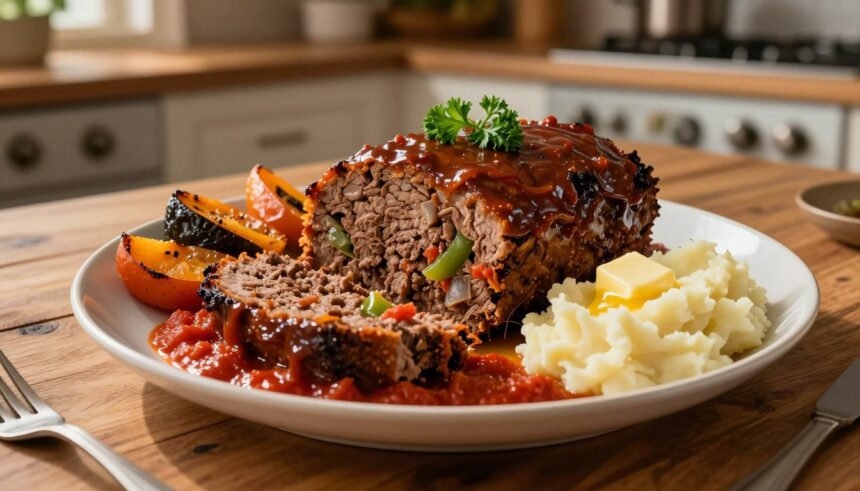
There’s something undeniably comforting about a warm, savory meatloaf straight from the oven. For many, it’s a dish that evokes memories of family dinners and cozy nights at home. Growing up, my family’s classic meatloaf recipe was a staple, a dish that brought everyone together.
- The Secret to Perfect Homemade Meatloaf
- Essential Ingredients for the Best MEATLOAF RECIPE
- Equipment and Tools You’ll Need
- Preparation Steps: Setting Up for Success
- Step-by-Step Mixing and Shaping Instructions
- The Perfect Meat Mixture Consistency
- Shaping Techniques for Even Cooking
- Common Shaping Mistakes to Avoid
- Creating the Perfect Meatloaf Glaze
- Cooking Your Meatloaf to Perfection
- Temperature and Timing Guidelines
- How to Tell When Your Meatloaf is Done
- Resting Period: Why It’s Important
- Troubleshooting Common Meatloaf Problems
- Delicious Variations on the Classic Meatloaf Recipe
- International Meatloaf Inspirations
- Dietary Adaptations (Gluten-Free, Low-Carb)
- Creative Stuffed Meatloaf Ideas
- Conclusion: Mastering the Art of Homemade Meatloaf
- FAQ
- What is the best meat blend to use for a classic meatloaf recipe?
- How do I prevent my meatloaf from becoming too dry?
- Can I make a meatloaf without eggs, and if so, what can I use as a substitute?
- What’s the best way to shape a meatloaf for even cooking?
- How do I know when my meatloaf is done cooking?
- Can I make a simple meatloaf recipe in under an hour?
- What’s a traditional meatloaf recipe, and how can I make it?
- How can I add a delicious glaze to my meatloaf?
- Are there any easy homemade meatloaf recipes that I can try?
- Can I make a gluten-free meatloaf, and if so, how?
This beloved recipe, passed down through generations, has remained unchanged due to its perfect blend of flavors and textures. It’s a best meatloaf recipe that never fails to impress, with its rich, meaty flavor and a tangy ketchup-based glaze.
Key Takeaways
- A classic comfort food dish that’s easy to make.
- Perfect blend of flavors and textures.
- A great recipe to share with family and friends.
- Can be customized with various ingredients.
- Perfect for a cozy night in or a special occasion.
The Secret to Perfect Homemade Meatloaf
Crafting the ideal meatloaf is an art that combines tradition with personal touches. A homemade meatloaf recipe can evoke memories of family dinners and comfort food. To understand what makes a meatloaf great, we first need to explore its significance in American cuisine and the elements that contribute to its enduring popularity.
Why Meatloaf Remains an American Classic
Meatloaf has been a staple of American cooking for decades, offering a hearty and satisfying meal that is both easy to prepare and versatile. Its enduring appeal lies in its simplicity and the ability to customize it with various ingredients, making it a favorite across different regions and cultures. The traditional meatloaf recipe often includes a mix of ground meats, breadcrumbs, and spices, providing a flavorful dish that can be served in numerous ways.
The cultural significance of meatloaf is also tied to its role in family gatherings and nostalgic meals. Many people have fond memories of enjoying meatloaf during holidays or special occasions, further cementing its place in American culinary traditions.
What Makes a Great Meatloaf Recipe
A delicious meatloaf recipe is characterized by its balance of flavors and textures. The right blend of ingredients, including the quality of the meat, the addition of binding agents, and the use of flavor-enhancing components, all contribute to a superior meatloaf. The cooking technique, including the temperature and the method of shaping the loaf, also plays a crucial role in achieving a perfectly cooked meatloaf.
Moreover, a great meatloaf recipe is adaptable, allowing cooks to experiment with different ingredients and toppings to create a dish that suits their taste preferences. Whether you’re making a classic version or a more innovative variation, the key to success lies in understanding the fundamental principles of meatloaf preparation.
Essential Ingredients for the Best MEATLOAF RECIPE
To make an exceptional meatloaf, it’s essential to begin with high-quality ingredients that will enhance the overall flavor and texture. The right combination of meats, binding agents, and flavor enhancers is crucial for a delicious and satisfying dish.
Choosing the Right Meat Blend
Selecting the appropriate meat blend is vital for achieving the perfect balance of flavor and texture in your meatloaf. The type of meat and its fat content play significant roles in the final product.
Ground Beef Options and Fat Content
Ground beef is a staple in many meatloaf recipes. For a moist and flavorful meatloaf, it’s recommended to use ground beef with a fat content of around 80/20 or 85/15. The fat helps keep the meatloaf juicy during cooking.
Adding Other Meats for Flavor
Combining ground beef with other meats like pork, veal, or bacon can add depth and complexity to your meatloaf. For example, adding pork can enhance the moisture, while bacon adds a smoky flavor.
Key Binding Ingredients
Binding ingredients are crucial as they hold the meatloaf together, ensuring it doesn’t fall apart during cooking. Common binding agents include eggs and breadcrumbs. Eggs provide moisture and help bind the ingredients, while breadcrumbs absorb excess moisture and add texture.
Flavor-Enhancing Components
To give your meatloaf a rich and savory flavor, incorporate ingredients like onions, garlic, and herbs. Sauteed onions and garlic can be mixed into the meat for added depth, while fresh or dried herbs like parsley and thyme can enhance the overall flavor profile.
Here’s a list of essential ingredients you’ll need:
- 1 lb ground beef (80/20 or 85/15 fat content)
- 1/2 cup breadcrumbs
- 1 egg
- 1/2 cup finely chopped onion
- 2 cloves garlic, minced
- 1 tsp dried thyme
- Salt and pepper to taste
Equipment and Tools You’ll Need
When preparing a homemade meatloaf recipe, having the right equipment is crucial. The tools you choose can affect the final outcome of your dish, from its shape to its cooking consistency.
Loaf Pans vs. Freeform Shaping
One of the primary decisions you’ll need to make is whether to use a loaf pan or shape your meatloaf freeform on a baking sheet. A loaf pan helps maintain the meatloaf’s shape and can lead to a more uniform cooking process. On the other hand, freeform shaping allows for a crisper crust around the meatloaf. For a quick meatloaf recipe, either method works well, depending on your preference.
Other Helpful Kitchen Tools
Besides the choice between a loaf pan and freeform shaping, there are other tools that can make preparing your homemade meatloaf recipe easier. These include:
- A meat thermometer to ensure the meatloaf is cooked to a safe internal temperature.
- A mixing bowl large enough to hold all your ingredients.
- A spoon or spatula for mixing and shaping the meat mixture.
- A baking sheet or loaf pan, depending on your chosen shaping method.
Preparation Steps: Setting Up for Success
To achieve a tender meatloaf, it’s essential to follow proper preparation steps. This involves preparing your ingredients correctly and using the right mixing techniques to ensure your meatloaf turns out delicious and tender.
Proper Ingredient Preparation
Preparing your ingredients is crucial for a classic meatloaf recipe. This includes finely chopping vegetables and measuring ingredients accurately.
Vegetable Preparation Techniques
Finely chop onions, bell peppers, and any other vegetables you’re using. This helps distribute their flavor throughout the meatloaf.
Measuring Ingredients Accurately
Use a digital scale to measure ingredients like ground meat, breadcrumbs, and spices. Accurate measurements ensure your meatloaf has the right balance of flavors and textures.
Mixing Techniques for Tender Meatloaf
Mixing is a critical step in making a traditional meatloaf recipe. It’s essential to mix the ingredients just until they come together. Overmixing can lead to a dense, tough meatloaf.
- Combine ingredients in a large bowl.
- Use your hands or a wooden spoon to mix until just combined.
- Avoid overmixing to keep the meatloaf tender.
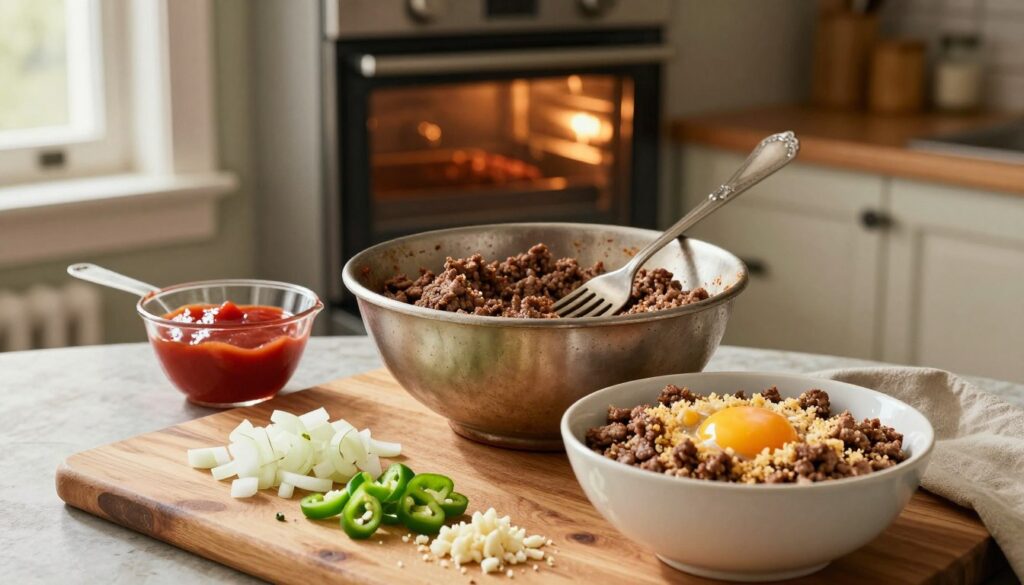
By following these preparation steps, you’ll be well on your way to creating a delicious and tender meatloaf that’s sure to please.
Step-by-Step Mixing and Shaping Instructions
The art of making a great meatloaf lies in the details of mixing and shaping. Achieving the perfect balance between flavors and textures is crucial for a deliciously moist and evenly cooked meatloaf. In this section, we’ll guide you through the process of mixing your ingredients to the ideal consistency and shaping your meatloaf for a perfectly cooked final product.
The Perfect Meat Mixture Consistency
To create an easy meatloaf recipe, it’s vital to mix the ingredients just until they come together. Overmixing can lead to a dense, tough meatloaf. The mixture should be cohesive but still retain some texture. Use a gentle touch when combining the meat with other ingredients like eggs, breadcrumbs, and seasonings. The ideal consistency is one where the mixture holds its shape when formed into a loaf but is not overly compacted.
Shaping Techniques for Even Cooking
Shaping your meatloaf correctly is key to achieving even cooking throughout. Start by gently forming the mixture into a loaf shape on a baking sheet or loaf pan. For a simple meatloaf recipe, shaping it by hand is sufficient; just ensure it’s evenly formed. If using a loaf pan, don’t overfill it, as the meatloaf will shrink during cooking. For freeform shaping, make sure the loaf is not too thick, as this can lead to undercooked centers.
Common Shaping Mistakes to Avoid
When shaping your meatloaf, there are a few common mistakes to watch out for. Avoid making the meatloaf too thick, as this can result in uneven cooking. Also, be careful not to compact the meat too much, as this can make the meatloaf dense and tough. Finally, ensure the edges are not too thin, as they can overcook quickly.
| Shaping Technique | Benefits | Common Issues |
|---|---|---|
| Freeform Shaping | Even browning, crispy edges | Can be irregularly shaped |
| Loaf Pan Shaping | Uniform shape, easy to slice | May have a soggy bottom |
Creating the Perfect Meatloaf Glaze
A great meatloaf isn’t complete without a delicious glaze to top it off. The glaze adds a rich, tangy flavor that elevates the dish from good to great.
Classic Tomato-Based Glaze Recipe
A classic tomato-based glaze is a staple for many meatloaf recipes. It’s made with a combination of ketchup, brown sugar, and vinegar, creating a sweet and tangy flavor profile.
Balancing Sweet and Tangy Flavors
The key to a great glaze is balancing the sweet and tangy flavors. Too much sugar can make the glaze overly sweet, while too much vinegar can make it too acidic. Finding the right balance is crucial.
| Ingredient | Quantity | Purpose |
|---|---|---|
| Ketchup | 1/2 cup | Base flavor |
| Brown Sugar | 2 tbsp | Adds sweetness |
| Vinegar | 1 tbsp | Adds tanginess |
When and How to Apply Glaze
Apply the glaze during the last 20-30 minutes of baking. This allows the glaze to set and caramelize, creating a sticky, flavorful crust.
Alternative Glazes and Toppings
While a classic tomato-based glaze is a favorite, there are many alternative glazes and toppings you can try. Consider a BBQ glaze for a smoky flavor or a honey mustard glaze for a sweeter take.
Cooking Your Meatloaf to Perfection
A perfectly cooked meatloaf is the result of precise temperature control and timing. To achieve this, it’s essential to understand the guidelines for cooking your meatloaf.
Temperature and Timing Guidelines
Cooking your meatloaf at the right temperature is crucial. Preheat your oven to 375°F (190°C). The cooking time will depend on the size of your meatloaf. As a general rule, a meatloaf should be cooked for about 45-60 minutes per pound. So, for a 1-pound meatloaf, you can expect a cooking time of around 45-60 minutes.
| Meatloaf Size (pounds) | Cooking Time (minutes) |
|---|---|
| 1 | 45-60 |
| 1.5 | 67.5-90 |
| 2 | 90-120 |
How to Tell When Your Meatloaf is Done
There are two primary methods to check if your meatloaf is cooked: using a meat thermometer and observing visual cues.
Using a Meat Thermometer Properly
A meat thermometer is the most accurate way to determine if your meatloaf has reached a safe internal temperature. The USDA recommends cooking ground meats to an internal temperature of at least 160°F (71°C). Insert the thermometer into the center of the meatloaf to get an accurate reading.
Visual Cues for Doneness
If you don’t have a meat thermometer, you can check for doneness by looking for visual cues. A cooked meatloaf should be firm to the touch and have a nicely browned crust on the outside. You can also check by cutting into the meatloaf slightly; the juices should run clear.
Resting Period: Why It’s Important
Once your meatloaf is cooked, it’s crucial to let it rest for 10-15 minutes before slicing. This resting period allows the juices to redistribute, making the meatloaf more tender and flavorful when served.
By following these guidelines, you’ll be able to create a delicious meatloaf recipe that’s sure to become a family favorite. The traditional meatloaf recipe, when cooked to perfection, is a comforting and satisfying meal.
Troubleshooting Common Meatloaf Problems
The path to a perfect meatloaf involves troubleshooting common issues. Even with a simple meatloaf recipe or a quick meatloaf recipe, problems like dryness, sogginess, or the meatloaf falling apart can occur. Understanding how to address these issues can elevate your meatloaf game.
Fixing Dry or Crumbly Meatloaf
A dry or crumbly meatloaf often results from overmixing or overcooking. To avoid this, mix your ingredients just until they come together, and be mindful of your cooking time. Adding ingredients like finely chopped vegetables or a bit more egg can also help retain moisture.
- Don’t overmix the meat mixture.
- Check your oven temperature to avoid overcooking.
- Add moisture-rich ingredients like onions or bell peppers.
Preventing a Soggy Bottom
A soggy bottom can be prevented by ensuring your loaf pan is properly greased and by not overloading the pan. Elevating the meatloaf on a baking rack can also improve air circulation and reduce sogginess.
- Grease your loaf pan thoroughly.
- Use a baking rack to improve air circulation.
Solutions for Meatloaf That Falls Apart
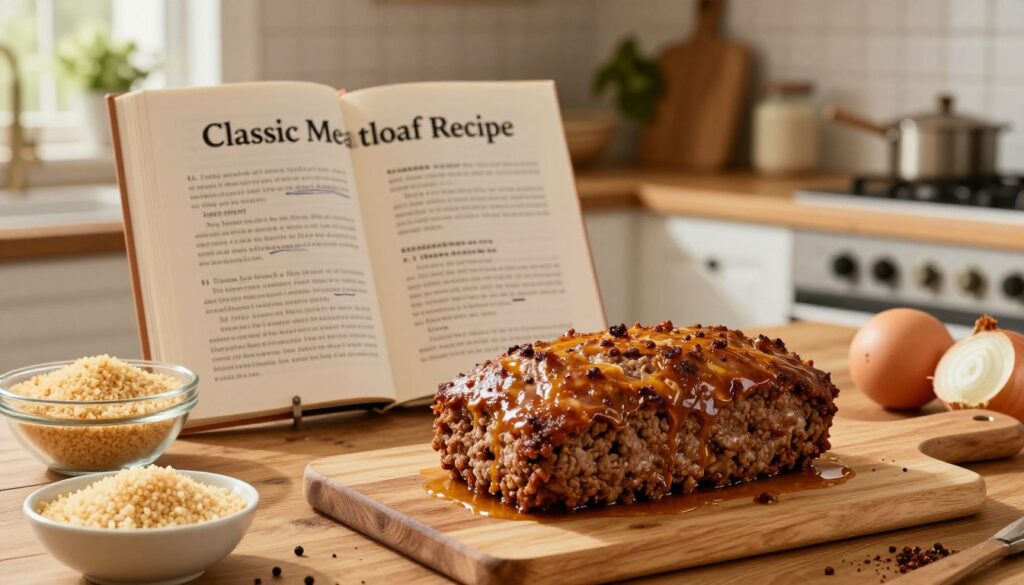
If your meatloaf falls apart, it might be due to insufficient binding ingredients. Ensuring you have the right balance of eggs and breadcrumbs can help. Also, letting the meatloaf rest before slicing can make a big difference.
- Check your binding ingredients (eggs, breadcrumbs).
- Let the meatloaf rest before slicing.
Delicious Variations on the Classic Meatloaf Recipe
Elevate your meatloaf game by exploring diverse variations that cater to different tastes and dietary needs. The classic meatloaf recipe is a foundation upon which you can build a multitude of flavors and textures, making it a versatile dish for any occasion.
International Meatloaf Inspirations
Infuse your meatloaf with global flavors by incorporating ingredients like Korean chili flakes (gochugaru) or Italian herbs. For instance, a Korean BBQ meatloaf can be made by adding gochujang to the meat mixture, while an Italian-inspired version might include prosciutto and parmesan. These international twists can transform a traditional meatloaf into an exciting culinary experience.
Dietary Adaptations (Gluten-Free, Low-Carb)
Adapting your meatloaf recipe to accommodate dietary restrictions is straightforward. For a gluten-free meatloaf, replace breadcrumbs with gluten-free alternatives like almond flour or coconut flakes. To make a low-carb meatloaf, focus on using meat, eggs, and vegetables, minimizing or eliminating carb-rich ingredients. These adaptations ensure that everyone can enjoy a delicious meatloaf, regardless of dietary constraints.
Creative Stuffed Meatloaf Ideas
Take your meatloaf to the next level by adding a creative filling. Consider a cheesy center with mozzarella or feta, or add some spinach and feta for a Greek-inspired twist. You can also experiment with stuffed peppers inside the meatloaf or create a mushroom and onion filling for added moisture and flavor. The possibilities are endless, allowing you to customize your meatloaf to suit any taste preference.
As
“The discovery of a new dish does more for human happiness than the discovery of a new star.” – Jean Anthelme Brillat-Savarin
encapsulates, experimenting with new ingredients and recipes can bring immense joy to cooking and sharing meals.
Conclusion: Mastering the Art of Homemade Meatloaf
Mastering the best meatloaf recipe is a journey that requires practice, patience, and attention to detail. By understanding the essential ingredients, preparation steps, and cooking techniques, you can create a delicious homemade meatloaf recipe that becomes a family favorite.
A traditional meatloaf recipe is more than just a dish; it’s a comfort food classic that evokes memories and satisfies appetites. With the guidance provided in the previous sections, you’re well on your way to creating a mouth-watering homemade meatloaf recipe that’s sure to impress.
The key to success lies in the details: choosing the right meat blend, preparing ingredients properly, and cooking the meatloaf to perfection. By following these steps and experimenting with different variations, you’ll become proficient in making the best meatloaf recipe that suits your taste preferences.
Now it’s your turn to put these tips into practice and make the traditional meatloaf recipe your own. With time and practice, you’ll be creating delicious homemade meatloaf recipes that will become a staple in your household.
FAQ
What is the best meat blend to use for a classic meatloaf recipe?
A mix of ground beef, pork, and sometimes veal is considered ideal for a classic meatloaf, as it provides a good balance of flavor, moisture, and texture.
How do I prevent my meatloaf from becoming too dry?
To avoid a dry meatloaf, make sure not to overmix the ingredients, and use a mix of meats that includes some with higher fat content. Also, don’t overbake it, and let it rest before slicing.
Can I make a meatloaf without eggs, and if so, what can I use as a substitute?
Yes, you can make a meatloaf without eggs. Common substitutes include flaxseed mixed with water, mashed avocado, or silken tofu, which help bind the ingredients together.
What’s the best way to shape a meatloaf for even cooking?
To achieve even cooking, shape your meatloaf into a loaf form and make sure it’s not too thick. You can also create a slight indentation on top to help it cook more evenly.
How do I know when my meatloaf is done cooking?
Use a meat thermometer to check the internal temperature, which should reach at least 160°F (71°C). You can also check for doneness by looking for clear juices and a firm texture.
Can I make a simple meatloaf recipe in under an hour?
Yes, a quick meatloaf recipe can be made in under an hour. Use a higher oven temperature and a smaller meatloaf size to reduce cooking time.
What’s a traditional meatloaf recipe, and how can I make it?
A traditional meatloaf recipe typically includes ground meat, breadcrumbs, egg, onion, and seasonings. Mix these ingredients, shape into a loaf, and bake until done.
How can I add a delicious glaze to my meatloaf?
Create a glaze by mixing ketchup, brown sugar, and spices, and brush it over the meatloaf during the last 20-30 minutes of baking for a sweet and tangy flavor.
Are there any easy homemade meatloaf recipes that I can try?
Yes, a simple homemade meatloaf recipe involves mixing ground meat with your choice of ingredients, shaping, and baking. You can customize it with your favorite flavors.
Can I make a gluten-free meatloaf, and if so, how?
To make a gluten-free meatloaf, replace traditional breadcrumbs with gluten-free alternatives like almond meal or gluten-free breadcrumbs, and be mindful of the ingredients used in your meatloaf recipe.