
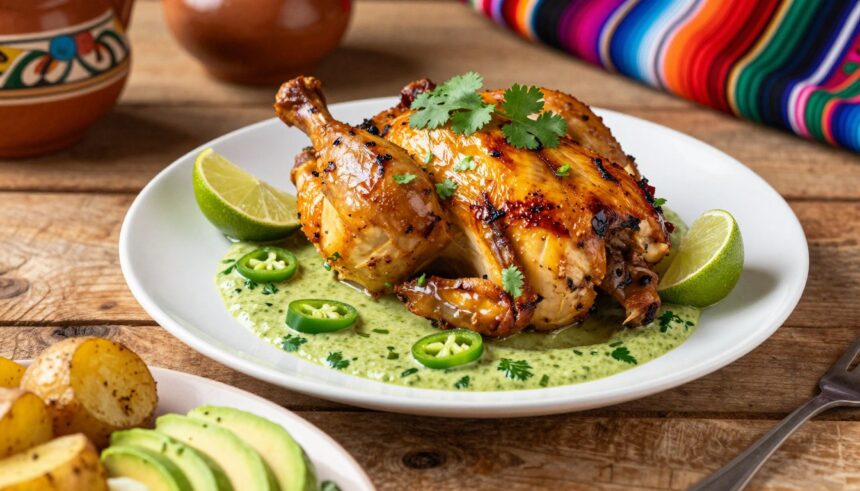
Experience the bold flavors of Peruvian cuisine with Peruvian Chicken with Creamy Green Sauce, a dish that combines tender, marinated chicken with a vibrant, spicy sauce that creates a flavor explosion in every bite.
- The Origins of Peruvian Chicken
- What Makes Peruvian Chicken Special
- The Perfect Peruvian Chicken Marinade
- Preparing the Chicken
- Making the Creamy Green Sauce (Aji Verde)
- Cooking Methods for Peruvian Chicken
- Step-by-Step Cooking Instructions
- Tips for Perfectly Juicy Peruvian Chicken
- Variations of Peruvian Chicken with Creamy Green Sauce
- What to Serve with Peruvian Chicken
- Make-Ahead and Storage Tips
- Nutritional Information and Dietary Considerations
- Conclusion
- FAQ
- What type of chicken thighs are best for this recipe?
- Can I use lime juice as a substitute for other acidic ingredients?
- How long should I marinate the chicken?
- What is Aji Verde and how is it made?
- Can I make the green sauce ahead of time?
- What are some common side dishes that go well with this recipe?
- How do I store leftover chicken?
- Can I adjust the spice level to my liking?
This recipe features chicken marinated in a blend of garlic, lime juice, cumin, and other spices, then cooked until juicy and tender. The signature green sauce (aji verde) is made with jalapeños, cilantro, and a creamy base that perfectly complements the smoky flavors of the chicken.
This dish represents authentic Peruvian cuisine while being accessible for home cooks to prepare with readily available ingredients.
Key Takeaways
- Combines tender, marinated chicken with a vibrant, spicy green sauce.
- Features a blend of garlic, lime juice, cumin, and other spices for marination.
- The green sauce is made with jalapeños, cilantro, and a creamy base.
- Offers flexibility in cooking methods: grilled, roasted, or air-fried.
- Represents authentic Peruvian cuisine with accessible ingredients.
The Origins of Peruvian Chicken
The story of Peruvian chicken begins with its marination in a mixture of lime juice, oil, garlic, and spices. This dish, known as Pollo a la Brasa, has become a staple in Peruvian cuisine.
What is Pollo a la Brasa?
Pollo a la Brasa, or Peruvian grilled chicken, is similar to rotisserie or roasted chicken but with a unique twist due to its marination process. This process gives the chicken a distinct flavor profile that has contributed to its global popularity.
The Cultural Significance of Peruvian Chicken
Peruvian chicken has evolved into a globally recognized dish that represents Peru’s diverse culinary heritage. In Peru, Pollo a la Brasa restaurants are gathering places for families and friends, highlighting the dish‘s role in social bonding. The popularity of Peruvian chicken worldwide demonstrates its ability to transcend cultural boundaries.
What Makes Peruvian Chicken Special
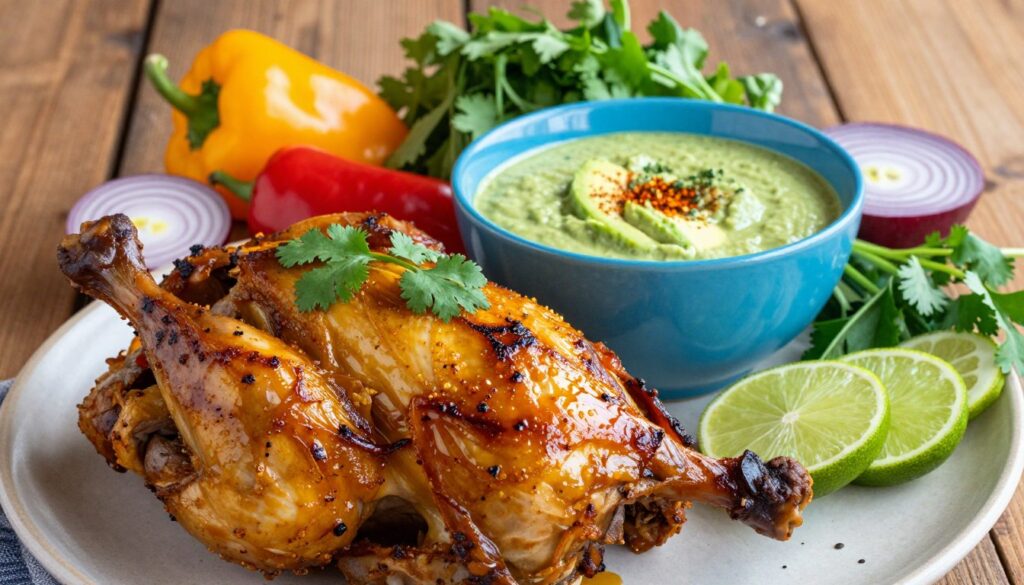
The secret to Peruvian chicken’s global popularity lies in its intricate flavor profile, which is both aromatic and tantalizing. This dish is a masterclass in balancing flavors, with each component playing a crucial role in the overall taste experience.
The Unique Flavor Profile
The unique flavor profile of Peruvian chicken is largely attributed to its marinade, which combines ingredients like lime juice, olive oil, and garlic to create a rich and savory taste. This blend not only flavors the chicken but also tenderizes it, making it juicy and flavorful.
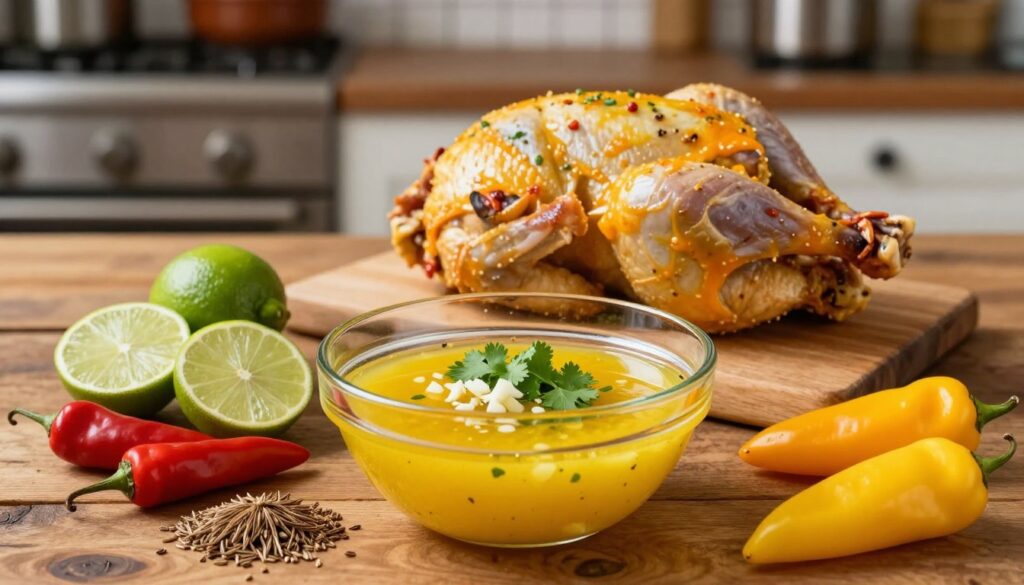
The Essential Spices and Ingredients
Key spices and ingredients that make up the Peruvian chicken marinade include:
- Cumin and paprika, which add warmth and depth
- Fresh herbs like oregano or cilantro, which bring brightness
- Garlic and lime juice, which enhance the flavor
This precise blend of spices and ingredients is what sets Peruvian chicken apart, making it a beloved dish around the world.
The Perfect Peruvian Chicken Marinade
Achieving the perfect Peruvian chicken dish begins with a well-crafted marinade. A good marinade not only adds flavor but also tenderizes the chicken, making it juicy and delicious.
Essential Marinade Ingredients
The marinade for Peruvian chicken typically includes a mix of spices, herbs, and acidic ingredients like vinegar or lime juice. Key ingredients often involve garlic, cumin, paprika, and ají amarillo peppers.
Marinating Techniques and Timing
To marinate the chicken, put it in a large ziplock bag, add the marinade, and refrigerate for 8 to 24 hours. Turning the bag occasionally ensures even distribution of flavors. For bone-in chicken, scoring the meat before marinating helps flavors penetrate deeper. Let chicken come to room temperature before cooking for even cooking and better caramelization.
| Marinating Time | Flavor Intensity |
|---|---|
| 8 hours | Good flavor development |
| 24 hours | Most flavorful results |
Preparing the Chicken
Preparing the chicken is a crucial step in making delicious Peruvian Chicken with Creamy Green Sauce. Proper preparation ensures that the chicken absorbs the flavors of the marinade effectively, resulting in a juicy and flavorful dish.
Choosing the Right Chicken Cuts
Selecting the appropriate chicken cuts is vital for achieving the best results. Chicken thighs are particularly recommended due to their tenderness and ability to retain moisture. When choosing chicken, consider the balance between skin-on and skin-off pieces, as well as the presence of bones, to decide what works best for your cooking method.
Preparing the Chicken for Marinating
To prepare the chicken for marinating, start by rinsing and patting dry 4 lbs of chicken. Trim excess fat or skin to help the marinade penetrate more effectively. Loosen the skin over the breasts and legs without removing it, creating a pocket for the marinade. Spoon about two-thirds of the marinade under the skin, ensuring the chicken is well-coated.
- Pat the chicken dry with paper towels to remove excess moisture.
- Trim excess fat and skin to reduce flare-ups during grilling and enhance marinade penetration.
- Loosen the skin to create a pocket for the marinade, especially for whole chickens or skin-on pieces.
Making the Creamy Green Sauce (Aji Verde)
Making the perfect creamy green sauce is essential to enjoying Peruvian chicken. This vibrant sauce, known as Aji Verde, is a blend of fresh ingredients that complement the rich flavors of the chicken.
Traditional Green Sauce Ingredients
The traditional green sauce is made with a combination of fresh cilantro, jalapeños, garlic, mayonnaise, and lime juice. To achieve the perfect blend, it’s crucial to use high-quality ingredients. The freshness of the cilantro and the quality of the mayonnaise significantly impact the flavor and texture of the sauce.
Blending the Perfect Green Sauce
To blend the green sauce, combine all ingredients except the olive oil in a blender or food processor. Process until the mixture is smooth. With the motor running, slowly drizzle in the olive oil to create an emulsion that gives the sauce its creamy texture. The key to a smooth sauce is to blend the ingredients in the right order and to avoid over-processing. After blending, transfer the sauce to a bowl and refrigerate for at least an hour to allow the flavors to meld.
Cooking Methods for Peruvian Chicken
Cooking Peruvian chicken can be achieved through several techniques, including grilling, oven roasting, and air frying. Each method produces a unique flavor profile and texture, allowing you to choose the one that best suits your preferences.
Grilling Method
Grilling Peruvian chicken yields a crispy exterior and a juicy interior, with a smoky flavor that enhances the dish. To grill, preheat your grill to medium-high heat, then cook the chicken for about 5-7 minutes per side, or until it reaches an internal temperature of 165°F. Ensure the chicken thighs are cooked thoroughly for the best results.
Oven Roasting Method
Oven roasting is another excellent method for cooking Peruvian chicken. Preheat your oven to 425°F (220°C), and roast the chicken for about 30-40 minutes, or until it reaches the desired internal temperature. This method allows for even cooking and can result in tender, flavorful chicken.
Air Fryer Method
The air fryer offers a quick and energy-efficient way to cook Peruvian chicken thighs. To make air fryer chicken, preheat the air fryer to 360°F. Place the chicken in the air fryer basket and cook for 12-15 minutes, flipping halfway through, until the internal temperature reaches 165°F.
| Cooking Method | Cooking Time | Temperature |
|---|---|---|
| Grilling | 5-7 minutes per side | Medium-high heat |
| Oven Roasting | 30-40 minutes | 425°F (220°C) |
| Air Fryer | 12-15 minutes | 360°F |
Step-by-Step Cooking Instructions
Here’s a step-by-step guide to cooking delicious Peruvian chicken with creamy green sauce. Whether you’re grilling or roasting, the key to perfect chicken lies in the preparation and cooking technique.
Preparing the Grill or Oven
Before you start cooking, it’s essential to prepare your grill or oven to the right temperature. For grilling, preheat your grill to medium-high heat, ensuring it’s clean and brush it with oil to prevent sticking. If you’re roasting, preheat your oven to 425°F (220°C). Proper preheating is crucial for achieving that perfect crispy skin on your chicken thighs.
Cooking Times and Temperatures
Cooking times and temperatures are critical for achieving perfectly cooked chicken. For grilling, cook the chicken for about 5-7 minutes per side, or until it reaches an internal temperature of 165°F. When roasting, cook for 20-25 minutes or until the internal temperature is reached. Use a meat thermometer to ensure the chicken is cooked to a safe temperature. Typically, boneless chicken thighs take around 15-20 minutes to cook through in the oven.
| Cooking Method | Cooking Time | Internal Temperature |
|---|---|---|
| Grilling | 5-7 minutes per side | 165°F |
| Roasting | 20-25 minutes | 165°F |
How to Know When Your Chicken is Done
To ensure your chicken is cooked to perfection, use a combination of visual cues and a meat thermometer. The chicken is done when it reaches an internal temperature of 165°F. Additionally, check that the meat is no longer pink, the juices run clear, and the skin is crispy and golden brown. As a quote from a renowned chef, “The art of cooking chicken is not just about following a recipe, it’s about understanding the nuances of heat and timing.”
“A good cook is like a sorceress, she dispenses happiness and satisfaction with every dish.” – Unknown
Let the chicken rest for 5-10 minutes before serving to allow the juices to redistribute, making the chicken even more tender and juicy.
Tips for Perfectly Juicy Peruvian Chicken
Achieving perfectly juicy Peruvian chicken requires attention to detail and a few expert techniques. The key to a delicious dish lies in understanding the importance of preparation and cooking methods.
Common Mistakes to Avoid
When cooking Peruvian chicken, several common mistakes can lead to dry or flavorless meat. Avoiding these pitfalls is crucial for achieving juicy results. For instance, not letting the chicken rest after cooking can cause the juices to run out, leaving the meat dry.
Professional Chef Techniques
Professional chefs employ several techniques to ensure their Peruvian chicken is always juicy and flavorful. These include brining the chicken before marinating, especially when using breast meat, to maximize juiciness. Creating small incisions in the meat, particularly in thicker cuts like chicken thighs, allows the marinade to penetrate deeper.
Other techniques involve tempering the meat to room temperature before cooking to ensure even cooking, basting the chicken with reserved marinade during cooking to maintain moisture, and controlling the cooking time and temperature precisely to preserve juiciness.
| Technique | Benefit |
|---|---|
| Brining | Maximizes juiciness, especially in breast meat |
| Scoring the meat | Allows marinade to penetrate deeper into thicker cuts like chicken thighs |
| Tempering | Ensures even cooking from surface to center |
“The art of cooking is not just about following a recipe; it’s about understanding the science behind the techniques.” – Chef’s quote on cooking techniques.
Variations of Peruvian Chicken with Creamy Green Sauce
This Peruvian Chicken recipe is highly flexible, allowing for numerous variations to suit different tastes and dietary needs. The dish can be adjusted in terms of spice level and ingredients, making it versatile for various palates.
Spice Level Adjustments
For those who prefer a milder flavor, reducing or omitting the jalapenos in the green sauce is a simple adjustment. Conversely, adding more jalapenos or incorporating hotter peppers can increase the spice level for those who enjoy it. Using aji amarillo paste instead of jalapenos can also provide a more authentic Peruvian flavor without excessive heat.
Alternative Ingredients and Substitutions
The green sauce can be modified by substituting mayonnaise with Greek yogurt or sour cream, offering a lighter or tangier version. For the chicken, various cuts can be used, such as breasts, legs, or wings. Additionally, the recipe can be adapted for vegetarian options by using firm tofu, cauliflower steaks, or portobello mushrooms. Serving the chicken with roasted vegetables or cauliflower rice instead of traditional sides can also cater to lower-carb diets.
What to Serve with Peruvian Chicken
Serving Peruvian chicken with the right accompaniments elevates the dining experience. A well-rounded meal featuring this dish includes traditional side dishes and complementary beverages that enhance its rich flavors.
Traditional Side Dishes
Traditional Peruvian side dishes that go well with chicken include creamy mashed potatoes and grilled vegetables. These sides complement the chicken without overpowering it. Consider serving a simple salad with a citrus vinaigrette to add freshness to the meal.
Complementary Beverages
For beverages, Chicha Morada, a traditional Peruvian drink made from purple corn, is a great choice. For wine enthusiasts, high-acidity white wines like Vinho Verde or Sauvignon Blanc pair well. Beer lovers might enjoy a crisp lager or citrusy IPA. Non-alcoholic options include ginger beer or tamarind agua fresca
- Pisco Sour makes an excellent aperitif.
- Inca Kola is a popular Peruvian soda that complements the meal.
Make-Ahead and Storage Tips
Preparing Peruvian Chicken and its accompanying green sauce in advance can save time during busy weeknights. This flexibility makes it an ideal meal option for those with tight schedules.
Storing Leftover Chicken
Leftover Peruvian Chicken can be stored in an airtight container in the refrigerator for up to 3 days. To maintain its juiciness, consider storing it with a bit of the green sauce. When reheating, use a gentle heat to prevent the chicken from drying out.
Preserving the Green Sauce
The creamy green sauce is a crucial component of Peruvian Chicken, and it can be preserved for later use. Key storage tips include:
- Storing the sauce in an airtight container in the refrigerator for up to 5 days.
- Floating a thin layer of olive oil on top to prevent oxidation and discoloration.
- Freezing portions in ice cube trays for up to 3 months and thawing as needed.
If the sauce gets too thick, stir in a little lime juice or water to achieve the desired consistency. When making the sauce ahead of time, consider slightly under-seasoning it, as the flavors will intensify during storage.
Nutritional Information and Dietary Considerations
Understanding the nutritional profile of Peruvian chicken is crucial for making informed dietary choices. This dish is high in protein (39g) and relatively low in carbohydrates (5g), making it suitable for various diets. The fat content (60g) is significant due to the chicken skin and creamy sauce. Modifications like using skinless chicken and lower-fat sauce alternatives can reduce fat.
Conclusion
With its unique blend of spices and herbs, Peruvian chicken offers a truly unforgettable dining experience. The creamy green sauce adds a rich and vibrant touch, making this dish a standout. This versatile recipe allows for numerous adaptations while maintaining its essential character. The techniques learned from preparing this chicken and sauce can be applied to other recipes, expanding your culinary repertoire. The balance of flavor in this dish exemplifies the sophisticated nature of Peruvian cuisine. Mastering this recipe will elevate your cooking skills and introduce you to new flavors.
FAQ
What type of chicken thighs are best for this recipe?
Boneless, skinless chicken thighs are ideal for this recipe as they absorb the marinade well and cook evenly.
Can I use lime juice as a substitute for other acidic ingredients?
Yes, lime juice is a key ingredient in the marinade and adds a unique flavor. However, you can substitute it with lemon juice if needed.
How long should I marinate the chicken?
The chicken should be marinated for at least 2 hours or overnight for the best flavor.
What is Aji Verde and how is it made?
Aji Verde, also known as green sauce, is a traditional Peruvian condiment made by blending cilantro, garlic, lime juice, and olive oil.
Can I make the green sauce ahead of time?
Yes, you can prepare the green sauce ahead of time and store it in the refrigerator for up to a week.
What are some common side dishes that go well with this recipe?
Traditional side dishes include grilled vegetables, rice, and beans. You can also serve it with a simple salad.
How do I store leftover chicken?
Leftover chicken can be stored in an airtight container in the refrigerator for up to 3 days or frozen for up to 2 months.
Can I adjust the spice level to my liking?
Yes, you can adjust the spice level by adding more or less cumin, paprika, or other spices to the marinade.